

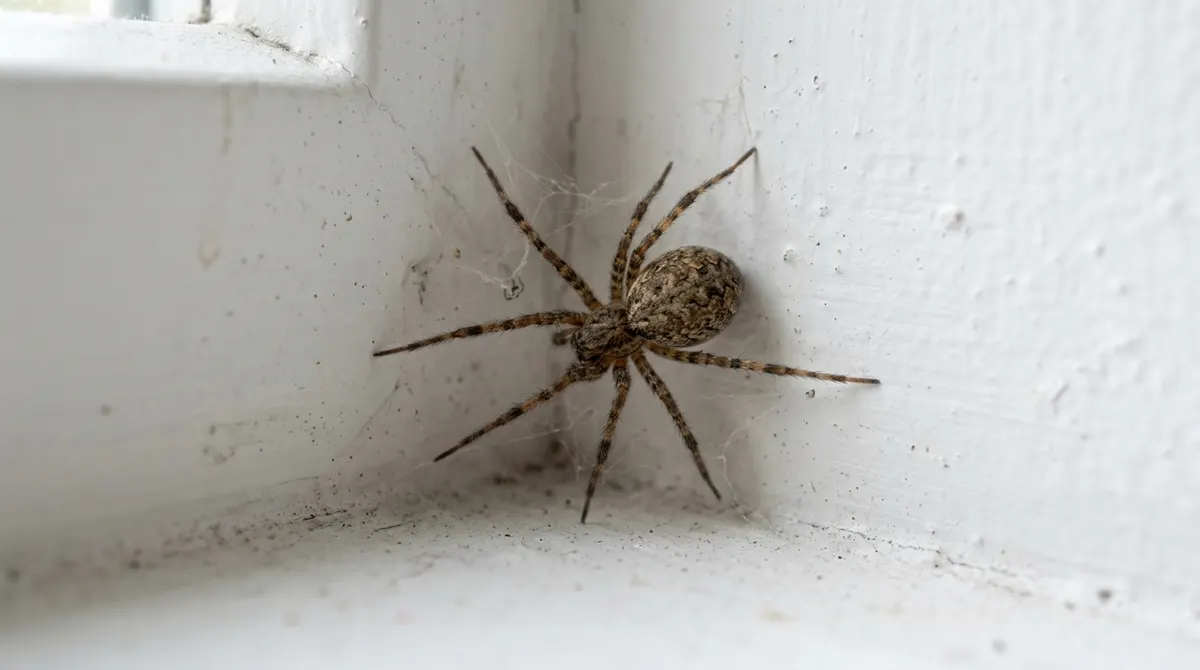
Most house spider bites look like a small red bump—similar to a mosquito bite—and cause mild pain, itching, or swelling that clears up in a few days with basic first aid. Common house spiders rarely bite and their venom is too weak to harm most people. In North America, only two spiders found indoors are medically significant: the black widow and the brown recluse. Seek medical care if you have severe pain, a spreading wound, or symptoms beyond the bite area.
Medical note: This guide is general information, not medical advice. If you have trouble breathing, swelling of the face or throat, chest pain, or severe symptoms, call emergency services. For possible poisoning questions in the U.S., call Poison Control at 1-800-222-1222.
What Does a House Spider Bite Look Like?
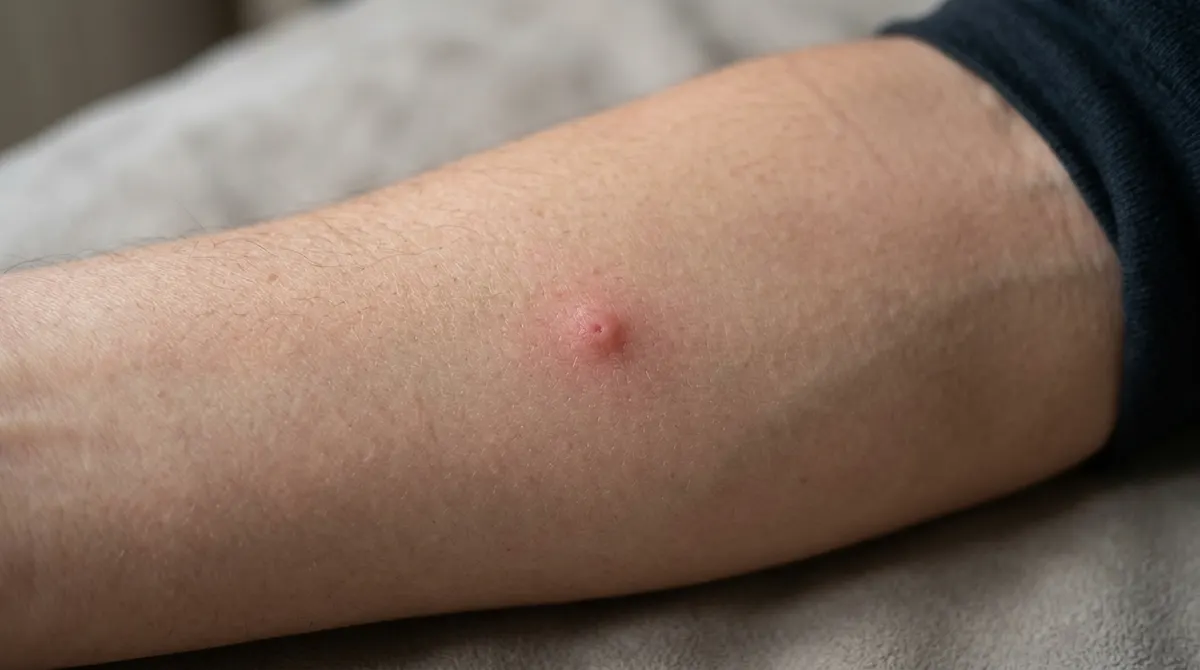
- A small red bump or welt, sometimes with a tiny pale center
- Mild swelling and tenderness around the bite
- Itching or a mild burning feeling
- Occasionally two tiny puncture marks, though these are often not visible
Symptoms usually peak in the first day and fade within 3 to 7 days.
Is It Really a Spider Bite?
Many “spider bites” are actually something else. Spiders tend to bite once, usually when trapped in clothing or bedding. Consider other causes if you see:
- Several bites in a line or cluster: often bed bugs or fleas
- Bites mostly on lower legs and ankles: often fleas
- A painful, warm, pus-filled bump that keeps growing: often a skin infection (such as staph/MRSA) rather than a spider—see a doctor
- Itchy welts after being outdoors: mosquitoes, chiggers, or ants
Spiders That Can Cause Serious Bites
| Black widow | Brown recluse | |
|---|---|---|
| Appearance | Shiny black, red hourglass on the underside | Light to medium brown, dark violin shape on the back |
| Where found indoors | Garages, sheds, woodpiles, cluttered corners | Closets, boxes, attics, mainly in the south-central U.S. |
| Bite symptoms | Sharp pain, then muscle cramps, stomach or back pain, sweating within hours | Mild at first; may become a blister and a sore that darkens and spreads over days |
| What to do | Seek medical care promptly | See a doctor, especially if the wound grows or darkens |
How to Treat a House Spider Bite at Home

- Wash the area gently with soap and water.
- Apply a cold compress (ice wrapped in a cloth) for 10–15 minutes at a time to reduce pain and swelling.
- Elevate the area if the bite is on an arm or leg.
- Use over-the-counter relief as directed on the label: a pain reliever for discomfort, an oral antihistamine or hydrocortisone cream for itching.
- Keep it clean and avoid scratching to prevent infection.
- Watch it for 24–48 hours.
When to See a Doctor
- You think a black widow or brown recluse bit you
- Severe pain, muscle cramps, sweating, nausea, or fever
- A wound that turns dark, blisters, or keeps growing after 24 hours
- Spreading redness, red streaks, warmth, or pus (signs of infection)
- The person bitten is a young child, an older adult, or has a weakened immune system
- Any sign of an allergic reaction—call emergency services
How to Prevent Spider Bites at Home
- Shake out shoes, gloves, and clothing left in garages or closets.
- Move beds a few inches from walls and keep bedding off the floor.
- Reduce clutter and store items in sealed plastic bins instead of cardboard boxes.
- Seal cracks around windows, doors, and pipes.
- Wear gloves when moving firewood, boxes, or yard debris.
Frequently Asked Questions
What does a bite from a house spider look like?
Usually a small red bump, a bit like a mosquito bite, sometimes with mild swelling and itching. It typically fades within a few days.
How do you tell if a bite is from a spider?
It’s hard to be sure unless you saw the spider. Spider bites are usually single bites, while clusters or lines of bites point to bed bugs or fleas.
What happens if I get bitten by a house spider?
Most people get mild, local symptoms—redness, swelling, itching—that go away on their own. Serious reactions are rare and mainly linked to black widows and brown recluses.
What kind of house spiders bite you?
Most house spiders can bite but rarely do. In North America, black widows and brown recluses are the indoor spiders with medically significant bites.
Should I pop a spider bite blister?
No. Leave blisters intact, keep the area clean and covered, and see a doctor if the blister grows, darkens, or becomes very painful.


