

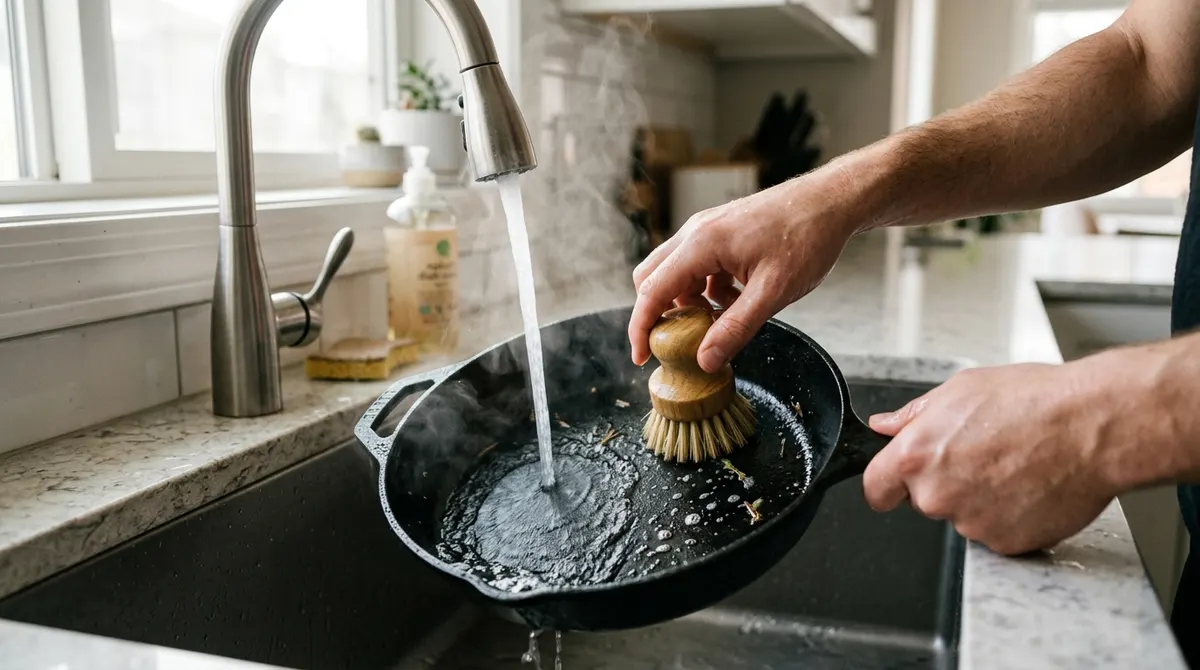
To clean a cast iron skillet, rinse it with hot water while it’s still warm, scrub off food with a brush or a pan scraper (a little dish soap is fine), dry it completely on the stove, and wipe on a very thin layer of oil. That’s it—no soaking, no dishwasher, and no harsh scouring of a well-seasoned pan.
Why Cast Iron Needs Different Care
Cast iron gets its nonstick surface from seasoning: thin layers of oil baked onto the iron until they bond into a hard, slick coating. Good cleaning removes food without stripping that layer. Bad cleaning—long soaks, the dishwasher, or leaving it wet—breaks down the seasoning and lets rust form within hours.
How to Clean a Cast Iron Skillet After Cooking (Everyday Method)
- Let it cool slightly. Clean it while it’s warm but safe to handle. Never plunge a very hot pan into cold water—the sudden temperature change can crack it.
- Wipe out excess grease and food with a paper towel.
- Rinse with hot water and scrub with a stiff brush, non-scratch sponge, or a plastic pan scraper. A small drop of mild dish soap is fine on a seasoned pan.
- Dry immediately. Towel it off, then set it on a burner over low heat for 2–3 minutes until every trace of moisture is gone.
- Oil lightly. While it’s warm, rub in ½ teaspoon of a neutral oil (vegetable, canola, or shortening) with a paper towel, then wipe until the surface looks dry, not greasy.
How to Remove Stuck-On Food
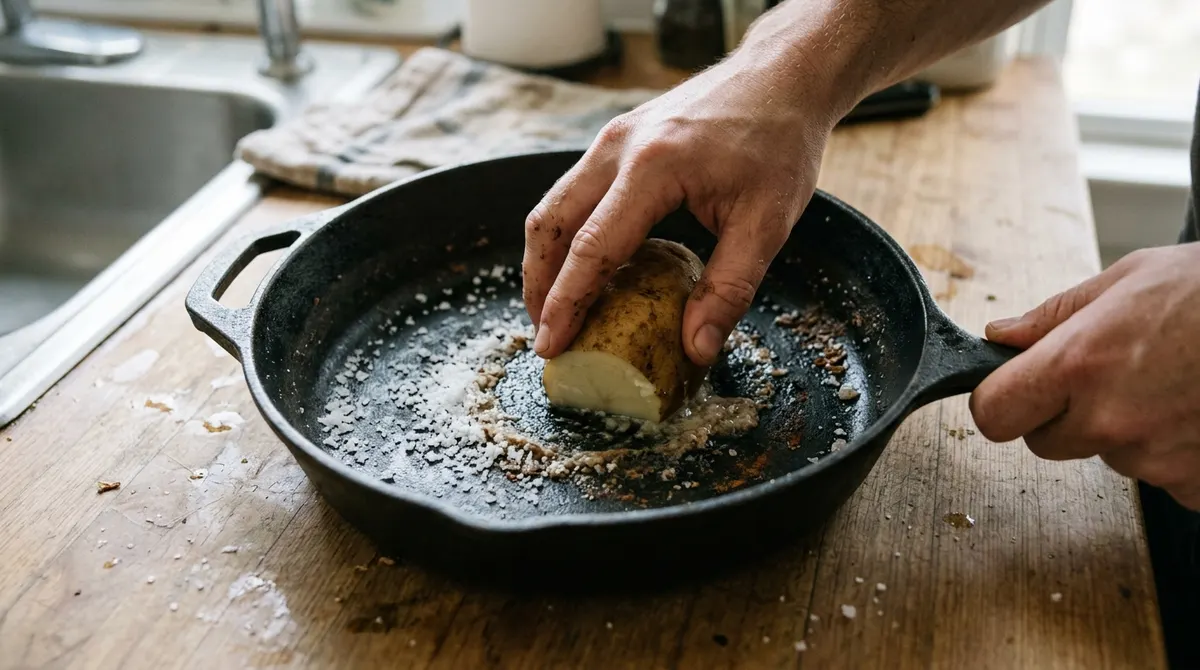
- Salt scrub: Pour 2 tablespoons of coarse kosher salt into the warm pan and scrub with a folded paper towel or half a potato. Rinse and dry.
- Simmer and scrape: Add ½ inch of water, bring it to a simmer for 3–5 minutes, then scrape with a wooden spatula. Dump the water and dry the pan on the stove.
- Chainmail scrubber: A stainless chainmail scrubber removes stubborn bits fast without damaging good seasoning.
How to Get Black Buildup Off a Cast Iron Skillet
Flaky black bits or a rough, sticky crust usually mean old oil has carbonized or the seasoning is uneven. Small flakes are harmless, but for a smooth pan:
- Scrub with coarse salt and a chainmail scrubber, or use steel wool on stubborn spots.
- For heavy buildup, use your oven’s self-clean cycle or a lye-based oven cleaner (follow the label and wear gloves) to strip it to bare iron.
- Wash, dry completely, and re-season (see below).
How to Remove Rust from Cast Iron
- Scrub the rusty areas with steel wool or a stiff brush until you reach bare gray metal.
- For heavy rust, soak the pan in a 50/50 mix of white vinegar and water for no more than 30–60 minutes, checking often—vinegar eats into iron if left too long.
- Rinse, dry thoroughly over heat, and re-season immediately.
How to Re-Season a Cast Iron Skillet

- Preheat your oven to 450–500°F (230–260°C).
- Rub a very thin layer of oil over the entire pan—inside, outside, and handle.
- Wipe off as much as you can so it looks dry.
- Place it upside down in the oven with a sheet of foil on the rack below to catch drips.
- Bake for 1 hour, turn off the oven, and let it cool inside.
- Repeat 2–3 times for a strong, glossy black finish.
Soap vs No Soap: The Pros and Cons
Pros
- Modern dish soap is mild and won’t remove polymerized seasoning
- Cuts grease and odors from meat and fish
- Lodge, the largest U.S. cast iron maker, says a little soap is fine
Cons
- Long soaks in soapy water can damage seasoning and cause rust
- Strong degreasers or lye soaps will strip it
- Not needed for light cleanup—hot water often works
What Ruins a Cast Iron Skillet?
- Putting it in the dishwasher
- Soaking it in water or leaving it in the sink overnight
- Air-drying instead of heat-drying
- Storing it with a lid on, which traps moisture
- Thermal shock—cold water on a very hot pan
- Cooking very acidic foods (like tomato sauce) for hours in a newly seasoned pan


