To dispose of paint thinner, never pour it down a drain, toilet, storm drain or onto the ground. Let used thinner settle so you can pour off and reuse the clear liquid, then take the leftover thinner and sludge, sealed and labeled, to your local household hazardous waste (HHW) drop-off or collection event. Paint thinner and mineral spirits are flammable and toxic, so they’re regulated as hazardous in most areas.
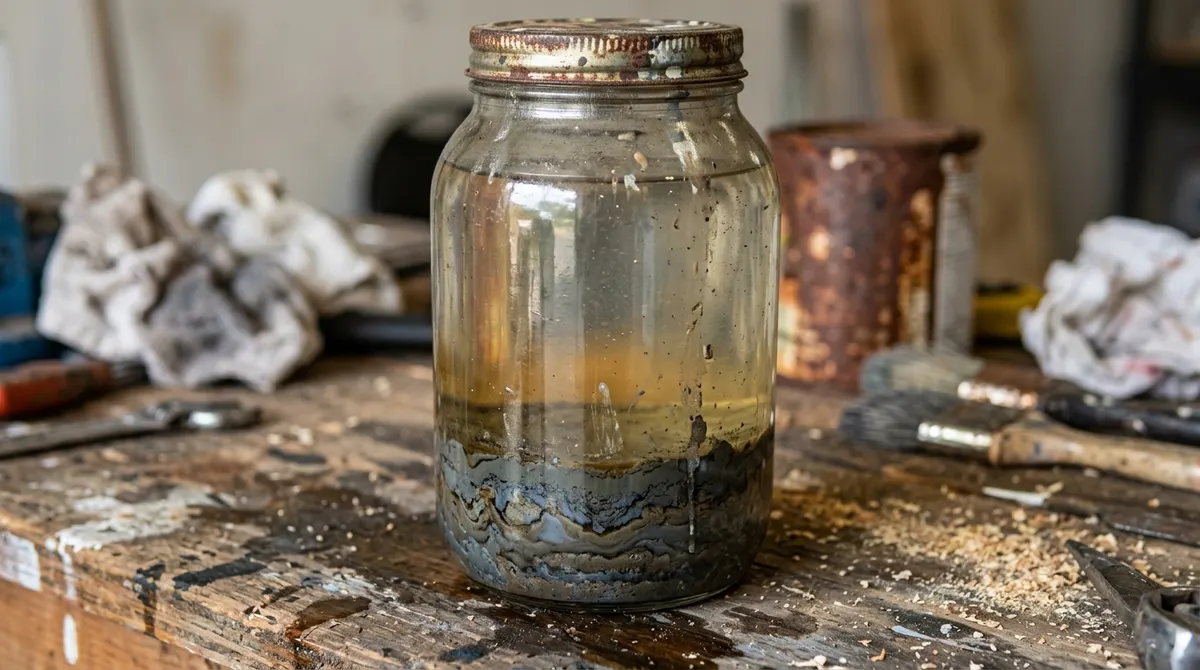
Disposal Options at a Glance
| Situation | What to do |
|---|---|
| Dirty but usable thinner | Let it settle, decant the clear liquid, reuse |
| Leftover thinner you won’t use | Household hazardous waste site or collection event |
| Paint sludge | Dry thin layers outdoors if allowed locally; otherwise HHW |
| Thinner-soaked rags | Dry flat outdoors or seal in a water-filled metal can, then dispose per local rules |
| Empty, dry container | Often trash or recycling—check your local hauler |
How to Reuse Paint Thinner
- Pour used thinner into a glass or metal container with a tight lid.
- Label it and let it sit undisturbed for a few days until solids settle.
- Carefully pour the clear thinner into a clean, labeled container.
- Reuse it for cleaning brushes; it works for many more cleanings.
- Let the sludge left behind dry or take it to an HHW site.
How to Take It to Hazardous Waste
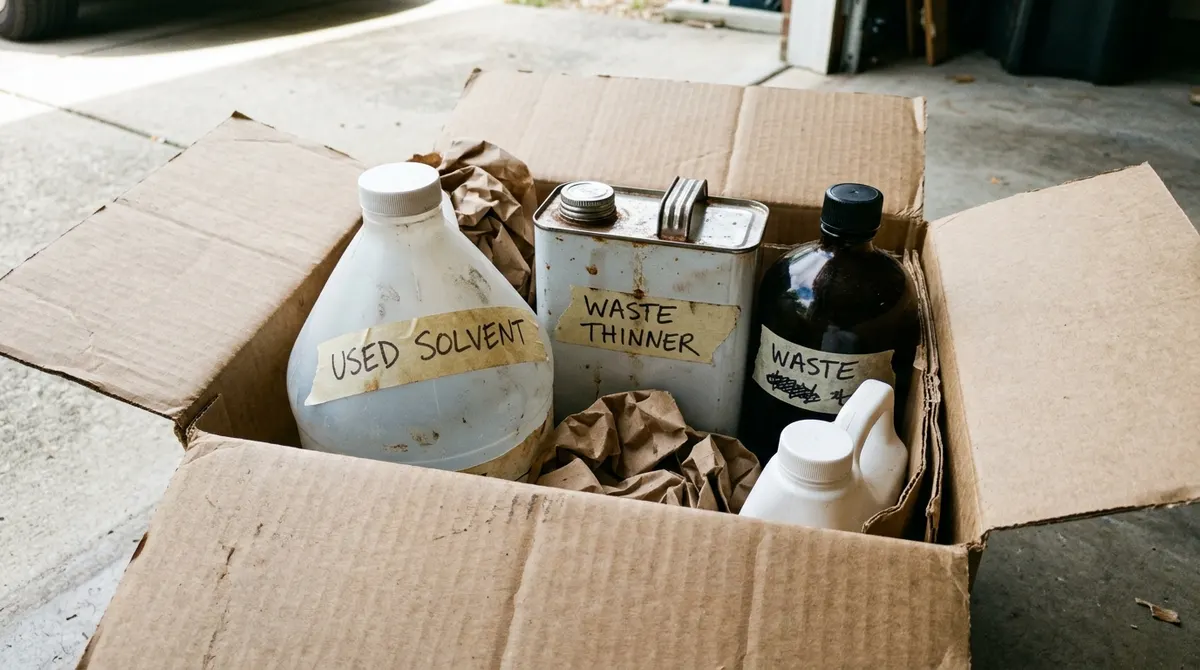
- Search your city or county website for “household hazardous waste.”
- Check accepted items, hours, and quantity limits.
- Keep thinner in its original or labeled, sealed container. Don’t mix it with other chemicals.
- Transport containers upright in a box in the trunk or truck bed, not the passenger area.
- Ask whether your area has paint stewardship drop-off sites, which may take related products.
Handling Thinner-Soaked Rags
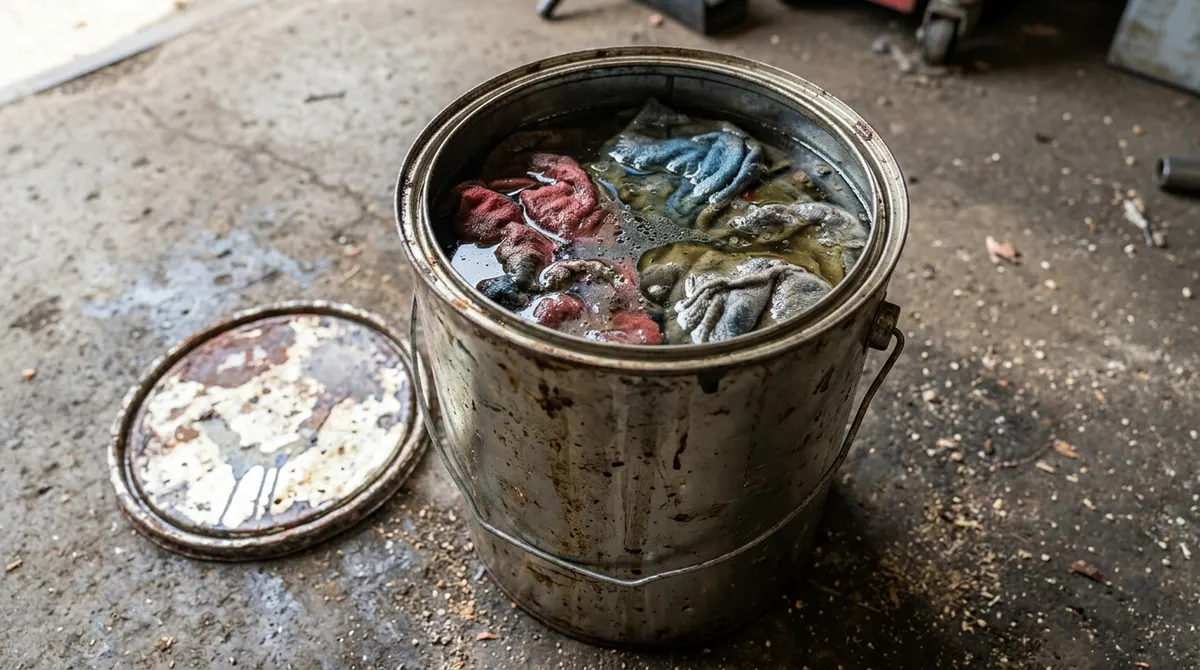
Rags used with thinner and oil-based finishes can catch fire as they dry. Lay them flat outdoors away from buildings to dry completely, or store them in a metal can filled with water and a tight lid until you can take them to an HHW site.
Reuse vs Drop-Off
Pros
- Reusing saves money and cuts waste
- HHW drop-off is usually free for residents
- Keeps solvents out of water and soil
Cons
- Settling takes several days
- HHW sites have limited hours
- Rules vary by city and state
Using less thinner helps too: see how to clean oil paint brushes and how to remove paint from clothes.