

To clean oil paint brushes, wipe off as much paint as possible with a rag, swish the brush in odorless mineral spirits (or a safer solvent-free brush cleaner or vegetable oil), then wash the bristles with mild soap and lukewarm water until the lather runs clean. Rinse, reshape the tip, and dry the brush flat or bristles-down. Never pour solvents down the sink.

What You’ll Need
- Paper towels or rags
- Odorless mineral spirits (or a solvent-free brush cleaner, safflower or linseed oil)
- A glass jar with a lid (a jar with a coil or screen at the bottom works best)
- Mild soap (bar brush soap, dish soap, or castile soap)
- Gloves and good ventilation
How to Clean Oil Paint Brushes Step by Step
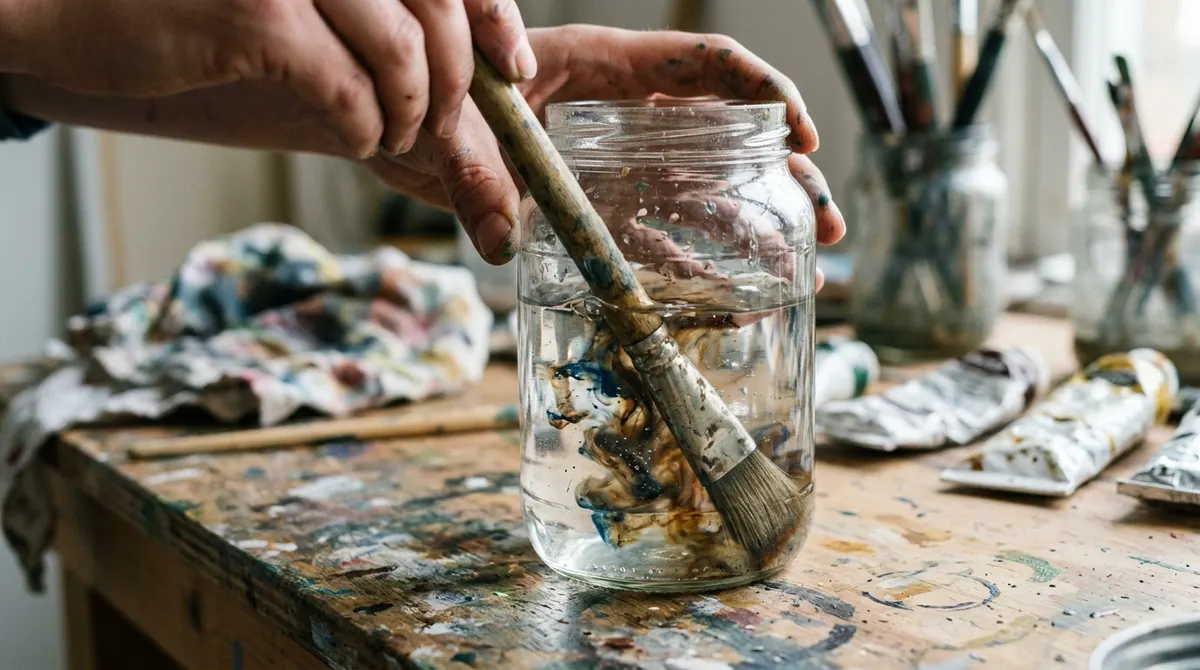
- Wipe: squeeze paint out of the bristles with a rag, working from the ferrule (metal part) toward the tip.
- Rinse in solvent or oil: swish the brush in odorless mineral spirits or oil, then wipe again. Repeat until little color comes out.
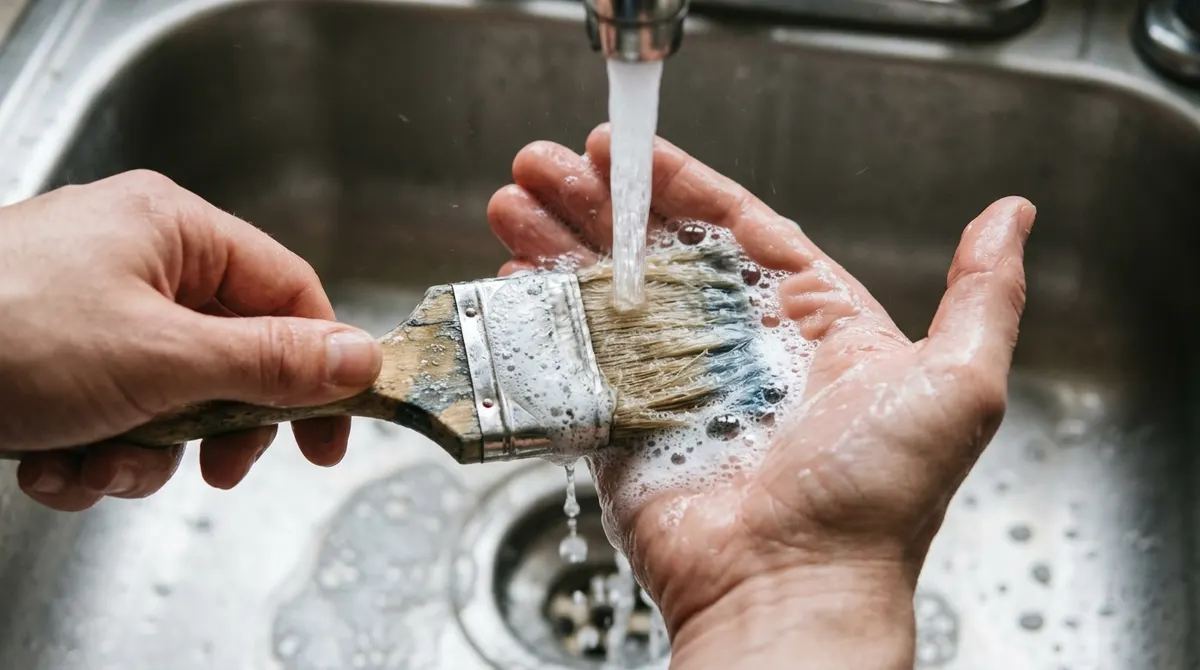
- Wash with soap: work soap into the bristles in your palm with lukewarm water. Keep going until the lather is white.
- Rinse with lukewarm (not hot) water.
- Reshape the bristles with your fingers.
- Dry flat or with bristles pointing down so water doesn’t seep into the ferrule.
How to Clean Brushes With Dried Oil Paint
- Soak the bristles (not the handle) in a commercial brush restorer or a mix of oil and a little solvent for several hours or overnight.
- Work the softened paint out with a brush comb or old toothbrush.
- Wash with soap and water, reshape, and dry.
- Repeat if needed—badly hardened brushes may only be good for rough work.
Solvent vs Solvent-Free Cleaning
Pros
- Mineral spirits remove paint quickly
- Oils and solvent-free cleaners have less odor and fewer fumes
- Soap washing keeps bristles soft
Cons
- Solvents are flammable and need ventilation
- Oil cleaning takes longer and needs a soap wash
- Used solvent must be disposed of properly
Safe Disposal
Never pour solvent down the drain. Let used mineral spirits settle in a sealed jar; pour the clear solvent off to reuse and let the sludge dry before disposing of it as household hazardous waste. Lay oily rags flat to dry outdoors or store them in a sealed metal container with water—oily rags can self-heat and catch fire.
Tips to Keep Brushes in Good Shape
- Clean brushes immediately after use.
- Don’t let brushes stand on their bristles in a jar.
- Keep paint away from the ferrule.
- Store brushes upright (handle down) once dry.
Frequently Asked Questions
How do you clean oil paint off of paint brushes?
Wipe off excess paint, rinse in odorless mineral spirits or oil, then wash with soap and lukewarm water until the lather is clean.
Can you use Dawn dish soap to clean oil paint brushes?
Yes. After rinsing in solvent or oil, dish soap works well to remove the remaining paint and oil from bristles.
What is the best brush cleaner for oil paint?
Odorless mineral spirits are fast and effective; solvent-free cleaners and safflower oil are gentler options with less odor.
Can I wash my oil paint brushes in the sink?
You can do the final soap-and-water wash in the sink after removing most of the paint, but never pour solvents or heavy paint residue down the drain.
Can you clean oil paint brushes without solvent?
Yes. Rinse in vegetable or safflower oil, then wash thoroughly with soap and water.


