To clean a washing machine filter, unplug the washer, open the small access panel at the bottom front, drain the leftover water through the emergency hose into a shallow tray, then twist the filter counterclockwise, remove lint, coins and hair, rinse it, and screw it back in tightly. Most manufacturers suggest checking it every month or every few months, and right away if the washer drains slowly or shows a drain error.
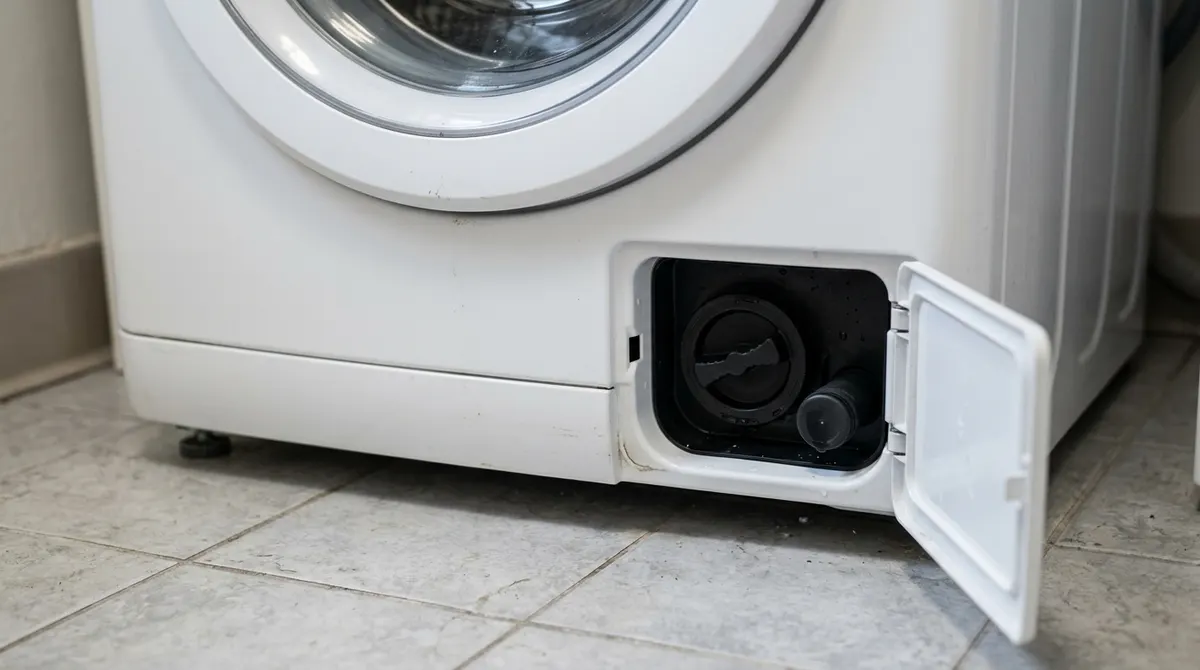
Safety: Unplug the washer first and let hot water cool. A full drum can hold several gallons that will flow out of the filter—have towels and a low pan ready.
Where Is the Washing Machine Filter?
| Washer type | Filter location | How often |
|---|---|---|
| Front-load | Behind a kick panel at the bottom front | Monthly to every 3 months |
| Top-load with agitator (older) | Lint trap at top of agitator or drum rim | After heavy lint loads |
| Top-load HE / impeller | Many are self-cleaning; some have a front pump filter | Check manual |
| Inlet hose screens (all) | Where hoses connect to the back of the washer | Once a year or if filling slowly |
How to Clean a Front-Load Washer Filter
- Unplug the washer and turn off the water taps.
- Open the access panel with your fingers or a coin.
- Place a baking dish or low tray under the panel and lay towels down.
- Pull out the small drain hose, remove its cap and let water drain. Recap when empty—this may take several trays.
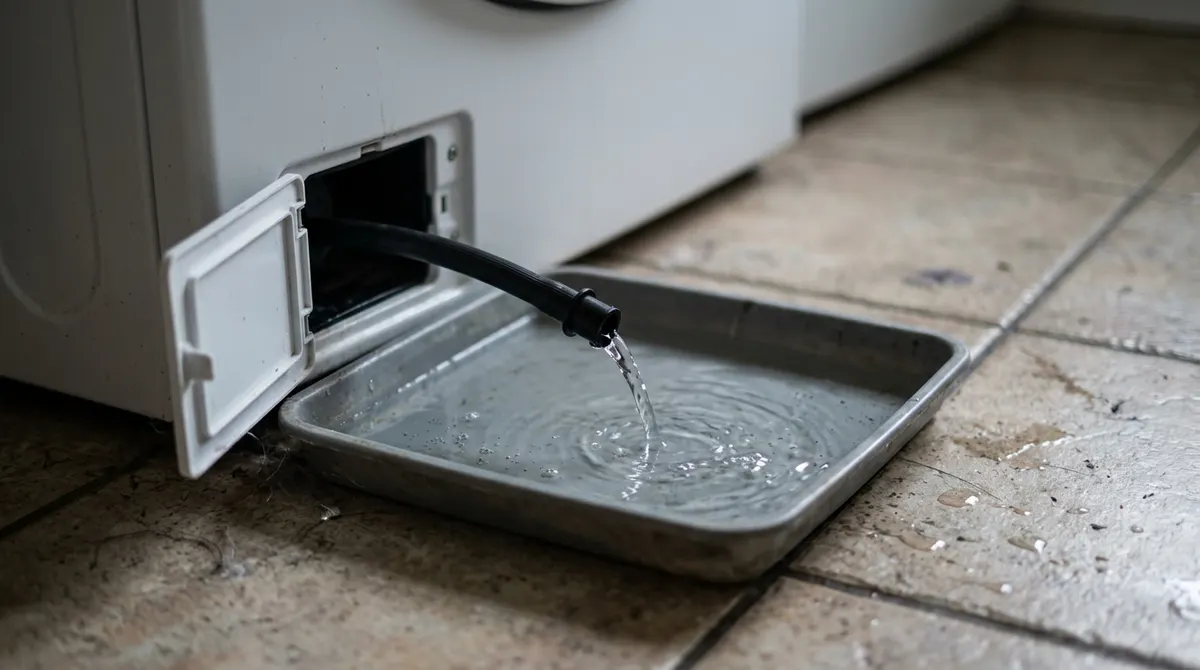
- Turn the filter counterclockwise slowly and pull it out.
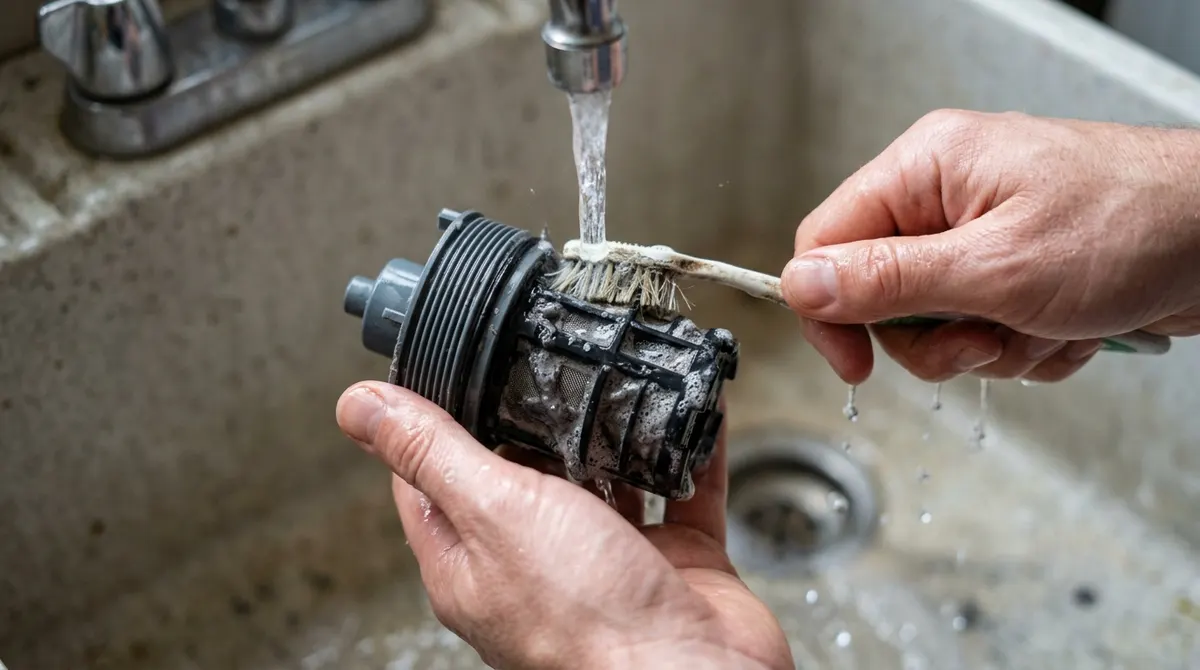
- Remove debris—socks, coins, hair ties and lint are common.
- Rinse the filter under warm water and scrub with an old toothbrush.
- Shine a flashlight into the opening and remove anything stuck near the pump impeller.
- Reinsert the filter and turn it clockwise until it’s snug, then close the panel.
- Plug in and run a short rinse and spin to check for leaks.
How to Clean a Top-Load Lint Filter and Inlet Screens
- Lift out the agitator lint cup or rim filter, empty it and rinse it.
- For inlet screens, turn off the water, unscrew the hoses at the back and gently pull out the small mesh screens with needle-nose pliers. Rinse and reinstall.
- Run an empty hot cycle with a washer cleaner or the manufacturer’s tub-clean cycle to finish.
Cleaning the Filter Yourself
Pros
- Fixes slow draining and many drain error codes
- Removes musty odors
- Free and takes 15 minutes
Cons
- Messy—expect water on the floor
- Filter can be tight to turn
- A failed pump still needs repair
Cut down on lint in the first place by sorting loads properly—see how to separate laundry.
Frequently Asked Questions
Do all washing machines have a filter?
Most front-loaders have a drain pump filter. Many newer top-loaders use self-cleaning pumps with no user-serviceable filter—check your manual.
How do I know if my washer filter is clogged?
Water left in the drum, slow draining, a humming pump, a drain error code or a bad smell are common signs.
Why won’t my washer filter unscrew?
It may be stuck with lint or overtightened. Drain all water first, then grip it with a rubber jar opener and turn slowly. Don’t use pliers on plastic caps.
Can I clean the filter with vinegar?
Yes, soaking it in warm water with a splash of vinegar loosens buildup. Rinse well before reinstalling.
What happens if I never clean the washer filter?
Debris can block draining, damage the drain pump and cause odors or leaks.