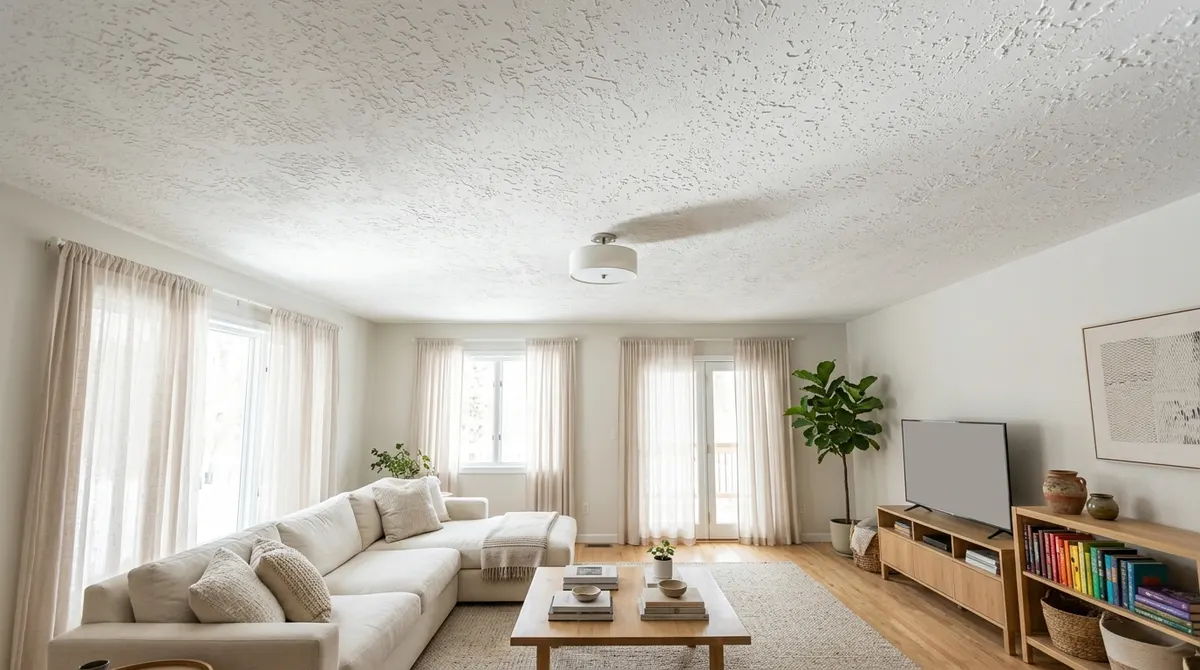
The most popular ceiling texture types are knockdown, orange peel, skip trowel, swirl, stomp (crow’s foot), sand swirl, popcorn (acoustic), lace, Spanish, and smooth (Level 5 finish). Knockdown and orange peel are the most common in modern homes because they hide drywall flaws and are quick to apply, while smooth ceilings look the cleanest but cost the most to finish well.
Why Texture a Ceiling?
- Hides drywall seams, nail pops, and small imperfections
- Faster and cheaper than a perfectly smooth finish
- Adds visual interest and character
- Some textures slightly reduce echo
10 Common Ceiling Texture Types
1. Knockdown
Best for: Modern homes that want subtle texture
Joint compound is sprayed in splatters, then lightly flattened with a wide knife, creating a mottled, stucco-like look. Popular, forgiving, and easy to paint.
2. Orange Peel
Best for: Budget-friendly, low-maintenance ceilings
A fine spray of thinned mud that looks like the skin of an orange. Subtle, durable, and quick to apply with a hopper gun.
3. Skip Trowel
Best for: Rustic, Mediterranean, or Southwestern styles
Applied by hand with a curved trowel that “skips” across the surface, leaving random raised patches. Takes skill but looks handcrafted.
4. Swirl
Best for: Adding a decorative, artistic touch
Made by brushing mud in overlapping circular patterns. Looks beautiful when consistent, but hard to repair seamlessly.
5. Sand Swirl
Best for: Older-style homes and character ceilings
Primer mixed with sand is brushed on in swirls, giving a soft, gritty texture.
6. Stomp (Crow’s Foot)
Best for: Hiding major imperfections
Mud is rolled on, then “stomped” with a brush to create a bold, repeating pattern.
7. Popcorn (Acoustic)
Best for: Sound dampening (now mostly removed)
Bumpy, cottage-cheese texture common from the 1950s to 1980s. It collects dust and looks dated. Popcorn ceilings installed before about 1980 may contain asbestos—have it tested before scraping or sanding.
8. Lace
Best for: A layered, decorative look
Often uses two colors: a base coat, then a sprayed and lightly knocked-down top layer for a lace-like effect.
9. Spanish (Slap Brush)
Best for: Spanish, Mission and Tuscan styles
Thick mud applied by trowel or brush in random, overlapping strokes for heavy texture.
10. Smooth (Level 5)
Best for: Contemporary, minimalist homes
A thin skim coat over the entire ceiling for a flat, glass-like surface. The most modern look but the most labor-intensive, and it shows every flaw under raking light.
Ceiling Textures Compared
| Texture | DIY difficulty | Hides flaws | Look |
|---|---|---|---|
| Orange peel | Easy (with sprayer) | Good | Subtle |
| Knockdown | Easy–moderate | Very good | Modern, mottled |
| Stomp | Easy | Excellent | Bold |
| Skip trowel | Moderate | Good | Rustic, handmade |
| Swirl / sand swirl | Moderate | Good | Decorative |
| Smooth | Hard | Poor | Clean, contemporary |
How Ceiling Texture Is Applied
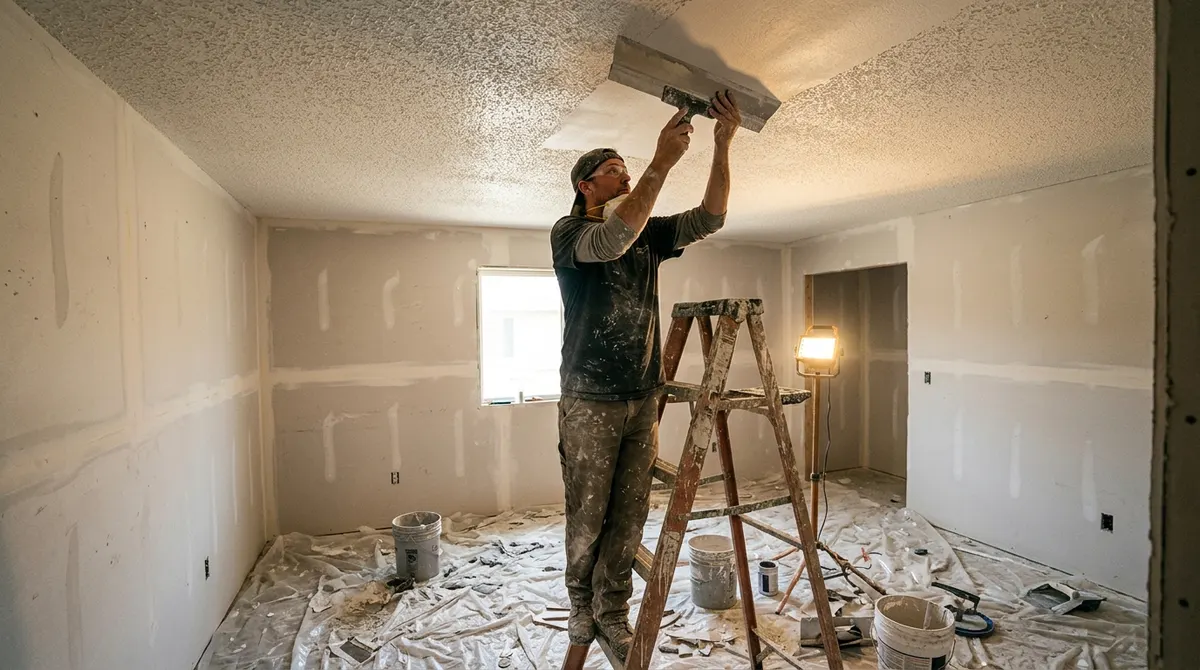
- Cover floors and walls with plastic and tape.
- Prime the ceiling so texture sticks evenly.
- Mix joint compound to the right thickness for your texture.
- Apply with a hopper gun, roller, brush, or trowel depending on the style.
- Flatten or shape (for knockdown, wait 10–15 minutes until the gloss fades).
- Let it dry fully, then prime and paint with flat ceiling paint.
Textured vs Smooth Ceilings
Pros
- Texture hides drywall flaws and costs less to finish
- Faster to complete
- Can add warmth and character
Cons
- Harder to clean and patch invisibly
- Some styles look dated
- Removing texture later is messy

How to Choose a Ceiling Texture
- Match the home’s style: smooth or light knockdown for modern; skip trowel or Spanish for rustic.
- Consider the drywall quality: uneven ceilings look better with heavier texture.
- Think about lighting: raking light from big windows exaggerates both texture and flaws.
- Match existing rooms for a consistent look throughout the house.
Planning to paint after texturing? Use our paint calculator to estimate how much ceiling paint you need.