

Your HVAC should move clean air throughout the house without needless strain. Maintaining the system regularly will make it run smoothly and in balance. Not to mention, it can help rooms feel balanced all year round. HVAC maintenance can be beneficial to a home’s comfort in the following ways:
Keep Temperatures More Consistent
Dirty filters, blocked vents and worn parts can cause reduced airflow into the system, with restricted heat circulation between rooms. Here is where furnace and duct cleaning comes in handy.
Support Better Indoor Air Quality
Your HVAC system is continually moving air indoors. So, the quality of this air can impact what’s moving around in your home. A clean filter will be able to pick up particles, and clean components will minimize the amount of accumulated dust that may circulate. Maintenance alone is not a solution to all indoor pollutants. But it can help maintain cleaner indoor air when used in conjunction with cleaner air.
Help Your System Run Smoothly
Many small HVAC issues can become more prominent when these units are not only in use for long periods of time, but also in extreme weather conditions. A technician can check the critical materials, inspect airflow and clean easily accessible parts, and build up an idea of their wear status before it starts to cause bigger performance issues. Proper maintenance could also minimize unnecessary cycling. Not to mention, it can ensure consistent heating or cooling performance.
Reduce Unwanted HVAC Noise
Even if it is a good temperature, an unusual noise can make a home less peaceful. Sometimes loose parts and limited airflow or parts that need to be cleaned up can cause rattling, buzzing or other sounds. Some sounds may need the expertise of a qualified technician for safe diagnosis. However, regular inspections can help identify these problems early on.
Use Energy More Wisely
If your HVAC unit has to work harder than it needs, it could consume more energy to perform. Filters are just some of the elements that can be maintained when necessary. But this depends on the system type. Energy bills aren’t necessarily lower when systems are maintained, but an efficient system using them will not have to operate inefficiently and will get to the desired temperature by making fewer unnecessary attempts.
To sum up, a well-functioning HVAC system is key to maintaining home comfort all day. Worn cord Wi-Fi or equipment can’t just decrease the airflow. It can also help homeowners realize that there is a problem before the situation becomes worse. With proper maintenance, your HVAC unit can help create a more comfortable indoor environment all year long. Comfort can be easier to sustain with attention paid to it throughout the year.
A Simple HVAC Maintenance Schedule
Most of the comfort benefits above come from a handful of small, regular tasks. Here is a schedule that works for most homes:
- Every 1–3 months: Check and replace the air filter. Homes with pets, allergies, or nearby construction should check monthly.
- Every spring: Rinse dirt and leaves off the outdoor condenser coil, clear two feet of space around the unit, and book a cooling tune-up.
- Every fall: Book a heating tune-up so the technician can check the burners, flame sensor, heat exchanger, and safety controls before cold weather.
- A few times a year: Pour a cup of white vinegar into the AC condensate drain line to prevent algae clogs and water leaks.
- Once a year: Test your carbon monoxide detectors and replace the batteries.
What Happens During a Professional Tune-Up?
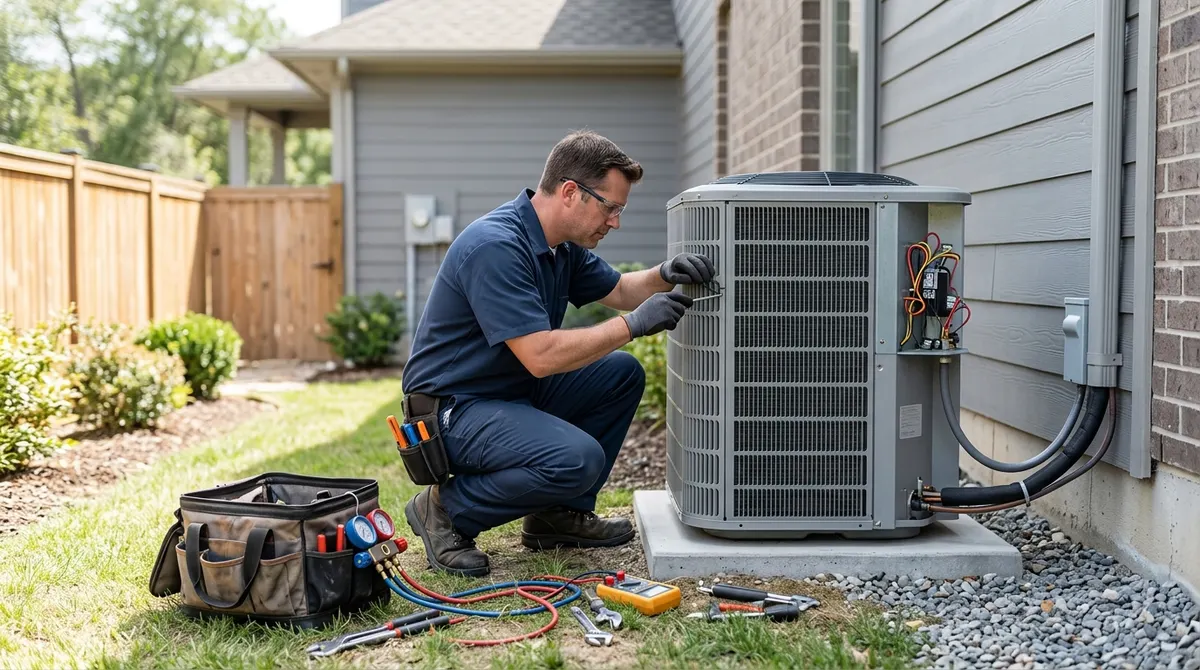
A typical tune-up takes about an hour. The technician usually cleans the blower and coils, checks refrigerant pressure, tightens electrical connections, tests capacitors and motors, lubricates moving parts where needed, measures airflow and temperature difference, and confirms the thermostat is working correctly. Ask for a written checklist so you know exactly what was done.
DIY Tasks vs. When to Call a Pro
Changing filters, keeping vents open, cleaning around the outdoor unit, and flushing the drain line are safe for homeowners. Leave refrigerant work, gas valves, electrical components, and anything inside the furnace cabinet to a licensed technician. Refrigerant handling in the U.S. legally requires EPA certification.


