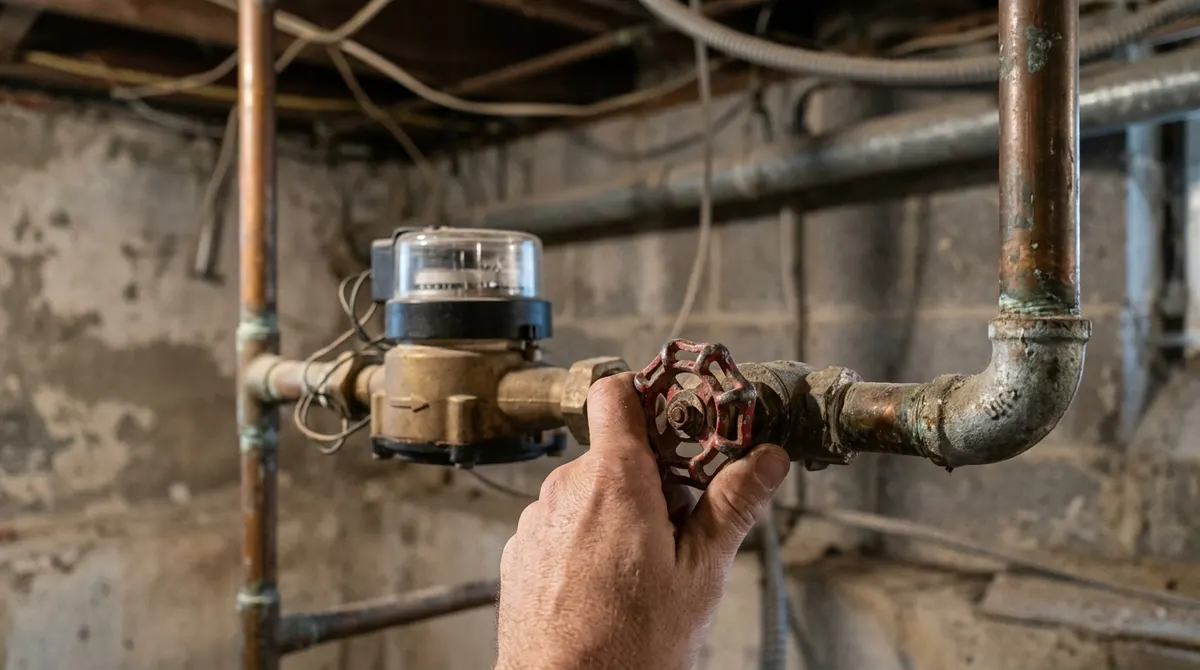
If a pipe breaks, shut off your main water valve immediately, then turn off electricity to any area where water is near outlets, appliances or the panel—only if you can reach the breaker without standing in water. Open faucets to drain the lines, move valuables, photograph the damage and call a licensed plumber. A repair clamp or push-fit coupling can hold a small break temporarily, but burst lines usually need a permanent repair.
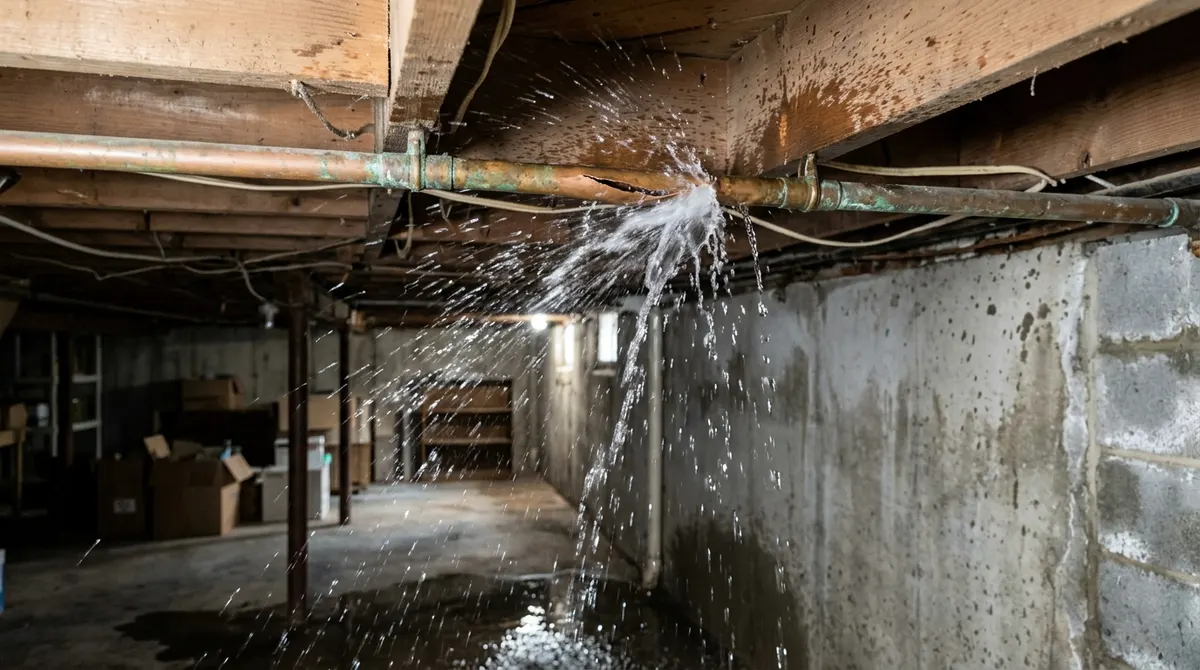
What to Do Immediately
- Shut off the main water valve. It is usually where the water line enters the house—basement, crawl space, utility room, near the water heater, or in a meter box outside.
- Turn off power to wet areas at the breaker if it’s safe to do so.
- Turn off the water heater (set gas to pilot/off or switch off the breaker) once the supply is off.
- Open the lowest cold faucets and flush toilets to drain the system, then open hot taps.
- Mop, wet-vac and move furniture, rugs and electronics out of the water.
- Photograph everything for insurance before you throw anything away.
- Call a licensed plumber; call a water restoration company for significant flooding.
Common Causes of Broken Pipes
| Cause | Signs | Prevention |
|---|---|---|
| Freezing | No water from a tap in cold weather, frost on pipe | Insulate pipes, drip faucets, keep heat at 55°F+ |
| High water pressure | Banging pipes, leaking fixtures | Keep pressure 40–80 psi; install a regulator |
| Corrosion / age | Discolored water, pinhole leaks, green or rust stains | Inspect and replace old galvanized or polybutylene lines |
| Physical damage | Leak after drilling or nailing | Use a stud finder and check before drilling |
| Tree roots / ground shift | Wet yard, sewage odor, high bill | Camera inspection by a plumber |
Temporary Fixes Until the Plumber Arrives
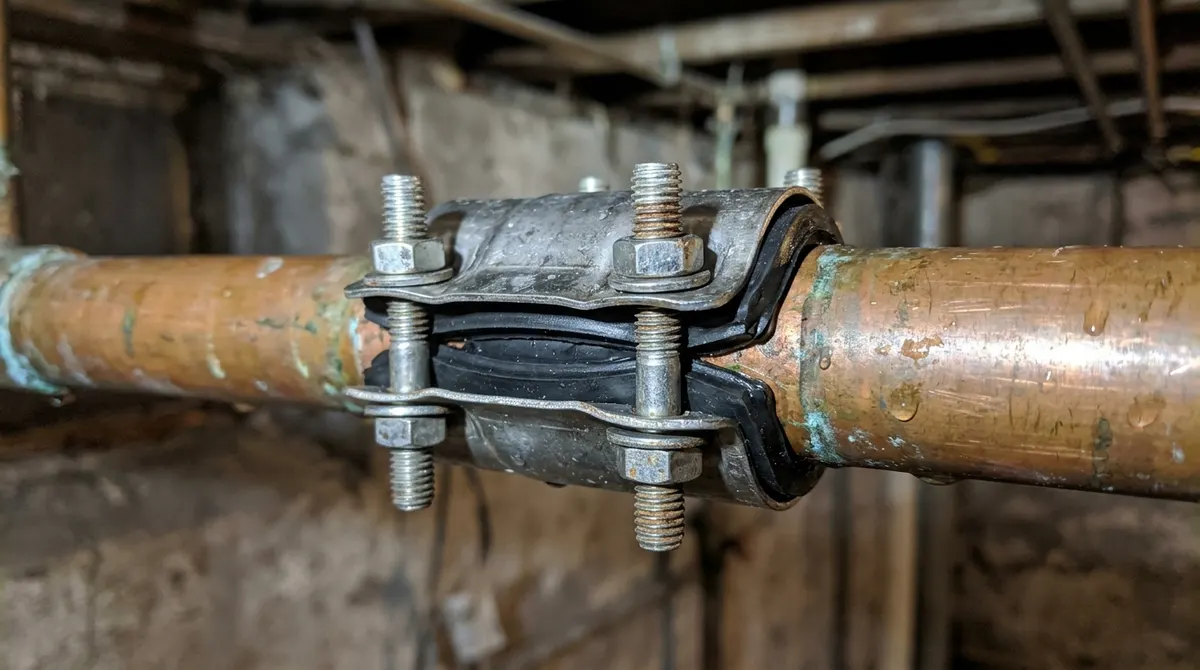
- Pipe repair clamp: center the rubber pad over the leak and tighten the bolts.
- Push-fit (push-to-connect) coupling: cut out the damaged section and push the fitting onto clean, deburred pipe ends; check that it’s rated for your pipe type.
- Epoxy putty or silicone repair tape for pinhole leaks.
- Never use an open flame to thaw a frozen pipe—use a hair dryer or heat tape.
After the Leak: Prevent Mold
The EPA advises drying water-damaged materials within 24–48 hours to help prevent mold growth. Run fans and dehumidifiers, remove soaked carpet pad and insulation, and open walls if drywall stayed wet.
DIY Fix vs Calling a Plumber
Pros
- DIY clamps and push-fit fittings buy time
- Shutting off water quickly limits damage
- Homeowners insurance often covers sudden bursts
Cons
- Hidden leaks inside walls need a pro
- Wrong fittings can blow off under pressure
- Gradual leaks are often not covered by insurance
While the water is off, learn how to flush a toilet when the water is off. For cleanup, read does vinegar kill black mold.