To flush a toilet when the water is off, pour 1 to 2 gallons of water quickly and steadily into the bowl from waist height—the rush of water triggers the siphon and the toilet flushes. Or, lift the tank lid, fill the tank to the fill line (about 1.6 gallons on newer toilets) and press the handle as usual. Pouring into the bowl uses less water; filling the tank gives a normal flush.
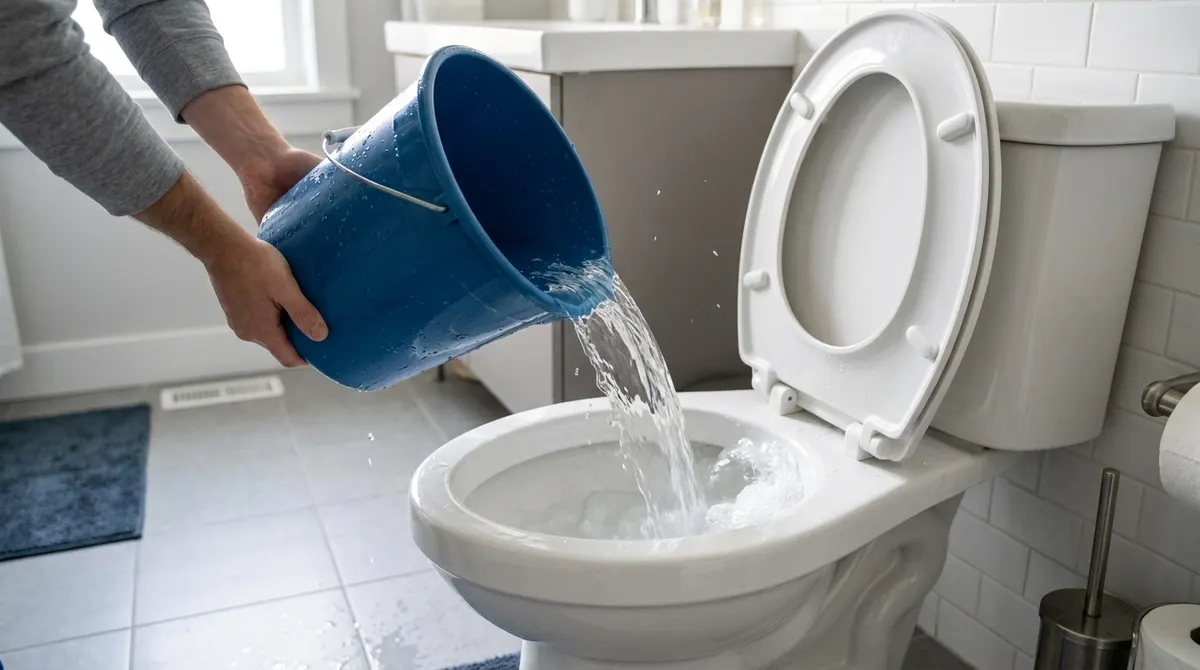
Method 1: Pour Water Into the Bowl (Bucket Flush)
- Fill a bucket with 1–2 gallons of water (bath water, rain water or pool water is fine).
- Lift the seat to avoid splashing.
- Pour in one smooth, fast motion, aiming at the drain opening at the bottom of the bowl.
- Stop once you hear the gurgle of the flush—waste should go down.
- Add a little more water afterward to refill the bowl so sewer gas stays out.
Method 2: Fill the Tank
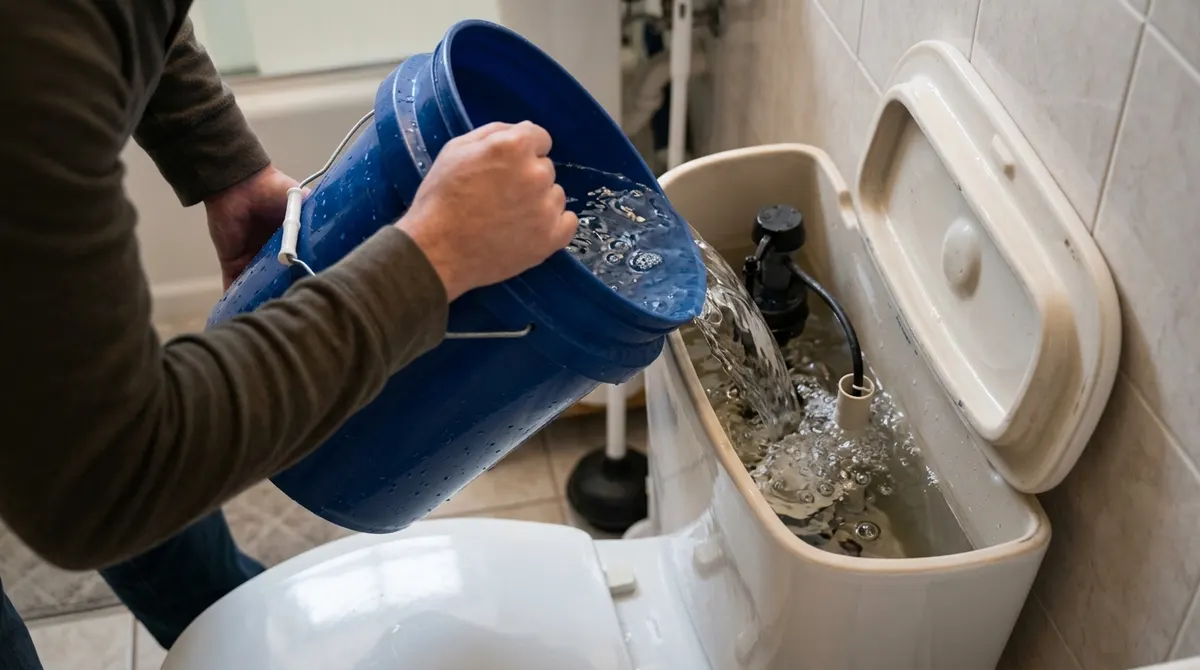
- Remove the tank lid and set it down somewhere safe—it’s heavy and breaks easily.
- Pour water into the tank until it reaches the fill line or about an inch below the overflow tube.
- Press the handle. The toilet flushes as usual.
How Much Water Do You Need?
| Toilet type | Water per flush |
|---|---|
| Modern (1994+) | 1.28–1.6 gallons |
| Older toilets | 3.5–7 gallons |
| Bowl (bucket) flush | About 1–2 gallons |
Save water: During a long outage, follow “if it’s yellow, let it mellow” and only flush solids. Keep the lid closed to control odors.
Mistakes to Avoid
- Pouring too slowly—the water just raises the bowl level without flushing.
- Using water that contains sand, gravel or debris in the tank—it can damage the flapper and fill valve.
- Flushing during a sewer backup or when the city has asked residents not to use drains.
- Flushing wipes or large amounts of paper with minimal water—it can clog the line. See toilet won’t unclog.
Bucket Flushing: Pros and Cons
Pros
- Works with any gravity toilet
- Can use non-drinking water
- No tools needed
Cons
- Heavy buckets to carry
- Splashing if poured carelessly
- Pressure-assist toilets may not flush the same way
Prepare for the Next Outage
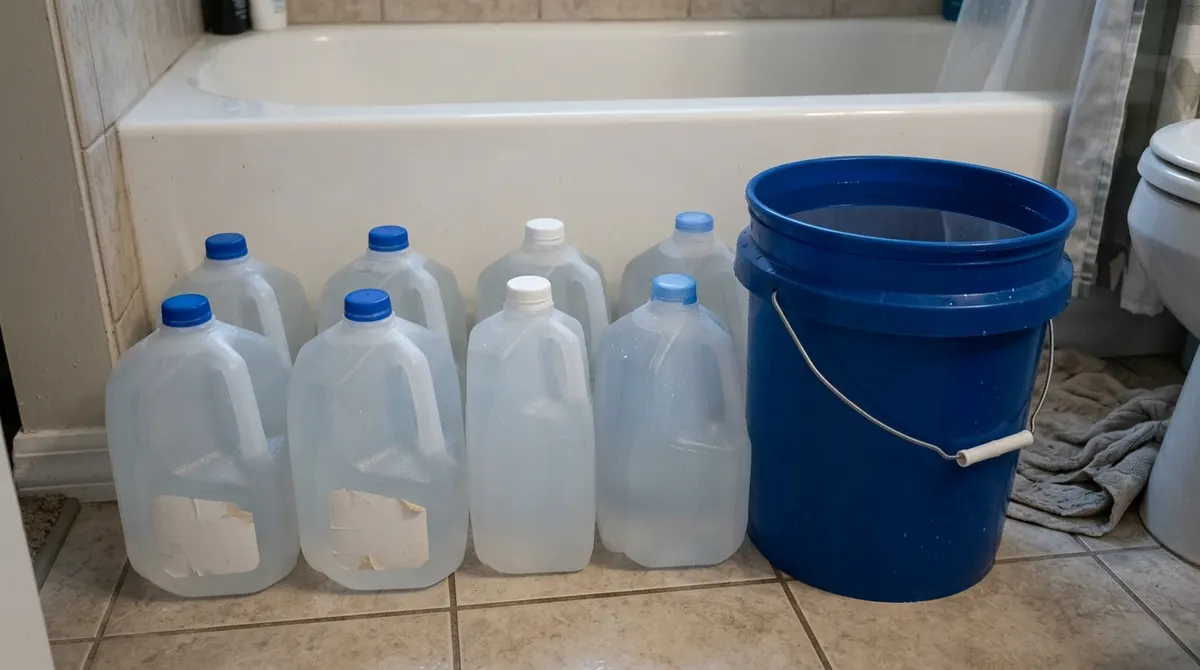
Before a planned shutoff or storm, fill the bathtub and a few buckets for flushing. If your toilet keeps running once water returns, it may need a new valve—see how to replace a toilet fill valve.
Frequently Asked Questions
Can you flush a toilet if the water is shut off?
Yes. Gravity toilets flush whenever enough water enters the bowl quickly. You just have to supply the water yourself with a bucket.
How many gallons of water does it take to flush a toilet manually?
About 1–2 gallons poured into the bowl, or 1.6 gallons in the tank of most modern toilets.
Can I use dirty water to flush a toilet?
Yes—gray water like used bath or dishwater works when poured into the bowl. Avoid putting gritty water in the tank.
Can I flush my toilet during a power outage?
On city water, usually yes. On a well with an electric pump, you’ll need to bucket-flush. Homes on sewage ejector pumps should limit flushing until power returns.
Why won’t my toilet flush when I pour water in?
You’re probably pouring too slowly. Pour faster from about waist height, aiming at the drain hole.