A basement French drain (interior drain tile) is a perforated pipe laid in a gravel-filled trench around the inside edge of the basement floor. It collects water that seeps in through the walls and floor joint and carries it to a sump pump, which pumps it outside. It’s one of the most reliable fixes for a wet basement caused by groundwater and hydrostatic pressure, though it’s a big job that usually costs several thousand dollars.
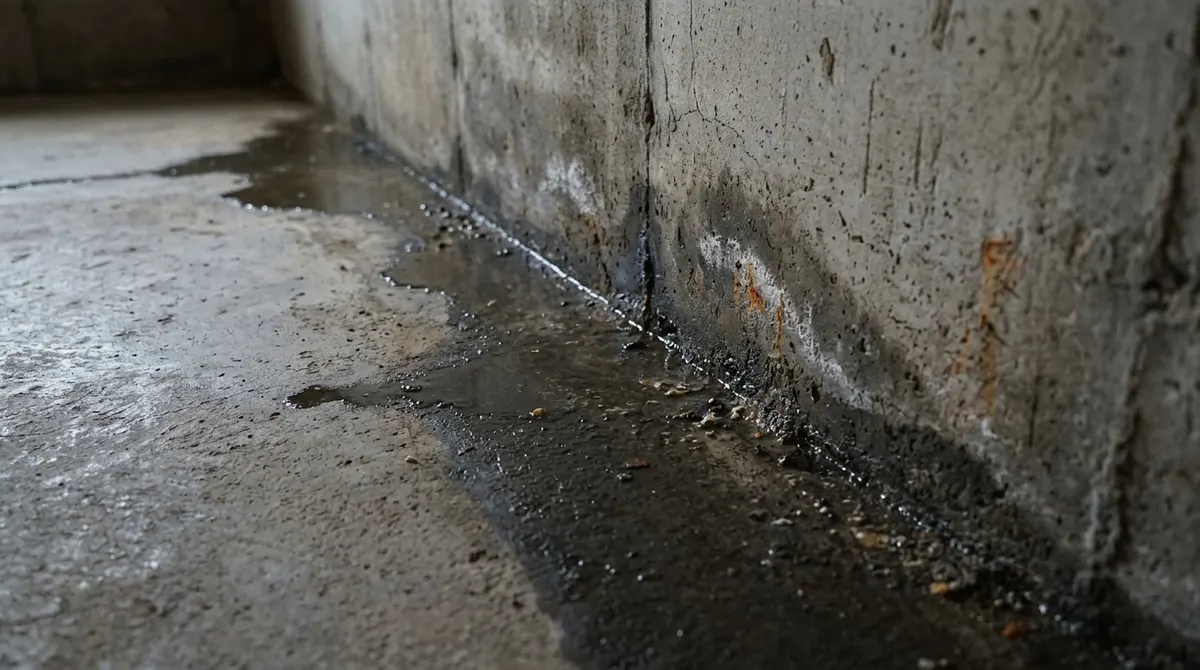
How Does a Basement French Drain Work?
- Water in the soil pushes against your foundation (hydrostatic pressure).
- It finds its way through the joint between the wall and floor, or through cracks.
- The French drain sits at that joint, below the floor, and catches the water before it spreads across the floor.
- The perforated pipe carries water to a sump pit, and the sump pump discharges it away from the house.
Signs You May Need a French Drain
- Water pooling along the edges of the basement floor after rain
- Damp, musty smell or mold along the bottom of walls
- White, chalky deposits (efflorescence) on concrete walls
- Peeling paint or damaged flooring at the base of walls
- A high water table or a house built on a slope where water collects
How an Interior French Drain Is Installed
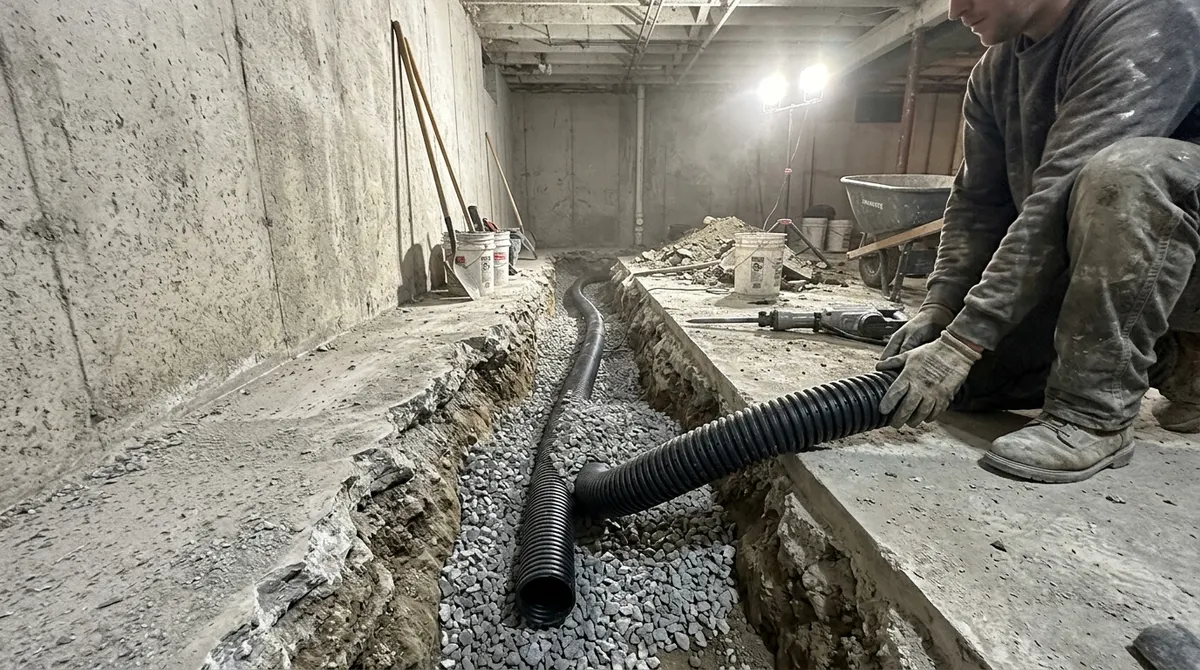
- Cut and remove a strip of concrete floor (about 12 inches wide) around the perimeter.
- Dig a trench about 8–12 inches deep, sloping toward the sump location.
- Add washed gravel and lay perforated pipe, often wrapped in filter fabric.
- Install a dimple membrane or wall flange so water running down walls drains into the system.
- Install a sump pit and pump, with a discharge line routed away from the foundation.
- Cover with gravel and re-pour concrete over the trench.
What Does a Basement French Drain Cost?
Costs vary widely by region, basement size, and site conditions. An interior system for a typical basement often runs into several thousand dollars, and more if a sump pump, battery backup, or finished-wall removal is needed. Exterior drains are usually more expensive because they require excavation around the foundation. Always get at least three written quotes. Use our renovation cost calculator to plan your budget.
Interior vs Exterior French Drain
| Interior drain | Exterior drain | |
|---|---|---|
| Where | Under the basement floor, inside | Outside, at the footing |
| Disruption | Concrete cutting indoors | Digging around the house |
| Typical cost | Lower | Higher |
| Stops water | After it enters the wall | Before it reaches the wall |
| Best for | Existing homes with seepage | New builds or full excavation projects |
Pros and Cons of a Basement French Drain
Pros
- Very effective against groundwater seepage
- Works year-round without needing outdoor excavation
- Makes it possible to finish the basement
- Can raise home value and buyer confidence
Cons
- Expensive and disruptive to install
- Depends on a sump pump and power (add a battery backup)
- Doesn’t stop water from soaking the wall itself
- Can clog over time without a filter fabric
Keep the System Working

- Test the sump pump every few months by pouring water into the pit.
- Install a battery backup or water-powered backup pump.
- Keep the discharge line clear of ice and debris.
- Run a dehumidifier to control remaining moisture—see our dehumidifier size calculator.