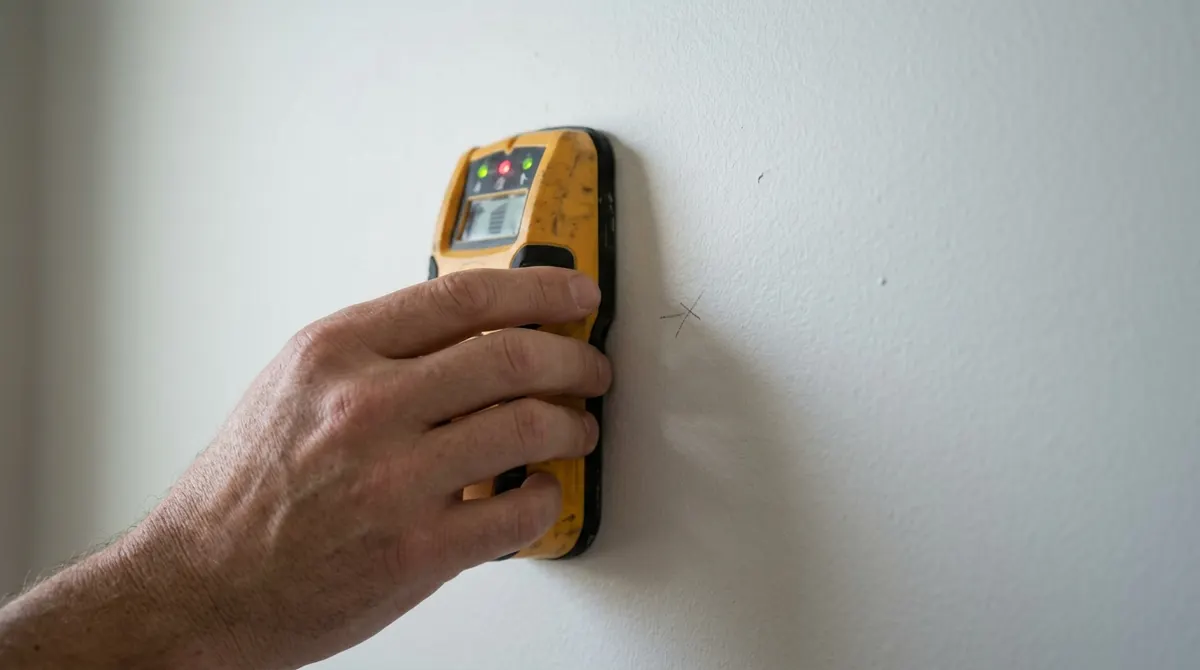
To find a stud in a wall, slide an electronic stud finder slowly across the wall and mark both edges where it beeps, or use a strong magnet to locate the drywall screws or nails that are fastened into the studs. Most studs are spaced 16 inches apart (sometimes 24 inches) center to center, so once you find one, measure over to find the next. Confirm with a small nail or pilot hole before hanging anything heavy.
How Far Apart Are Wall Studs?
- 16 inches on center is the most common spacing in modern U.S. homes.
- 24 inches on center is used in some newer homes and exterior walls.
- Older homes can be irregular.
- Studs are usually 1½ inches wide (a “2×4” is actually 1½ × 3½ inches).
- There’s almost always a stud on each side of windows and doors, and at wall corners.
Method 1: Use an Electronic Stud Finder
- Calibrate it by holding it flat on the wall and pressing the button (per the instructions).
- Slide it slowly and level across the wall.
- Mark where it signals the first edge, then approach from the other side and mark the second edge.
- The center between your marks is the center of the stud.
- Check a few spots up and down to make sure it’s a stud, not a pipe or wire.
Method 2: Use a Magnet
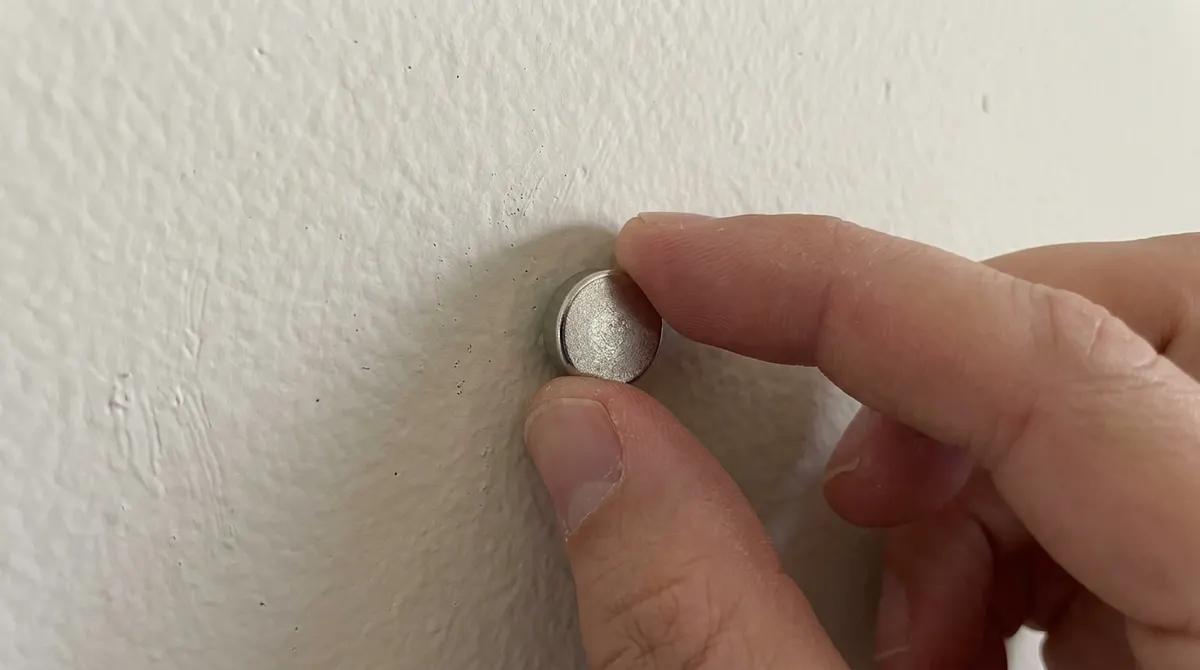
A strong neodymium magnet (or a magnetic stud finder) sticks to the hidden drywall screws or nails. Move it slowly in a zigzag pattern; when it clings, you’ve found a fastener—and a stud. Find a couple of screws in a vertical line to confirm.
Method 3: How to Find a Stud Without a Stud Finder
- Outlets and switches: electrical boxes are usually attached to the side of a stud. Remove the cover (turn off power first) or tap beside it.
- Baseboard and trim nails: nail holes or filled dimples in baseboards often line up with studs.
- Knock on the wall: a hollow sound means empty space; a duller, solid sound suggests a stud.
- Measure from a corner: measure 16 inches from a corner and check that spot.
- Look in good light: shine a flashlight across the wall at a low angle to see slight dimples from screws.
Confirm the Stud Before Drilling
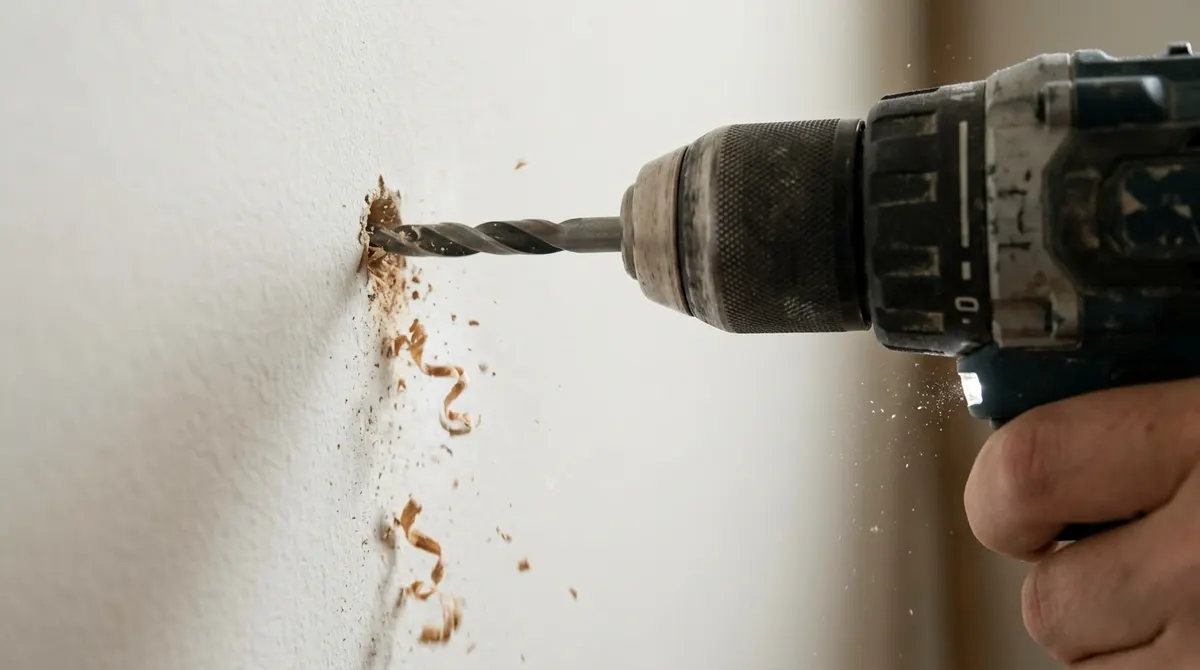
- Drive a thin finishing nail or drill a small pilot hole where the stud should be, ideally where it will be hidden by the item you’re hanging.
- If it bites into wood, you’ve found the stud. If it slides in easily, move over slightly and try again.
- Avoid drilling directly above or below outlets and switches, where wires run.
Stud Finder vs No-Tool Methods
Pros
- Stud finders are fast and show stud edges
- Magnets are cheap and very reliable on drywall
- No-tool tricks work in a pinch
Cons
- Electronic finders can be fooled by pipes, wires or thick plaster
- Knocking is guesswork
- Plaster and lath walls are harder for all methods
What If You Can’t Find a Stud?
For lighter items, use the right drywall anchor—plastic expansion anchors, self-drilling anchors, or toggle bolts for heavier loads. Check the anchor’s weight rating. For TVs, cabinets, and heavy shelves, always fasten into studs or add blocking.