

A door silencer is a small rubber or vinyl bumper set into the door stop on the frame. It cushions the door when it closes, stops rattling and keeps light pressure on the latch. To install one, drill a hole of the right diameter in the stop (or use a stick-on pad) and press the silencer in—typically three on the latch-side jamb. It is a quick, cheap fix for noisy interior and commercial doors.
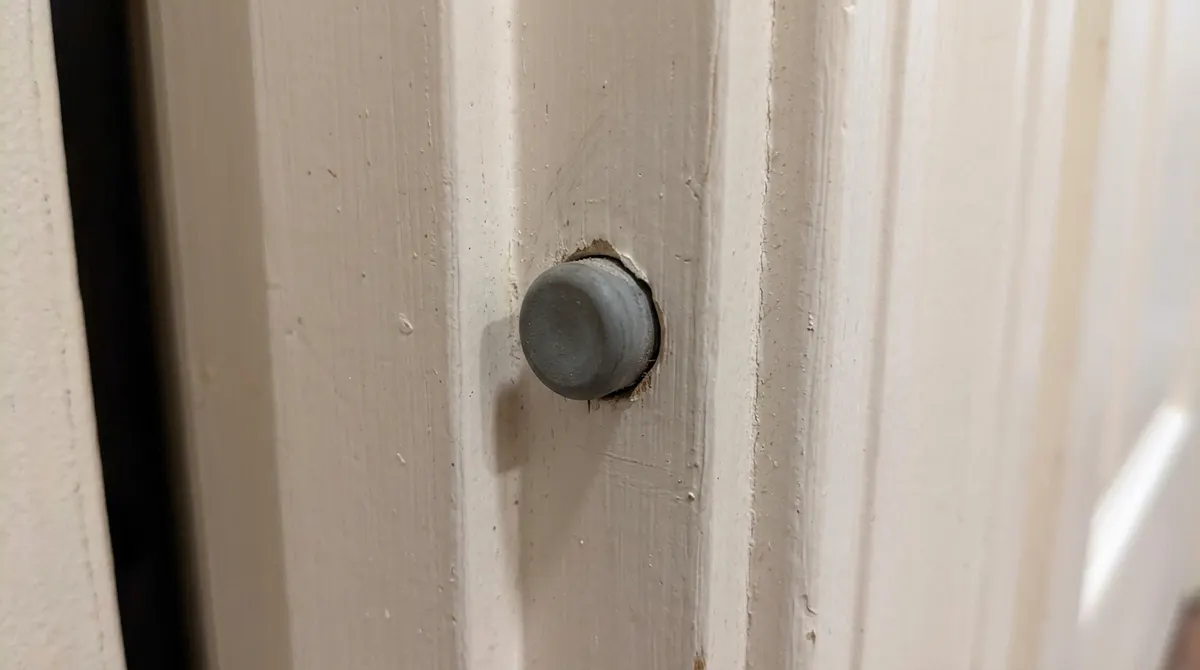
Tip: Most silencers need about 1/8 inch of clearance between the door face and the stop, so the door compresses the bumper slightly without binding.
Types of Door Silencers
| Type | Frame | Install | Best for |
|---|---|---|---|
| Press-in (metal frame) | Hollow metal | Push into pre-punched holes | Commercial doors |
| Drill-in (wood frame) | Wood stop | Drill hole, tap in | Homes, offices |
| Adhesive pad | Any smooth surface | Peel and stick | Light interior doors, cabinets |
| Felt or foam bumpers | Any | Peel and stick | Quiet closets and cabinets |
Where to Put Door Silencers
- Single door: three on the latch (strike) jamb stop—near top, middle and bottom.
- Pair of doors: two on the head stop for each leaf.
- Keep them a few inches from the strike plate so they don’t interfere with the latch.
How to Install a Drill-In Door Silencer
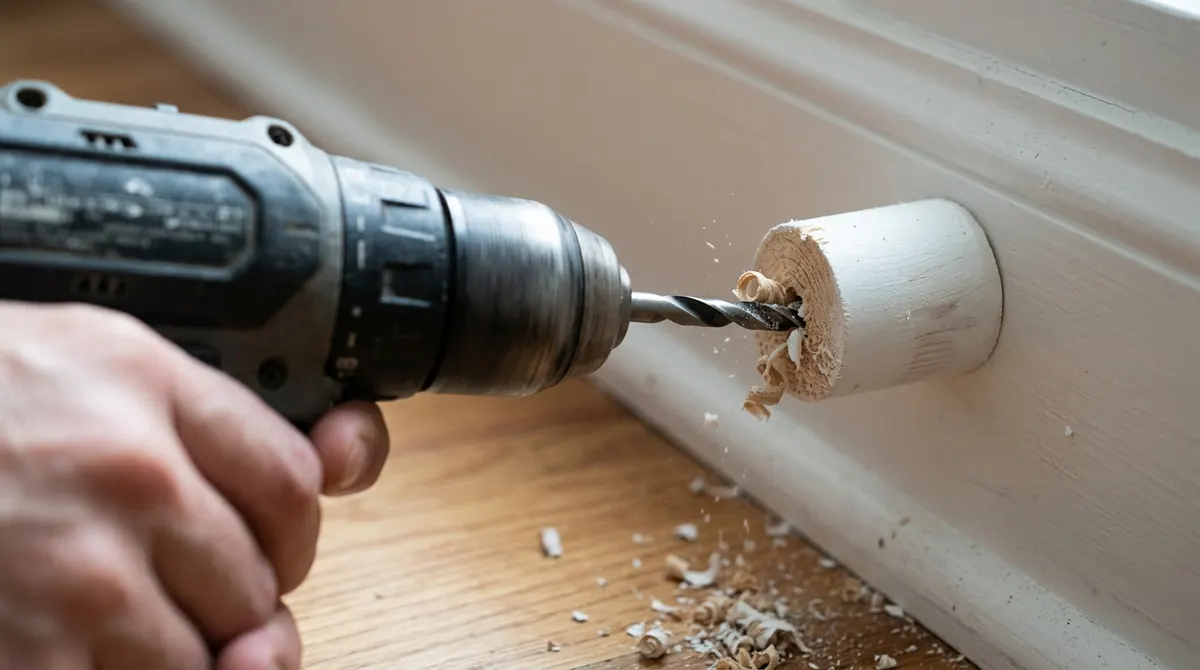
- Close the door and mark the contact line on the stop at each location.
- Check the product label for hole size (often 1/4 in. for wood types; some metal-frame styles use 3/8 in.).
- Drill straight into the stop to the specified depth.
- Tap the silencer in with a rubber mallet until the head sits flush or at its designed projection.
- Close the door: it should latch easily with no rattle. Adjust the strike if it’s too tight.
How to Install Adhesive Silencers
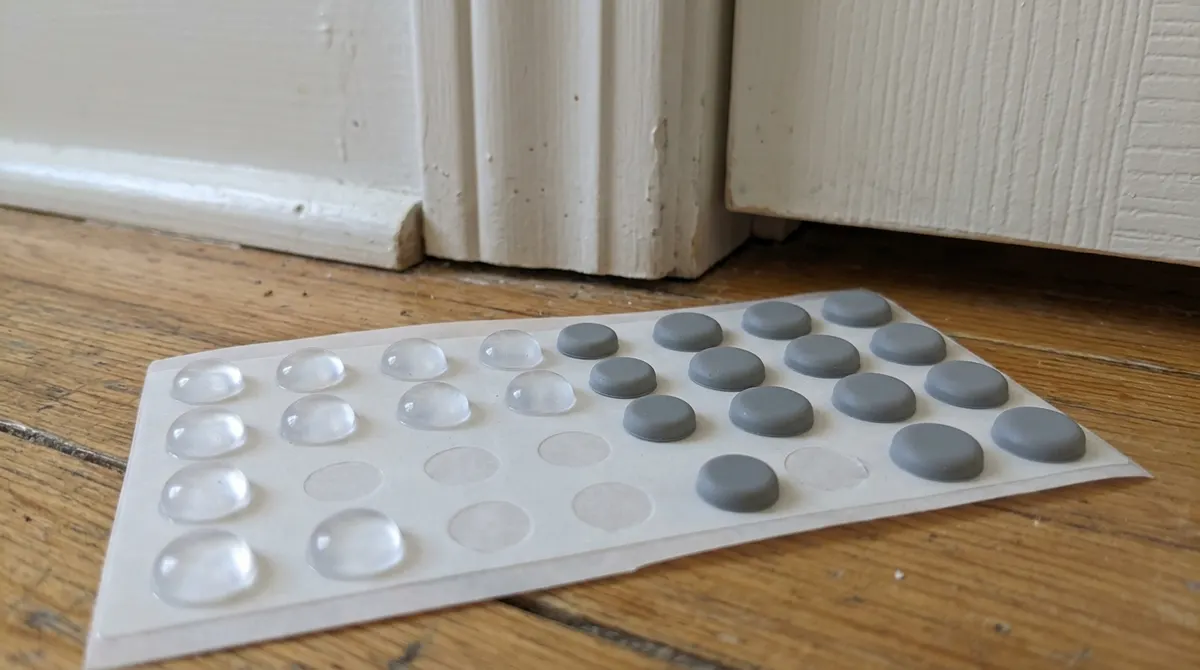
- Clean the stop with rubbing alcohol and let it dry.
- Peel the pad and press it firmly at the contact point for 30 seconds.
- Wait a few hours before slamming the door so the adhesive cures.
Door Silencers at a Glance
Pros
- Costs a few dollars
- Stops slamming and rattling
- Protects paint and frames
Cons
- Adhesive pads can fall off
- Wrong size can stop the door latching
- Rubber wears and hardens over years
Door still won’t latch? See how to unlock a door knob and learn how to read door handing in right-hand swing door.
Frequently Asked Questions
What does a door silencer do?
It cushions the closing door, reduces noise and keeps the door snug against the latch so it doesn’t rattle.
How many silencers does a door need?
Typically three for a single door on the latch side and two per leaf at the head for double doors.
Are door silencers required?
Many commercial hardware specifications include them, but they aren’t required on most home doors.
Can I replace a worn door silencer?
Yes. Pry out the old one with a small screwdriver and press a new one of the same size into the hole.
Do door silencers help with soundproofing?
They reduce slam and rattle noise but do not block sound through the door. Use weatherstripping and a door sweep for that.


