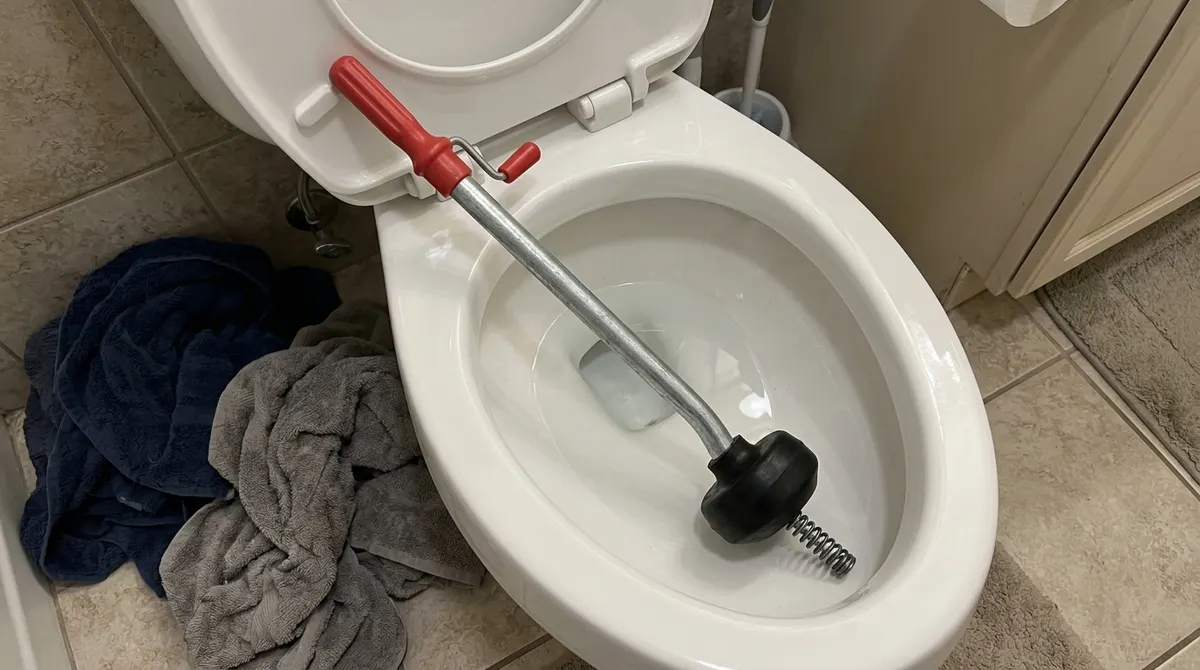
To use a toilet auger, pull the handle up so the cable is retracted, set the curved, rubber-guarded end in the bottom of the bowl aimed into the drain, then push down while cranking the handle clockwise until the clog gives way. Retract the cable while still turning, then flush to test. A toilet (closet) auger reaches about 3–6 feet, enough to clear most clogs in the toilet’s built-in trap without removing the toilet.
What You’ll Need
- Toilet (closet) auger, 3 ft or 6 ft
- Rubber gloves and eye protection
- Old towels and a bucket
- Flange plunger (try this first)
Toilet Auger vs Other Tools
| Tool | Best for | Use on toilets? |
|---|---|---|
| Flange plunger | Soft clogs from paper and waste | Yes, try first |
| Toilet auger | Stubborn trap clogs, small objects | Yes, designed for it |
| Drum or sink snake | Sink and tub drains | No, exposed cable scratches porcelain |
| Chemical drain cleaner | Not recommended | No, can damage pipes and splash |
How to Use a Toilet Auger Step by Step
- Lay towels around the toilet. If the bowl is full, bail some water into a bucket.
- Pull the handle up so the cable is fully retracted into the tube.
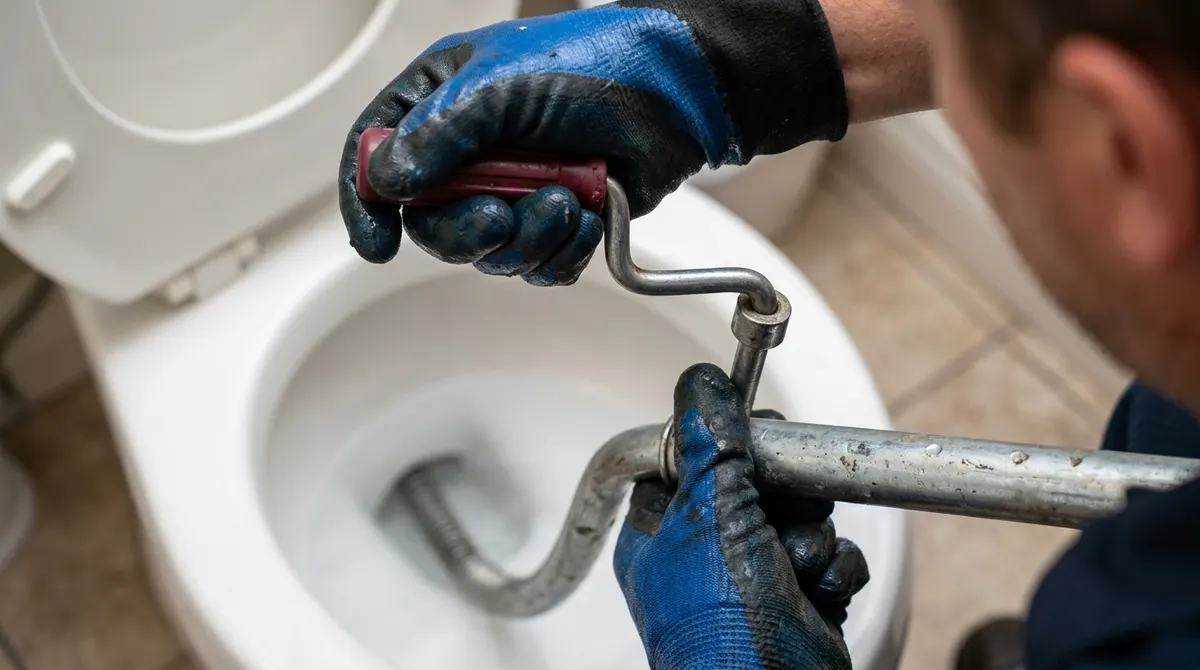
- Place the bent end in the bowl, boot resting on the porcelain, tip aimed into the drain opening.
- Push the handle down slowly while cranking clockwise. The cable will snake through the trap.
- When you hit resistance, keep cranking and gently push and pull to break up or hook the clog.
- Once the handle reaches the tube, keep cranking while pulling the cable back up.
- Flush to test. Repeat if the water still drains slowly.
After You’re Done
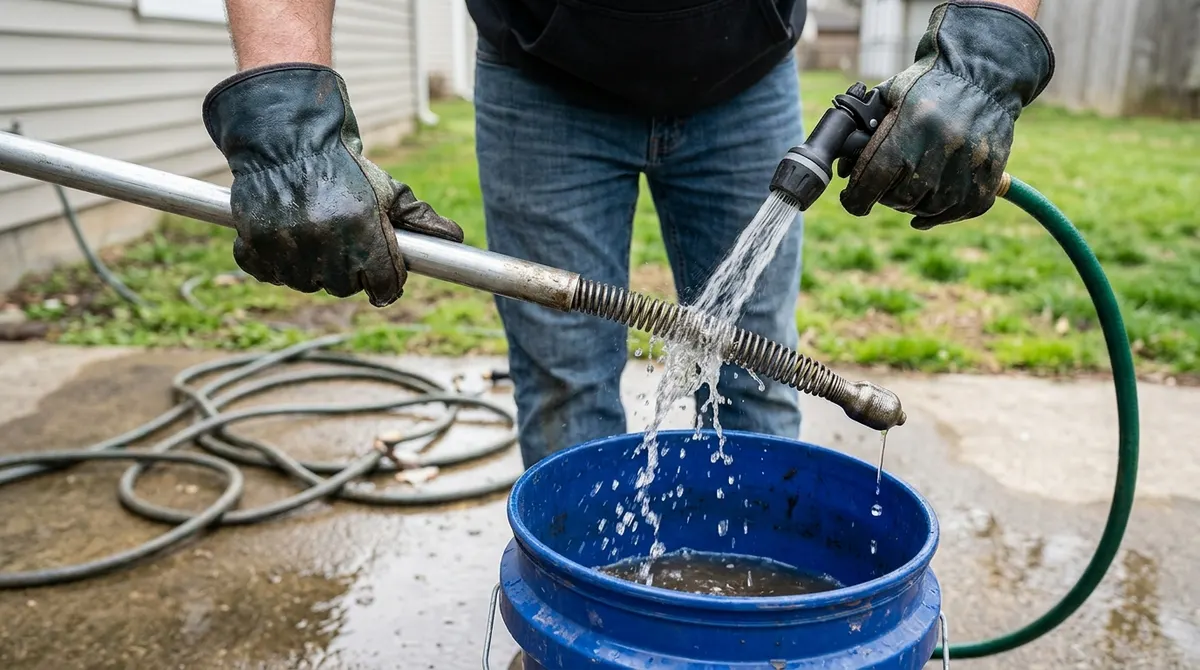
Rinse the cable with hot water, wipe it dry, and store the auger upright. If the clog is a toy or hard object you can’t retrieve, the toilet may need to be pulled off the flange.
DIY Auger vs Calling a Plumber
Pros
- A basic toilet auger costs about $20–$50
- Clears most trap clogs in minutes
- No risk of chemical splashes
Cons
- Only reaches a few feet
- Won’t fix main sewer line blockages
- Forcing it can scratch or crack porcelain
If several drains back up at once, the problem is likely the main line—call a plumber. More help: toilet won’t unclog and bathtub drain clogged.