

To clean a lawn mower carburetor, let the engine cool, disconnect the spark plug wire, and remove the air filter. For mild problems, spray carburetor cleaner into the intake and run the engine. For a mower that won’t start or surges, shut off or drain the fuel, remove the float bowl, take out the main jet, soak and spray the parts with carb cleaner, clear the jet holes, and reassemble with fresh fuel. Old ethanol-blend gas that sat over winter is the usual cause.
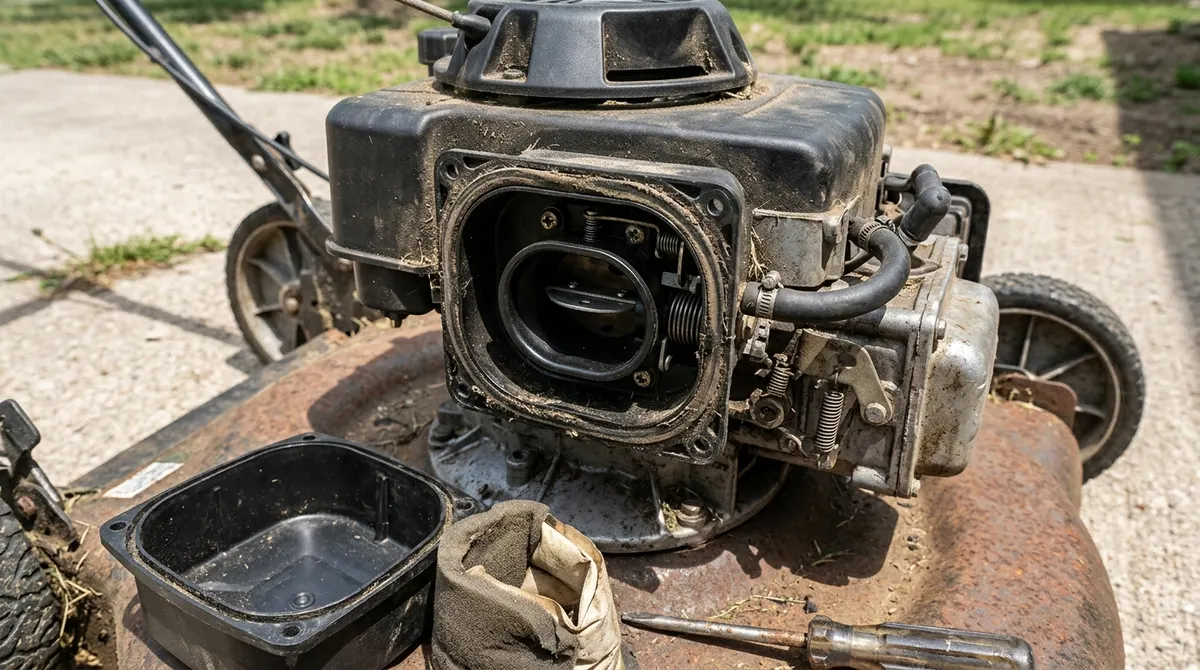
Safety: Gasoline vapor is highly flammable. Work outdoors with the engine cold, away from pilot lights, sparks and cigarettes. Disconnect the spark plug wire before working near the blade, wear safety glasses and nitrile gloves (carb cleaner stings eyes and skin), catch fuel in an approved container, and never tip a mower with the carburetor side down.
Signs Your Carburetor Needs Cleaning
- Mower won’t start or starts only with the choke on
- Engine surges or “hunts” up and down at full throttle
- Runs a few seconds then dies
- Black smoke or a strong fuel smell
- Gas has been sitting in the mower more than 30 days
Cleaning Methods Compared
| Method | Fixes | Time | Skill |
|---|---|---|---|
| Spray cleaner into intake | Light varnish, hard starting | 10 min | Easy |
| Remove bowl and clean jet (carb on engine) | Surging, no start from stale fuel | 30–45 min | Moderate |
| Full removal and soak | Heavy varnish, stuck float | 1–2 hours | Advanced |
| Replace carburetor | Corroded or damaged body | 30–60 min | Moderate |
How to Clean a Carburetor Without Removing It
- Disconnect the spark plug wire and remove the air filter.
- Spray carburetor cleaner into the carburetor throat in short bursts.
- Reconnect the plug wire, start the engine and let it run; repeat if it still hesitates.
How to Clean the Float Bowl and Jet
- Drain or shut off fuel. Close the fuel valve or pinch the fuel line, or siphon the tank into a gas can.
- Take photos of linkages and springs so you can reassemble them.
- Remove the bowl. Hold a rag under it and unscrew the bolt at the bottom (on many mowers this bolt is the main jet). Dump the old fuel into a container.
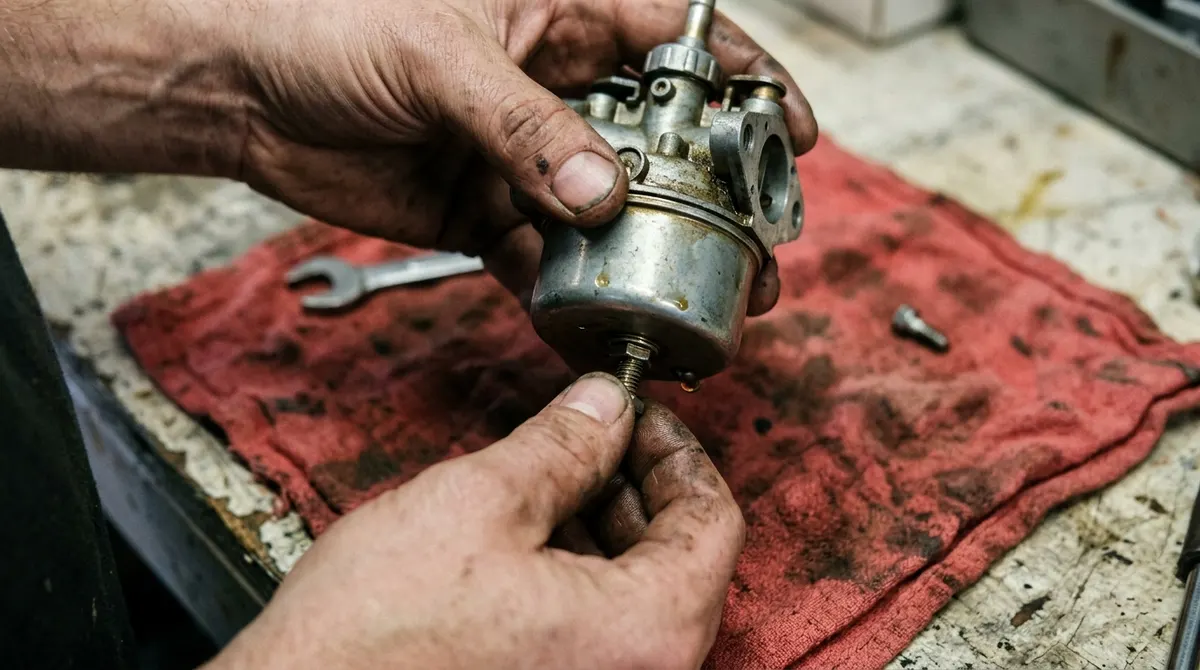
- Inspect the bowl. White crust or gummy varnish means stale fuel. Scrub it out with cleaner and a soft brush.
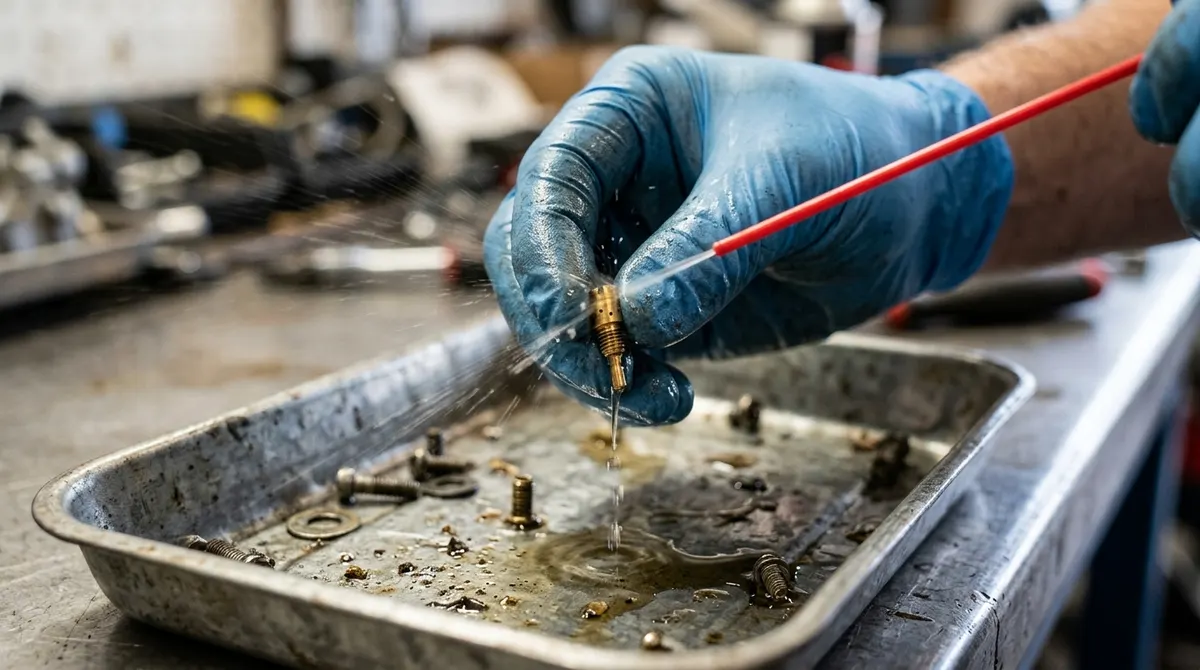
- Clean the jet. Spray cleaner through every hole in the jet/bowl bolt and clear them with a carb-cleaning wire or a single bristle. Don’t enlarge the holes with a drill bit.
- Check the float and needle. The float should move freely; a sticking needle causes flooding.
- Blow out passages with compressed air or more spray.
- Reassemble with the bowl gasket seated correctly, refit the air filter and fill with fresh fuel.
Clean vs Replace the Carburetor
Pros of cleaning
- A can of cleaner costs under $10
- Fixes most stale-fuel problems
- Keeps the original, well-matched part
Cons of cleaning
- Heavy corrosion may not clean up
- Tiny parts and gaskets are easy to lose or tear
- Replacement carbs are inexpensive and faster
How to Prevent Carburetor Problems
- Buy only the gas you’ll use within about 30 days
- Add fuel stabilizer to gas that will sit longer
- Before winter, run the mower dry or drain the bowl
- Use ethanol-free fuel if your area sells it
- Change the air filter each season
Frequently Asked Questions
Can I clean a lawn mower carburetor without taking it off?
Often, yes. Spraying cleaner into the intake and removing the bowl to clean the jet fixes most issues without unbolting the carburetor.
What can I use instead of carburetor cleaner?
Carb cleaner works best. In a pinch, fresh fuel and compressed air can clear light deposits, but avoid harsh solvents that harm gaskets.
Why does my mower surge after cleaning the carburetor?
A jet hole may still be partly blocked, the air filter may be missing, or there’s an air leak at a gasket. Recheck the jet and gaskets.
How often should I clean my mower carburetor?
Only when symptoms appear. Using fresh, stabilized fuel and draining it before storage prevents most problems.
Is gasoline safe to store in the garage?
Store small amounts in an approved, sealed gas can away from living spaces, heaters and appliances with pilot lights. See our generator guide for more fuel-safety tips.


