

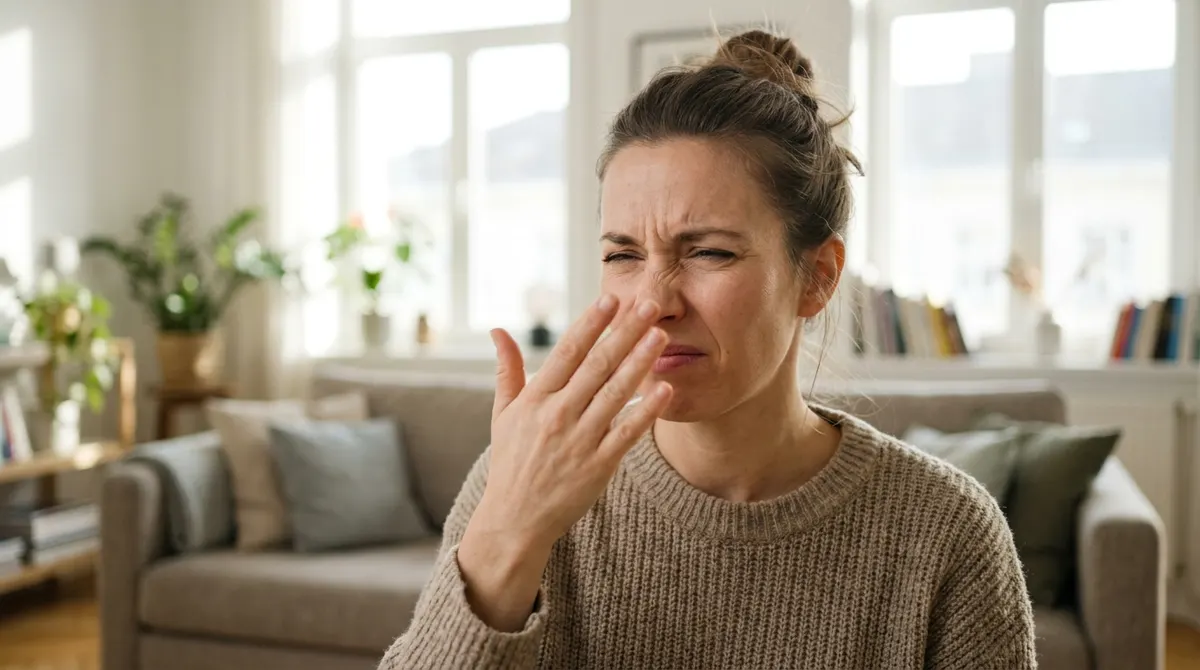
An ammonia smell in the house is most often caused by pet urine (especially cats), a hidden mouse or rat problem, mixing or overusing cleaning products, or a refrigerator or plumbing issue. Find the source by checking where the smell is strongest, clean urine with an enzyme cleaner (not ammonia or bleach), ventilate, and call a professional if you suspect rodents, a refrigerant leak, or a sewer problem.
8 Common Causes of an Ammonia Smell
1. Pet Urine
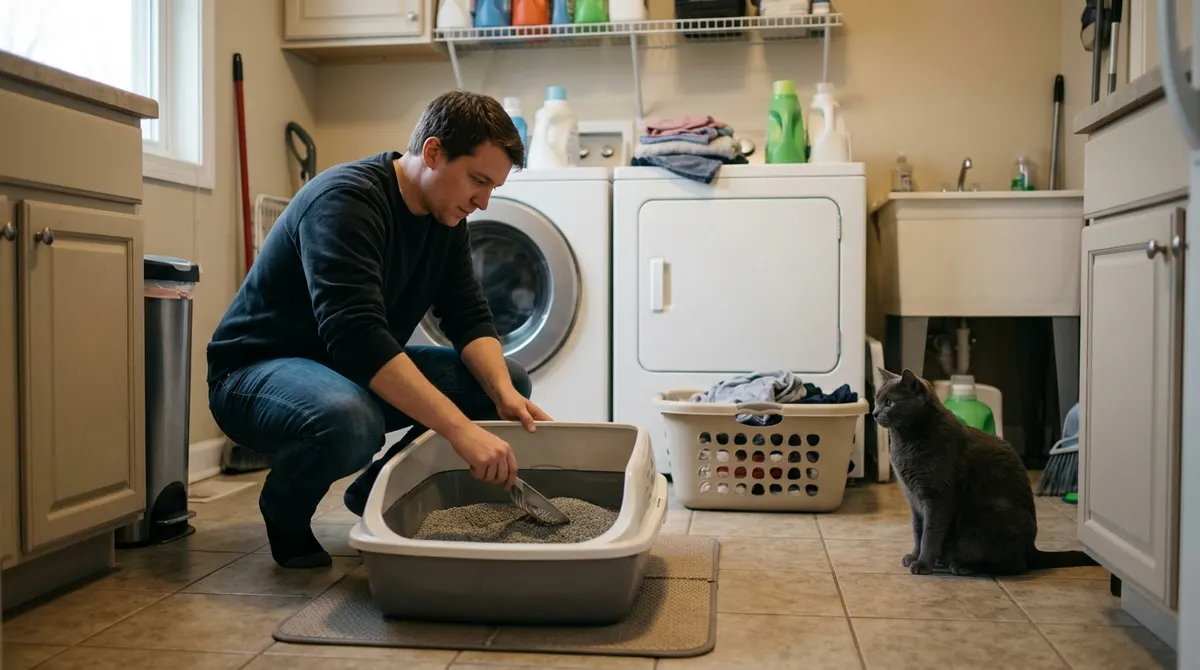
As urine breaks down, bacteria release ammonia. Cat urine is especially strong. Check litter boxes, carpets, rug pads, under furniture, and corners. A UV black light makes old urine stains glow in the dark.
2. Mice or Rats
Rodent urine smells strongly of ammonia, often in kitchens, pantries, attics, basements, or behind appliances. Look for droppings, gnaw marks, nesting material, or greasy rub marks along walls.
3. Cleaning Products
Glass cleaners and some all-purpose cleaners contain ammonia. Overuse or poor ventilation can leave a lingering smell.
4. Refrigerator Problems
Spoiled food, especially meat, fish, or eggs, can smell like ammonia. Some older refrigerators and RV fridges use ammonia as a refrigerant—a leak needs a technician right away.
5. Mold or Mildew
Mold usually smells musty, but some growth combined with damp, decaying material can give off a sharp, sour odor. Check under sinks, basements, and around windows.
6. Plumbing or Sewer Issues
A dry P-trap, a cracked sewer line, or a leaking septic system can bring sewer gases indoors. These usually smell more like rotten eggs, but can mix with an ammonia-like odor.
7. Laundry and Diapers
Damp towels, sweaty workout clothes, or a diaper pail can produce an ammonia smell as bacteria break down sweat and urine.
8. A Smell Only You Notice
If no one else can smell it and you notice it everywhere, including outside the home, talk to a doctor. Smelling ammonia can sometimes relate to sinus problems, diet, or other health conditions.
How to Get Rid of an Ammonia Smell
- Ventilate: open windows and run exhaust fans.
- Find and remove the source—spoiled food, soiled laundry, the litter box, or urine spots.
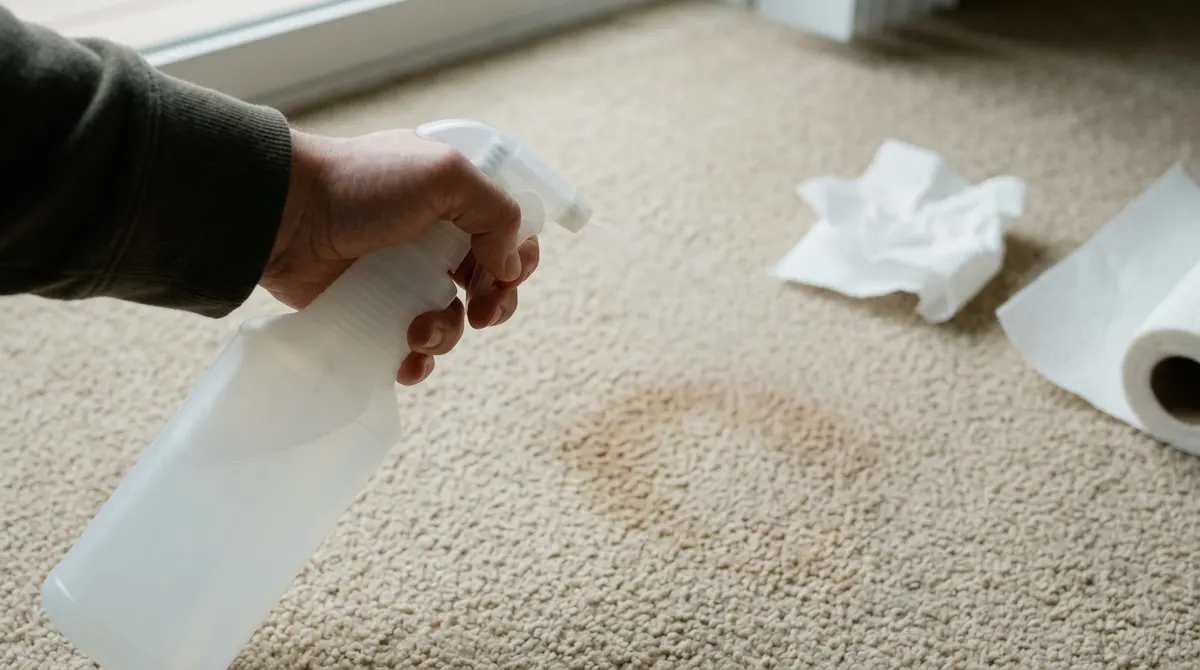
- Use an enzyme cleaner on urine. Soak the area, let it sit as long as the label says (often 10–15 minutes or more), then blot and let it air dry.
- Neutralize with vinegar and baking soda on hard surfaces: wipe with 1:1 white vinegar and water, then sprinkle baking soda on carpets, leave overnight, and vacuum.
- Deep clean soft furnishings: heavily soaked carpet pads or mattresses may need professional cleaning or replacement.
- Run an air purifier with an activated carbon filter in the affected room.
Enzyme Cleaner vs Home Remedies
Pros
- Enzyme cleaners break down the uric acid that causes lasting odor
- Vinegar and baking soda are cheap and safe on most surfaces
- Both are safer around pets than harsh chemicals
Cons
- Home remedies may only mask deep or old urine stains
- Enzyme cleaners need time to work and can’t be mixed with other cleaners
- Neither fixes rodent, refrigerant or sewer problems
When to Call a Professional
- You find signs of mice or rats—call a pest control company.
- You suspect an ammonia refrigerant leak from an appliance.
- The smell is near drains or outside near the septic area.
- The smell comes back after thorough cleaning.


