

Most GE dishwasher problems can be fixed by checking power and the circuit breaker, turning off Control Lock, doing a hard reset (switch off the breaker for about a minute), making sure the door latches fully, and cleaning the filter and spray arms. If it still won’t start, drain, or clean, the problem may be a faulty door switch, drain pump, or control board—check your model’s manual or GE Appliances support.
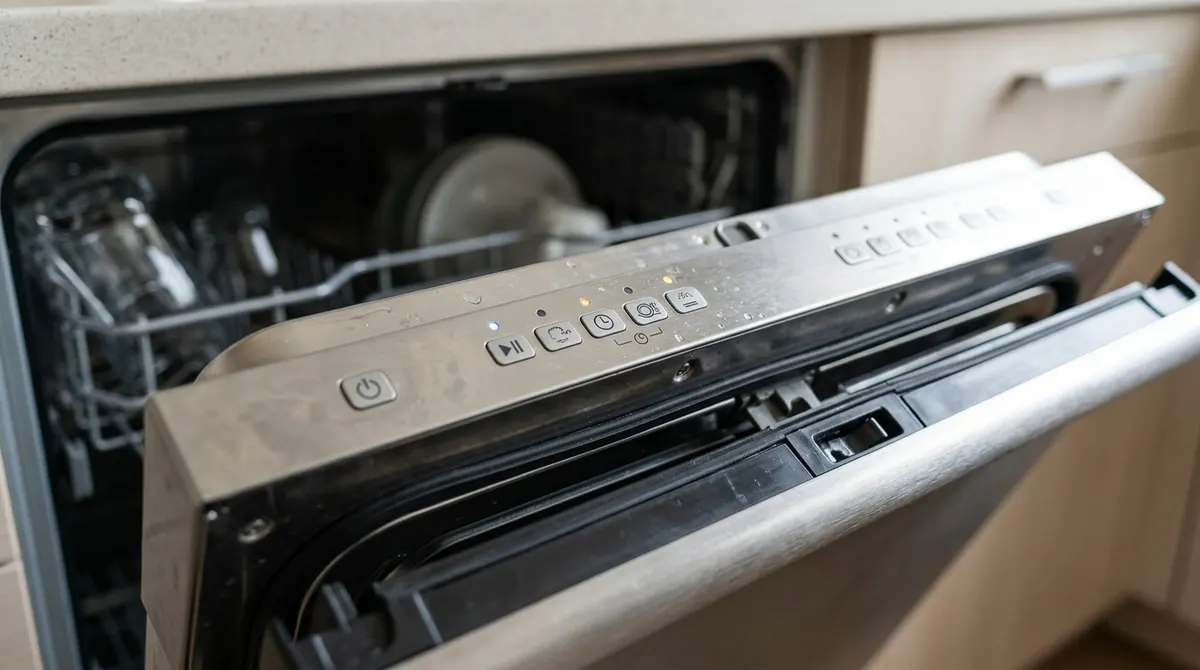
Common GE Dishwasher Problems and Fixes
| Problem | Try this |
|---|---|
| Won’t start / no response | Check breaker, turn off Control Lock, hard reset, close door firmly |
| Buttons not responding | Turn off Control Lock; hard reset; clean the panel |
| Not draining | Clean filter, check drain hose for kinks, clear garbage disposal knockout/plug |
| Dishes not clean | Clean filter and spray arms, run hot water first, use fresh detergent and rinse aid |
| Leaking | Check door gasket, use dishwasher detergent only, ensure dishwasher is level |
| Bad smell | Clean filter, run an empty hot cycle with dishwasher cleaner |
| Not drying | Add rinse aid, use heated dry, unload bottom rack first |
How to Hard Reset a GE Dishwasher
- Turn off the dishwasher’s circuit breaker (or unplug it).
- Wait about 1 minute.
- Turn power back on and start a cycle.
Many GE models also let you cancel or reset a cycle by pressing Start/Reset—check your manual for your model.
How to Turn Off Control Lock
If the panel shows a lock icon or buttons don’t respond, press and hold the Lock button (or the button marked with a lock symbol) for about 3 seconds until the light turns off.
How to Clean the Filter
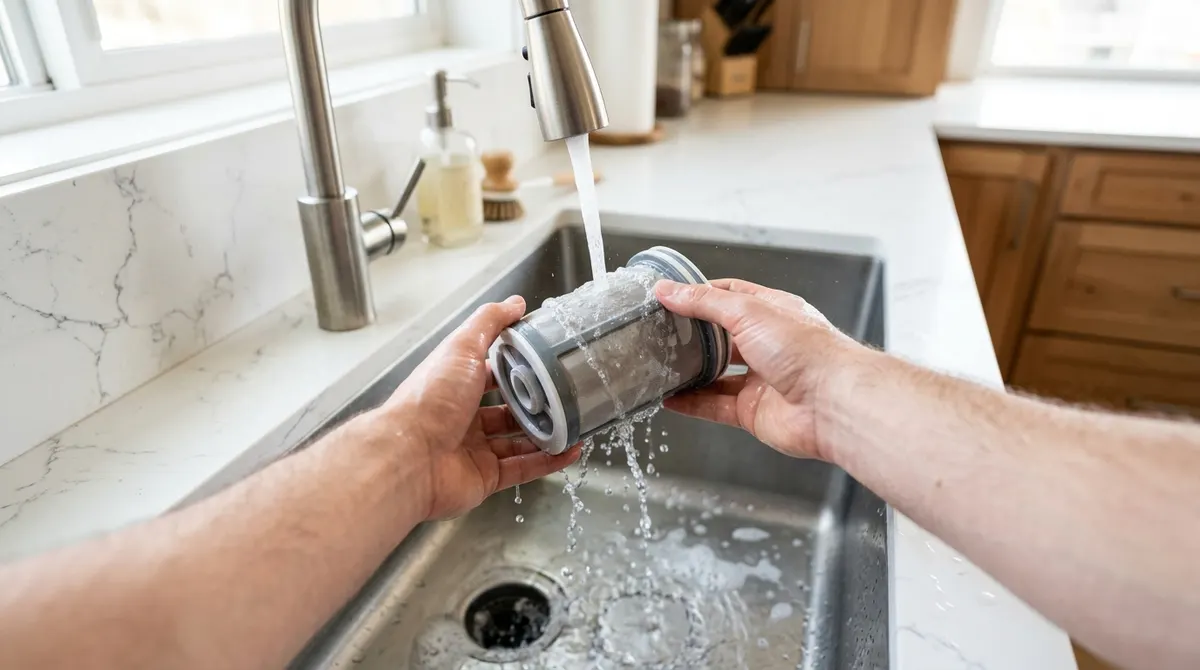
- Remove the bottom rack.
- Twist and lift out the filter assembly (on models with a removable filter).
- Rinse under warm water and scrub gently with a soft brush.
- Reinstall and lock it in place.
GE Dishwasher Not Draining
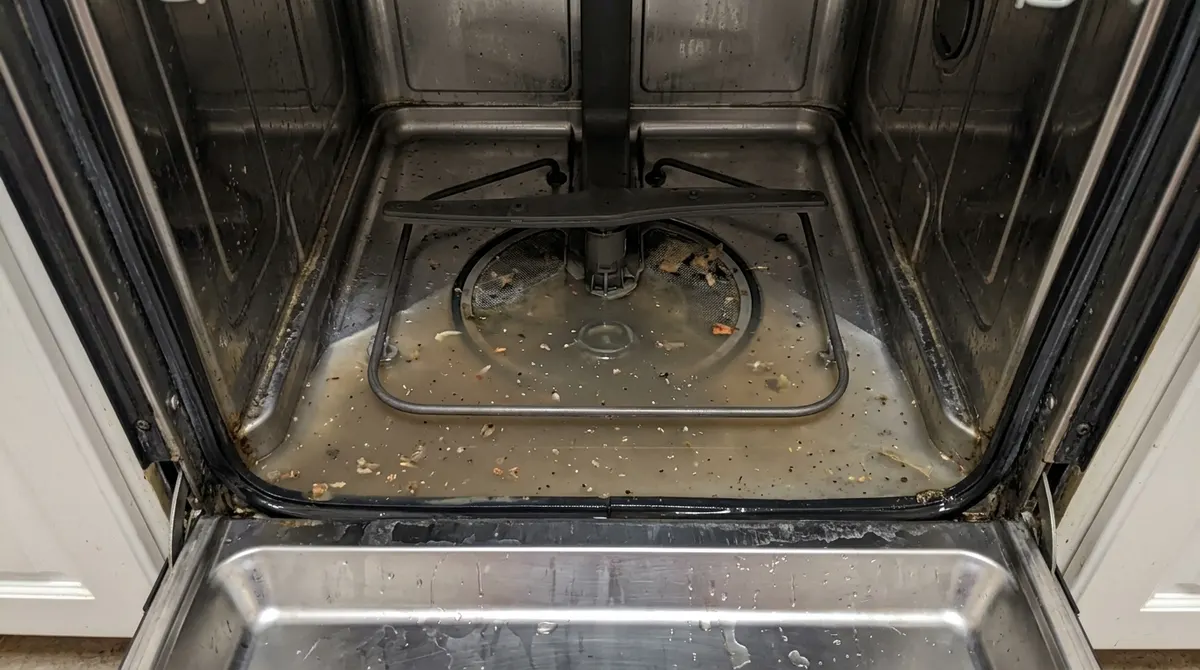
- Clean the filter and the area beneath it.
- Check that the drain hose isn’t kinked under the sink.
- If newly installed with a garbage disposal, make sure the disposal’s knockout plug was removed.
- Run the garbage disposal before starting the dishwasher.
- Listen for the drain pump—humming without draining may mean a blocked or failed pump.
DIY Fix vs Calling a Technician
Pros
- Resets, filters and spray arms are easy DIY fixes
- No special tools needed
- Saves a service call
Cons
- Control boards and pumps need parts and skill
- Water and electricity together can be risky
- Older units may not be worth repairing
Loading problems can also cause poor results—see how to load a dishwasher.


