

To load a dishwasher properly, put plates, pots, and large dishes on the bottom rack facing the center spray arm; place cups, glasses, bowls, and plastics upside down on the top rack; and put cutlery in the basket with handles down (but knives handles up). Scrape food off—don’t pre-rinse—leave space between items, make sure the spray arms can spin, add the right detergent, and choose a normal or auto cycle.
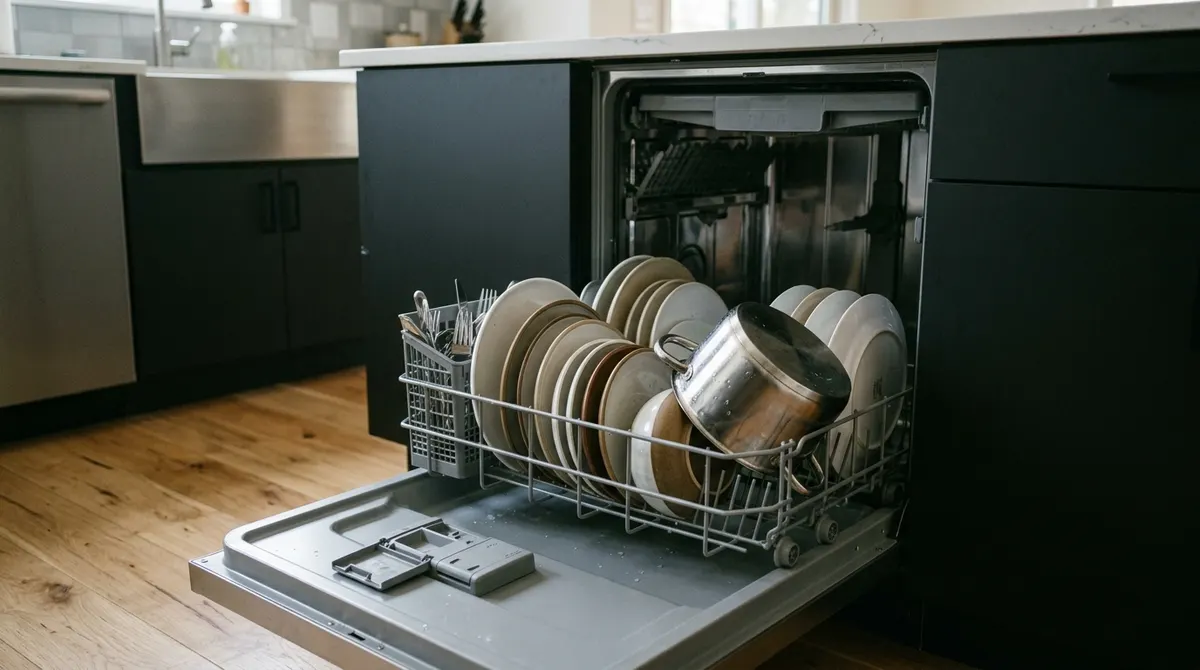
How to Load the Bottom Rack
- Plates: stand them upright in the tines, dirty side facing the center of the dishwasher. Larger plates at the back and sides.
- Pots and pans: place them along the sides or back, angled down and facing the center. Use the “pots and pans” or heavy cycle for baked-on food.
- Baking sheets and cutting boards: along the sides or back so they don’t block the spray arm or detergent dispenser.
- Bowls (if needed): angled down and facing the center.
How to Load the Top Rack
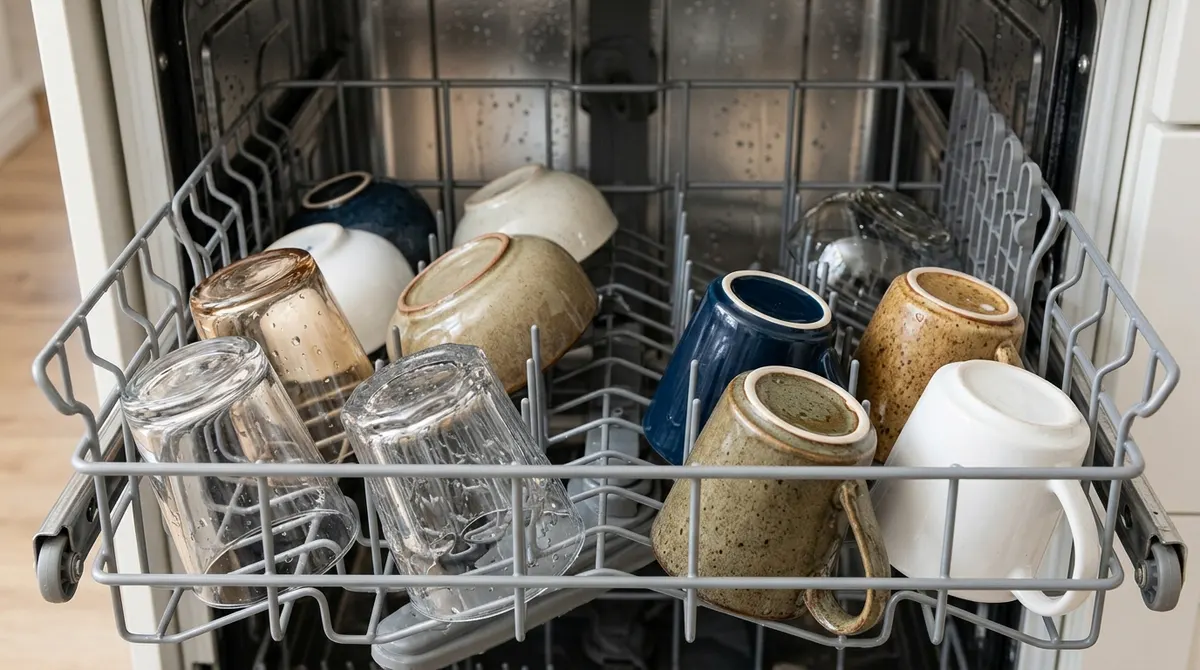
- Cups, glasses, and mugs: upside down, between the tines (not over them) to avoid breakage and water spots.
- Bowls: upside down and angled toward the center.
- Plastics: top rack only, away from the heating element, and labeled dishwasher-safe.
- Long utensils like spatulas and ladles: lay them flat on the top rack or in the third rack if you have one.
How to Load Silverware
- Forks and spoons: handles down so the eating surfaces get the most spray.
- Knives: handles up for safety when unloading.
- Mix items in each slot so spoons don’t nest together.
How to Use a Dishwasher Step by Step
- Scrape, don’t rinse. Remove leftover food; modern detergents need some food soil to work well.
- Load as described above, leaving space between items.
- Spin the spray arms by hand to make sure nothing blocks them.
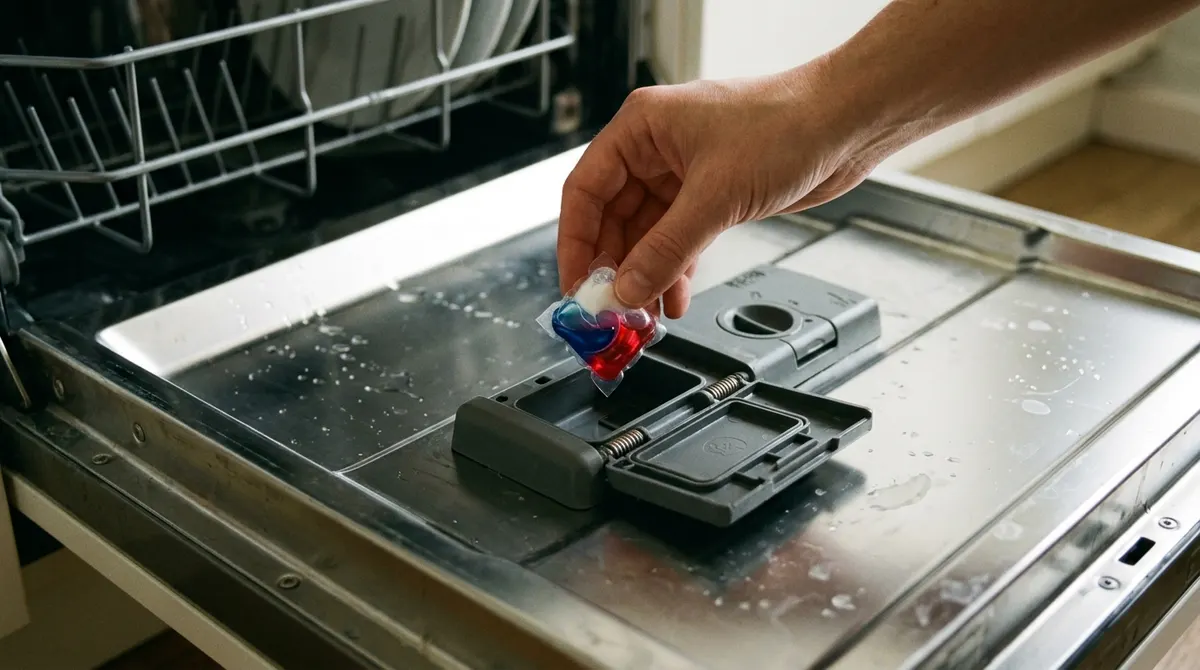
- Add detergent to the dispenser and close it. Add rinse aid if the indicator says it’s low.
- Run hot water at the kitchen sink until it’s hot, so the dishwasher starts with hot water.
- Choose a cycle: Normal or Auto for everyday loads, Heavy for pots, Quick for lightly soiled items.
- Unload the bottom rack first so water from the top rack doesn’t drip on dry dishes.
Pre-Rinsing vs Scraping
Pros
- Scraping saves water and time
- Detergent enzymes work best with some food soil
- Most modern dishwashers have soil sensors that adjust the wash
Cons
- Dried-on food may need a soak or a quick rinse if the load waits for days
- Bones, seeds and large scraps must be removed to protect the filter
- Older dishwashers without grinders may need more scraping
What Not to Put in the Dishwasher
- Cast iron pans (see how to clean cast iron)
- Good kitchen knives and wooden spoons or boards
- Non-stick pans unless labeled dishwasher-safe
- Copper, brass, and aluminum cookware
- Crystal, hand-painted, or antique china
- Insulated travel mugs (unless labeled safe)
Keep Your Dishwasher Working Well
- Clean the filter every 1–2 weeks (twist it out from the bottom of the tub and rinse).
- Run an empty hot cycle with a dishwasher cleaner monthly.
- Keep rinse aid topped up to reduce spots and help drying.
Frequently Asked Questions
What goes on the top rack of a dishwasher?
Cups, glasses, mugs, bowls, small plates, plastics, and long utensils. Place them upside down and angled so water drains off.
Should silverware go up or down in the dishwasher?
Forks and spoons go handles down for better cleaning. Knives go handles up so you don’t cut yourself when unloading.
Do you need to rinse dishes before putting them in the dishwasher?
No. Scrape off food but skip rinsing—modern detergents and dishwashers are designed to remove food soil.
Why are my dishes still dirty after the dishwasher?
Common causes are overloading, blocked spray arms, a dirty filter, too little detergent, or starting with cold water.
Which dishwasher cycle should I use?
Normal or Auto for most loads, Heavy or Pots & Pans for baked-on food, and Quick only for lightly soiled dishes.


