

To remove a tile floor, clear the room and seal it off for dust, wear safety glasses, gloves and a dust mask, break one tile with a hammer to create a starting point, then drive a floor scraper or hammer and chisel under the tiles to pop them up. Finally, scrape off the remaining thinset or mortar so the subfloor is flat and ready for new flooring. An electric rotary hammer with a chisel bit makes large rooms much faster.
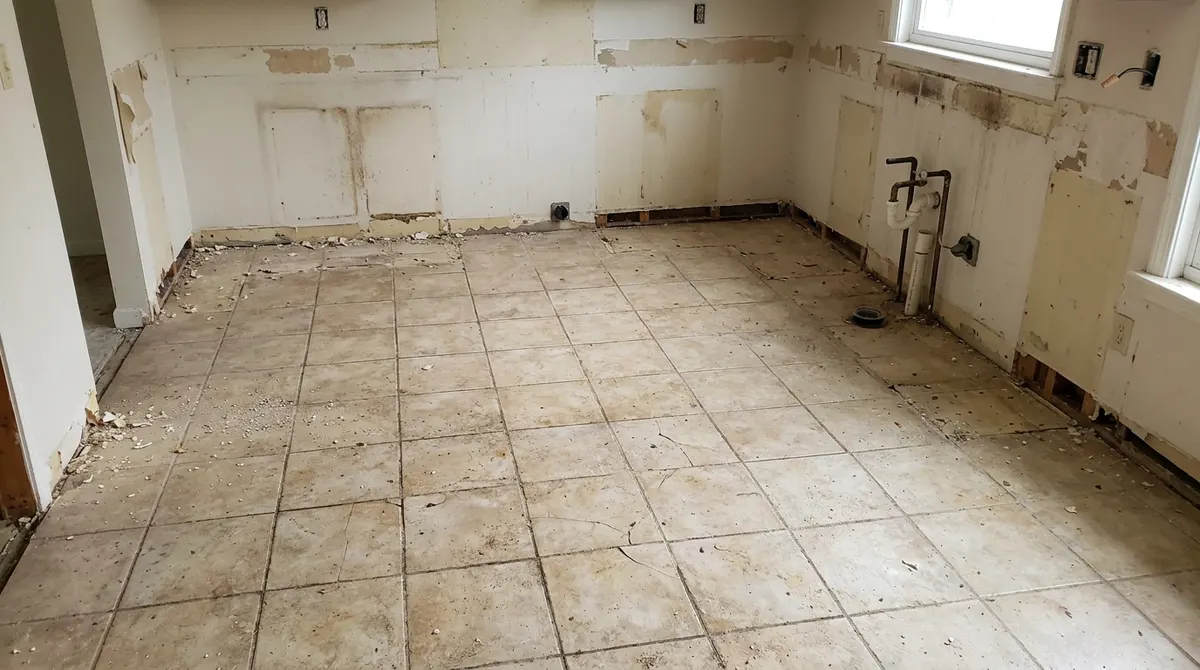
Safety: Tile shards are sharp and silica dust is harmful. Wear safety glasses, heavy gloves, long sleeves, and an N95 or better mask. Older tile adhesive or underlying vinyl may contain asbestos—test before disturbing very old floors.
Best Tools to Remove Tile Flooring
| Tool | Best for |
|---|---|
| Hammer and cold chisel | Small areas and edges |
| Long-handled floor scraper | Popping tiles while standing |
| Rotary hammer with chisel bit | Large rooms, tile on concrete |
| Oscillating multi-tool | Removing grout at edges |
| Floor grinder (rental) | Thick thinset on concrete |
How to Remove Tile Floor Step by Step
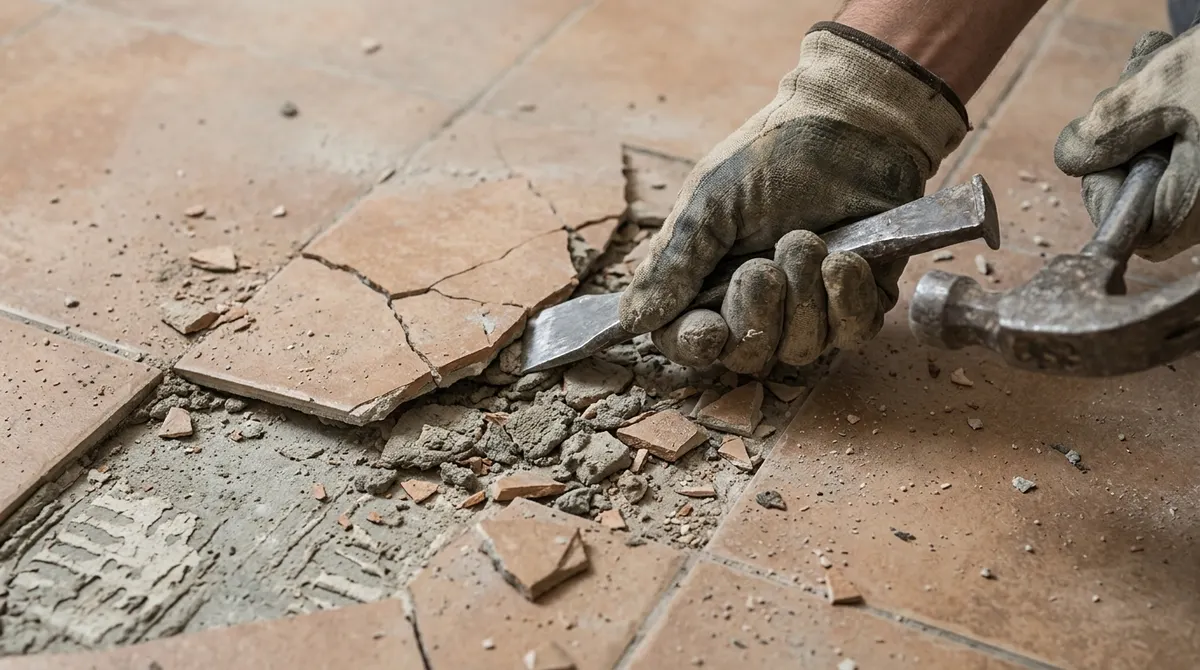
- Prepare: remove appliances, toilets, and baseboards. Cover vents and doorways with plastic.
- Find a starting point: break a tile in the center or start at a cracked tile or an edge.
- Pry up tiles: slide a chisel or floor scraper under the tile at a low angle and tap to pop it loose.
- Work in rows and clear debris into heavy-duty bags or buckets as you go.
- Remove backer board if needed—unscrew or pry it up.
- Scrape thinset to get a flat surface for the new floor.
- Vacuum and inspect the subfloor for damage or rot.
How to Remove Thinset From the Subfloor
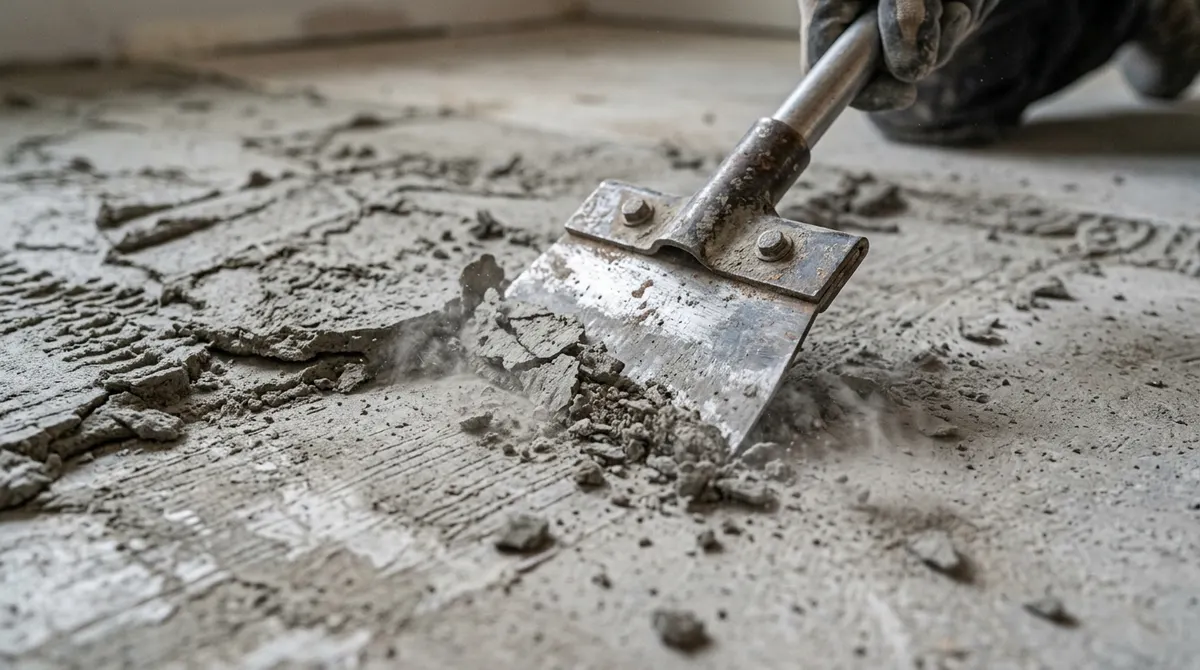
- On concrete: use a rotary hammer with a wide chisel bit or rent a floor grinder.
- On plywood: scrape carefully; if thinset is bonded hard, it may be easier to replace damaged plywood sections.
- Check flatness with a long level and patch low spots with floor leveler.
DIY vs Hiring a Pro
Pros
- DIY saves on labor costs
- Basic tools are inexpensive or easy to rent
- You control how carefully the subfloor is treated
Cons
- Hard, dusty, physically demanding work
- Risk of damaging the subfloor
- Debris disposal can be costly
Can You Tile Over Old Tile?
Sometimes. If the existing tile is solidly bonded, flat, and floor height allows, you can install new tile or luxury vinyl over it. Loose, cracked, or uneven tile should come out first.
Planning new flooring? Use our flooring calculator or tile calculator.
Frequently Asked Questions
What is the best tool to remove tile flooring?
A long-handled floor scraper or a rotary hammer with a chisel bit for large areas; a hammer and chisel for small spaces.
Is it expensive to remove tile floors?
DIY costs mainly tool rental and disposal. Professional removal costs more depending on area, tile type, and whether thinset must be ground off.
How can I cover old floor tiles without removing them?
Options include luxury vinyl plank, floating floors, or new tile over well-bonded, flat existing tile—if door clearances allow.
How do you remove floor tile and replace with new tile?
Remove the old tile and thinset, repair and level the subfloor, install backer board if needed, then set new tile with fresh thinset.
How long does it take to remove a tile floor?
A small bathroom may take a few hours; a large kitchen can take one to two days.


