Installing a sectional garage door involves removing the old door safely, attaching the bottom panel and weather seal, stacking and hinging each panel, mounting the vertical and horizontal tracks, installing the springs and cables, then balancing and testing the door and connecting the opener. It’s a big, heavy job, and spring installation is dangerous, so most homeowners hire a professional. Handy DIYers can install doors with extension springs or pre-wound torsion systems by following the manufacturer’s instructions exactly.
What You’ll Need
- New garage door kit (panels, tracks, hardware, springs)
- Drill/driver, socket set, level, tape measure
- Winding bars (for torsion springs—never use screwdrivers)
- Step ladders and C-clamps or locking pliers
- A helper—panels are heavy and awkward
Garage Door Installation Steps
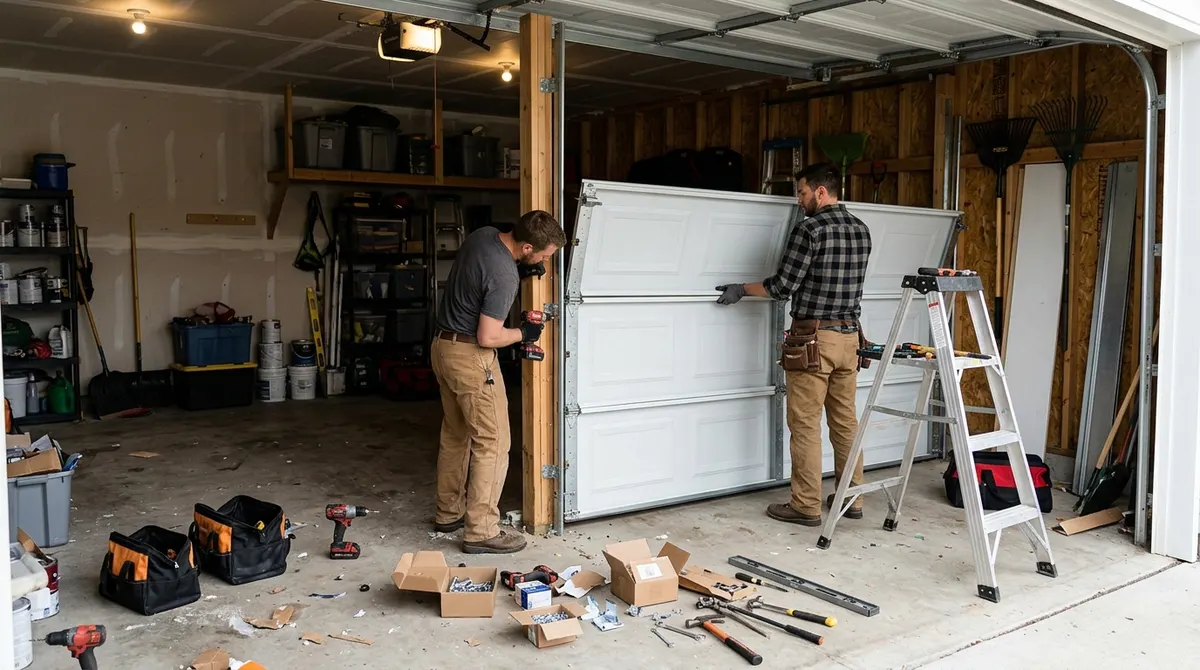
- Measure the opening (width, height, headroom, and side room) and order the right door.
- Remove the old door after a professional or careful process to release spring tension.
- Install the bottom panel with its weather seal and bottom brackets, level it in the opening.
- Stack the remaining panels, attaching hinges and rollers as you go.
- Mount the vertical tracks on each side, plumb and with the correct gap to the door.
- Install the horizontal tracks and rear supports from the ceiling.
- Install springs and cables following the kit instructions exactly.
- Balance and test: the door should stay put when lifted halfway by hand.
- Install or reconnect the opener, safety sensors, and test reversal.
Torsion vs Extension Springs
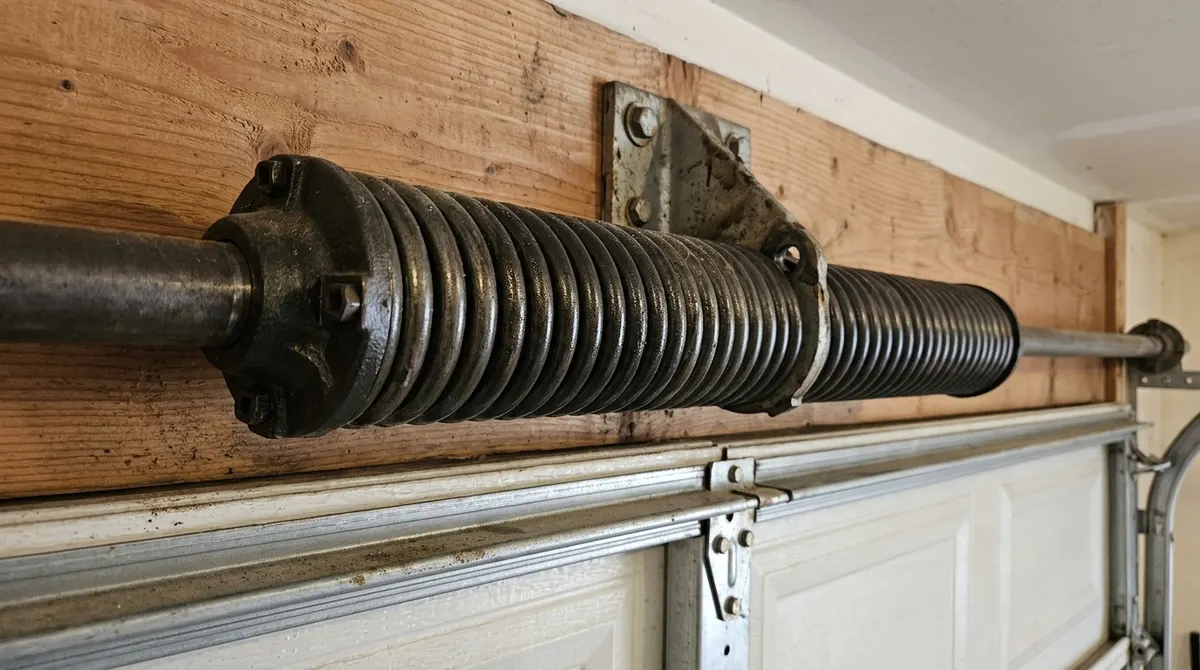
| Torsion springs | Extension springs | |
|---|---|---|
| Location | On a shaft above the door | Along the horizontal tracks |
| Lifespan | Longer | Shorter |
| Balance | Smoother, more controlled | Less even |
| DIY risk | High—needs winding | Moderate—needs safety cables |
How Much Does Garage Door Installation Cost?
Costs depend on door size, material (steel, aluminum, wood, insulated), and local labor. Basic single steel doors cost far less than insulated double or custom wood doors, and professional installation often includes old door removal. Get several written quotes and plan with our renovation cost calculator.
DIY vs Professional Installation
Pros
- Professionals install safely in a few hours
- Correct spring sizing and balancing
- Warranty on labor and parts
Cons
- DIY saves labor cost but takes a full day or more
- Spring work is dangerous without training
- Mistakes can void the door warranty