

To paint wood, clean it, sand it smooth (120 then 180–220 grit), fill holes and remove the dust, then apply a primer suited to the wood—stain-blocking primer for knotty pine or bare wood. Finish with two thin coats of acrylic latex or oil-based enamel, sanding lightly between coats. Good prep matters more than the paint: most peeling and blotchy finishes come from skipping primer or painting over dirt and gloss.
Lead paint warning: If the wood is in a home built before 1978, assume old paint may contain lead until tested. Use an EPA-recognized test kit. If it’s positive, don’t dry-sand, power-sand or burn it off—wet-sand or leave intact paint and paint over it, contain the area with plastic, keep children and pregnant women away, and clean with a HEPA vacuum. For large jobs hire an EPA lead-safe (RRP) certified contractor.
What You’ll Need
- Degreaser or mild detergent, sponge
- Sandpaper (120, 180–220 grit) or sanding sponges
- Wood filler and a putty knife
- Tack cloth or damp microfiber
- Primer and paint (see table)
- Quality angled brush, small foam roller, painter’s tape
Choosing Primer and Paint for Wood
| Project | Primer | Paint |
|---|---|---|
| Bare interior wood (furniture, trim) | Water-based or oil-based wood primer | Acrylic enamel, satin or semi-gloss |
| Knotty pine or cedar (tannin bleed) | Oil-based or shellac stain-blocking primer | Acrylic enamel |
| Glossy previously painted wood | Bonding primer after scuff-sanding | Match the existing type |
| Exterior siding, fences, doors | Exterior wood primer | 100% acrylic exterior paint |
| Floors and stair treads | As specified by the floor paint | Porch and floor enamel |
How to Paint Wood Step by Step
- Clean. Wash off grease and grime, rinse and let dry. Kitchen cabinets need a degreaser.
- Repair. Fill holes and dents with wood filler, let it dry, and sand flush.
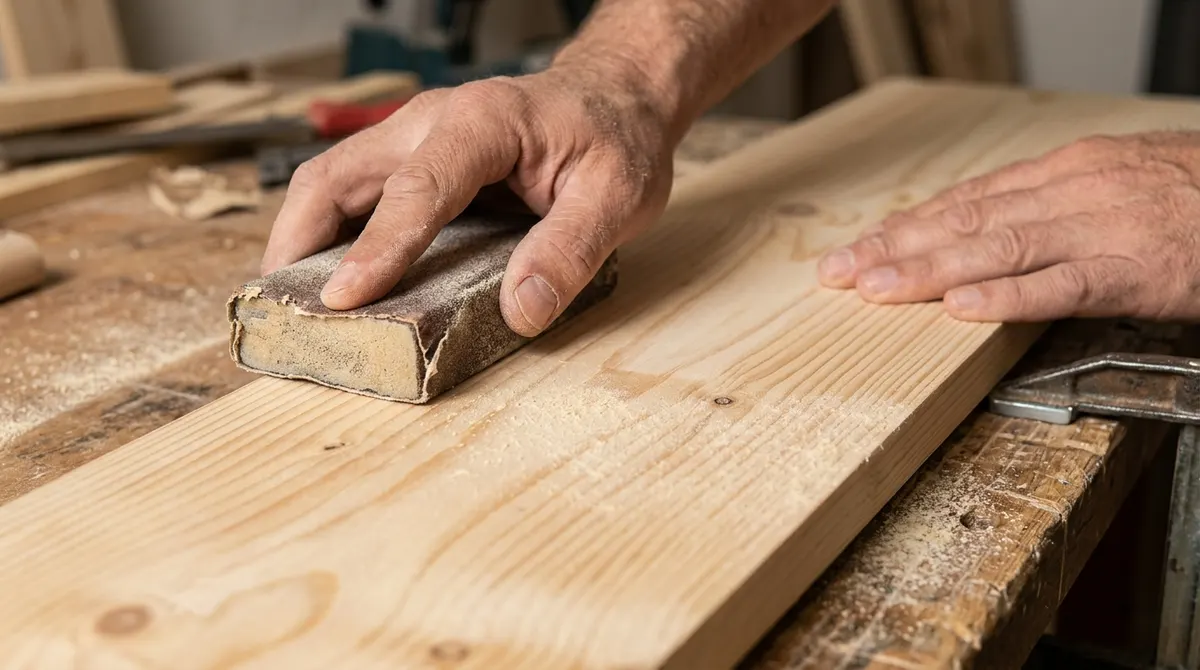
- Sand. Scuff glossy paint and sand bare wood with 120 grit, then 180–220 grit, always with the grain.
- Remove dust with a vacuum and tack cloth.
- Prime. Apply a thin, even coat. Once dry, lightly sand with 220 grit to knock down raised grain.
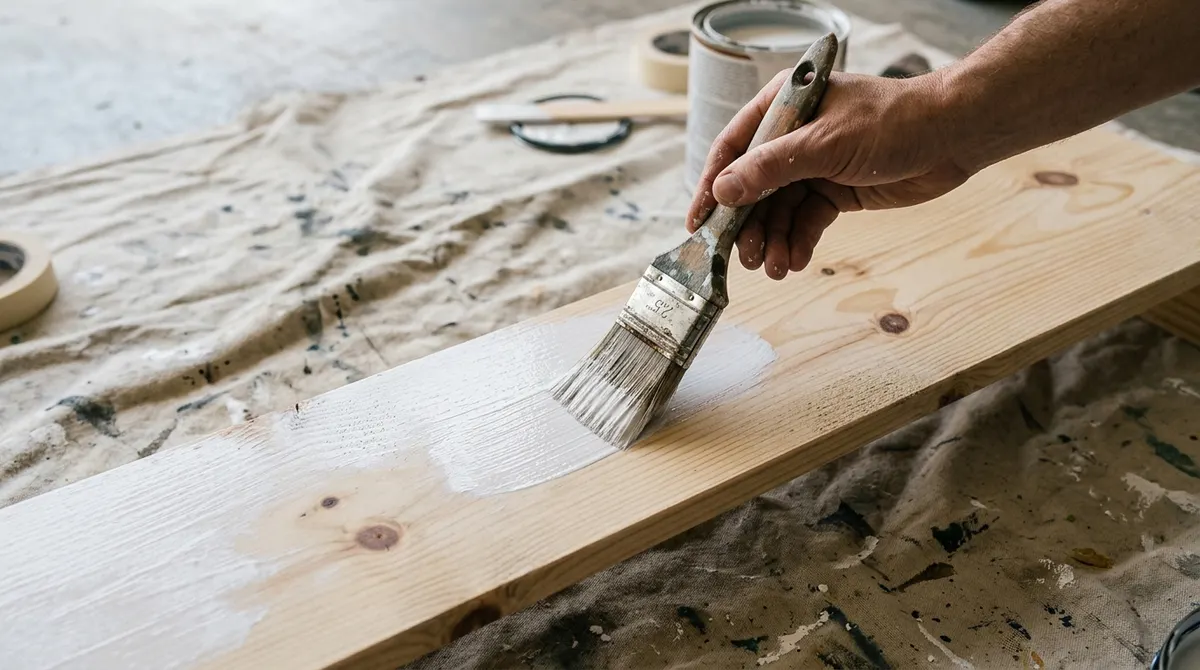
- Paint the first coat. Brush in the direction of the grain, keep a wet edge, and don’t overload the brush. Use a foam roller on flat panels, then “tip off” with the brush.
- Sand lightly and recoat. After the recoat time on the label, scuff with 220 grit, wipe clean and apply a second coat.
- Let it cure. Paint may be dry to the touch in an hour, but it can take days to weeks to fully harden. Go easy on shelves and tabletops.
Brush, Roller or Sprayer?
Pros
- Brushes handle trim and detail well
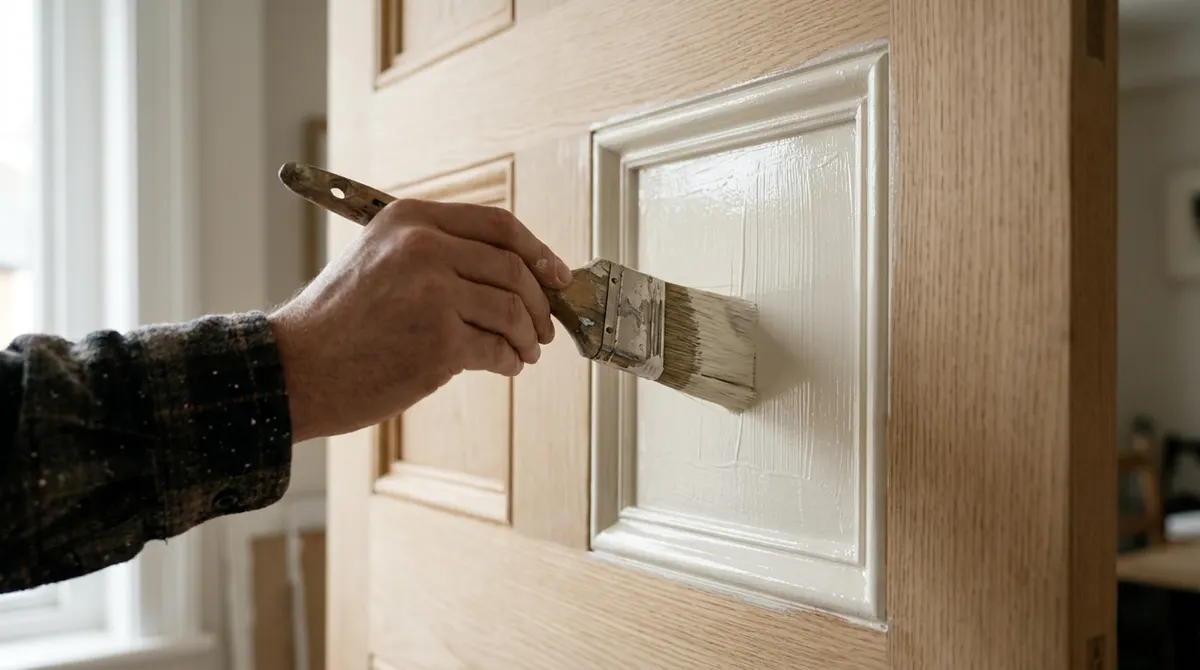
- Foam rollers give a smooth finish on flat surfaces
- Sprayers are fastest for cabinets and spindles
Cons
- Brushes can leave marks with cheap paint
- Rollers can’t reach inside corners
- Sprayers need masking and a respirator
Cleaning up oil-based paint? See how to clean oil paint brushes, and if drips hit your clothes, how to remove paint from clothes.
Frequently Asked Questions
Do I need to prime wood before painting?
Yes for bare wood, knots, stains and glossy surfaces. Primer improves adhesion and blocks tannins. Some paint-and-primer products work over previously painted, sound surfaces.
Can I paint wood without sanding?
On glossy finishes, use a liquid deglosser and a bonding primer. Sanding still gives the most durable result.
What paint is best for wood?
Acrylic (water-based) enamels are easy to clean and don’t yellow. Oil-based enamels level well and are very hard but yellow over time and need mineral spirits for cleanup.
How many coats of paint does wood need?
Usually one coat of primer and two thin topcoats. Dark-to-light color changes may need a third.
Why is my paint peeling off wood?
Common causes are moisture, dirty or glossy surfaces, skipped primer, or latex over oil-based paint without a bonding primer.


