To clean a diffuser, unplug it and empty it, fill the tank halfway with water plus about a teaspoon or two of white vinegar, run it for 5–15 minutes, drain it, then wipe the inside and the small ultrasonic plate with a cotton swab dipped in rubbing alcohol, and let it dry. Doing this about once a month—and a quick rinse and wipe between oils—stops oil buildup, mold and weak mist.
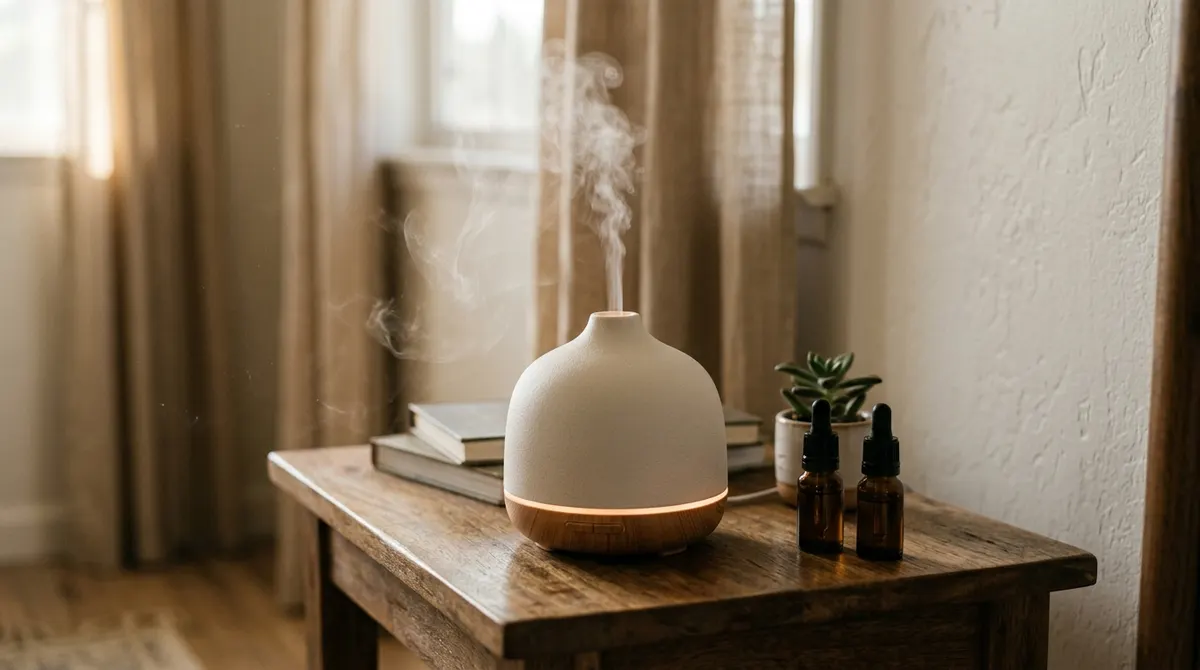
Safety: Always unplug the diffuser before cleaning, and pour liquid out the side away from the air outlet and electronics. Never use bleach—running it through a diffuser can release harmful fumes—and don’t mix vinegar with bleach or other cleaners.
Step-by-Step Deep Clean
- Unplug and empty any leftover water and oil.
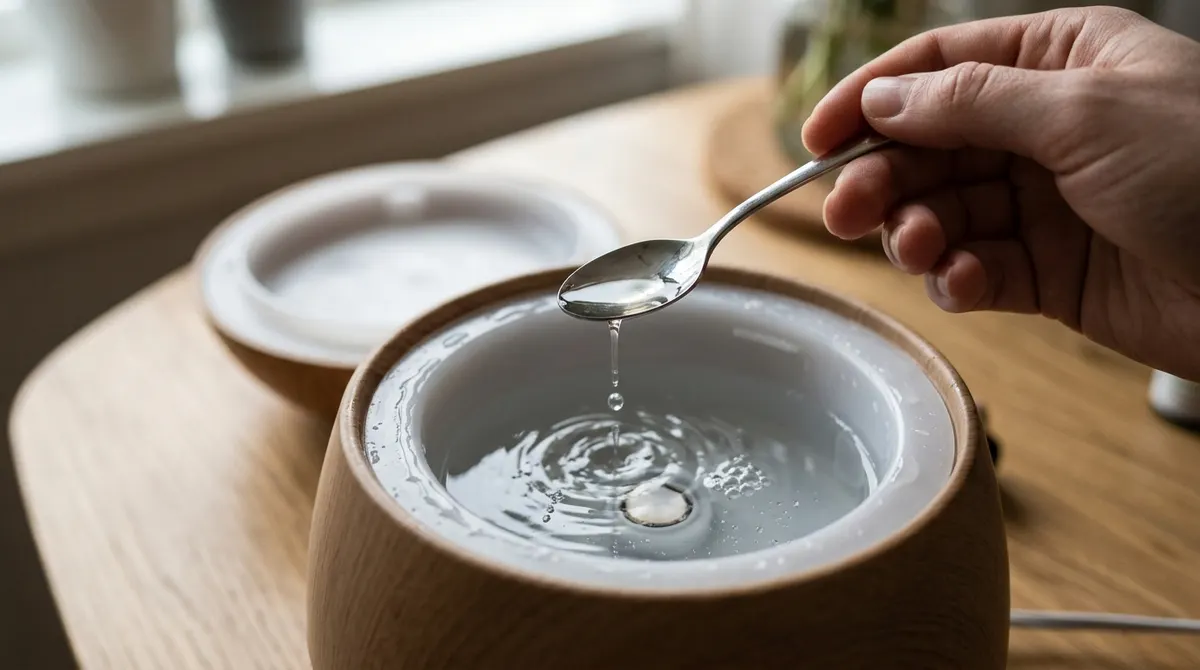
- Add water and vinegar. Fill to about half (below the max line) with clean water and add 1–2 teaspoons of white vinegar.
- Run it for 5–15 minutes near an open window.
- Drain and unplug, pouring out the side your manual shows.
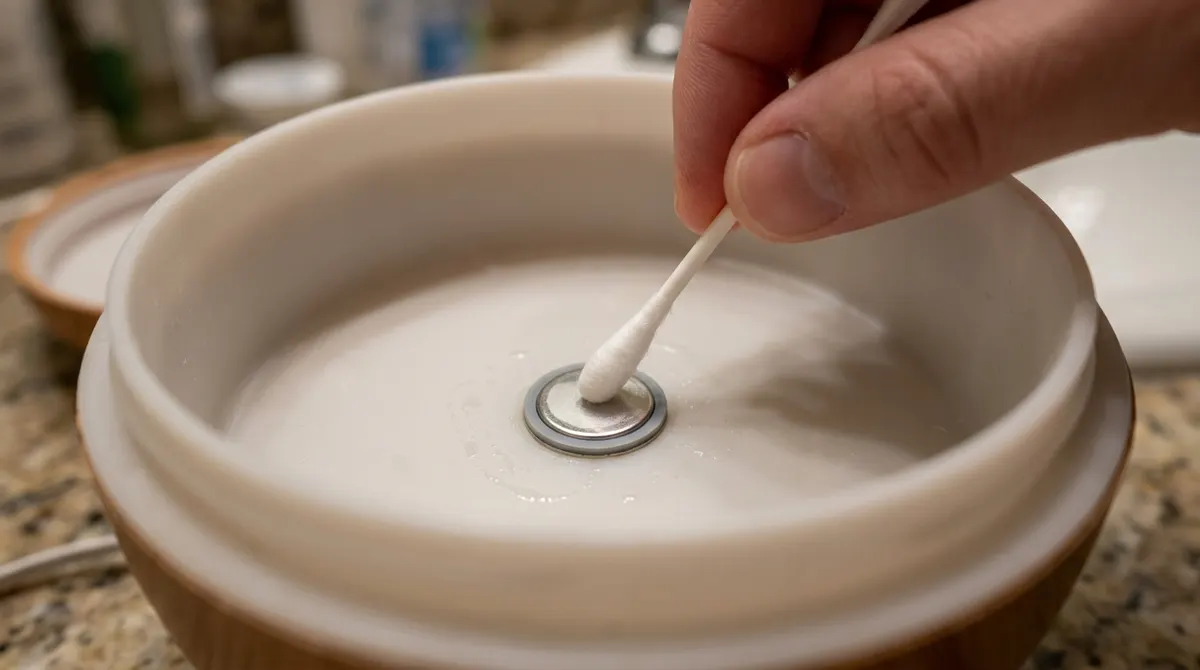
- Clean the plate. Gently wipe the ultrasonic chip with a cotton swab dipped in rubbing alcohol—don’t scrub hard.
- Wipe the tank and lid with a soft cloth or swab dipped in vinegar.
- Rinse and dry. Wipe with a cloth dampened in clean water, then let it air dry fully before the next use.
Cleaning Schedule
| When | What to do |
|---|---|
| After each use | Empty, wipe dry, leave lid off to air out |
| Switching oils | Quick rinse and wipe to avoid mixed scents |
| Monthly | Full vinegar run and alcohol wipe of the plate |
| Weak mist or film | Deep clean right away |
Tips to Keep It Running Well
- Use distilled or filtered water if you have hard water to reduce mineral spots
- Don’t leave water sitting in the tank for days
- Avoid thick carrier or citrus oils if your manual warns against them
- Never submerge the base or run it under the tap
- Reed and nebulizing diffusers need different care—check the manual
Vinegar Cleaning Pros and Cons
Pros
- Cheap and food-safe
- Removes oil film and mineral buildup
- Takes about 20 minutes
Cons
- Vinegar smell lingers briefly
- Too much vinegar may not suit every model
- Doesn’t fix a failed plate or fan
Frequently Asked Questions
How often should I clean my diffuser?
A full vinegar clean about once a month, plus emptying and wiping after each use.
Can I clean a diffuser with just water?
Water rinses loose residue, but oil film needs vinegar or rubbing alcohol to break down.
Why is my diffuser not misting?
Usually oil or mineral buildup on the ultrasonic plate, too much or too little water, or a blocked air intake. Clean the plate and check the fill line.
Can I use rubbing alcohol in the tank?
Use it on a swab for the plate and corners only; don’t run it through the diffuser.
Is mold in a diffuser dangerous?
It can irritate airways. Clean it out with vinegar, dry fully, and replace the unit if mold keeps returning.