To clean a fish tank, unplug the heater and filter, scrape algae off the inside glass with an aquarium-safe scraper, use a gravel vacuum to siphon out 10–25% of the water along with debris from the gravel, rinse the filter media in that removed tank water (not tap water), then refill with dechlorinated water at the same temperature and plug everything back in. You don’t need to remove the fish, and you should never use soap or household cleaners inside the tank.
How Often Should You Clean a Fish Tank?
| Task | How often |
|---|---|
| Partial water change (10–25%) | Every 1–2 weeks |
| Gravel vacuum | With each water change |
| Wipe glass / remove algae | As needed, usually weekly |
| Rinse filter media | Monthly (in tank water) |
| Test water | Weekly for new tanks, then regularly |
Small tanks and heavily stocked tanks need more frequent care.
What You’ll Need
- Gravel vacuum / siphon
- Clean bucket used only for the aquarium
- Algae scraper or aquarium-safe pad
- Water conditioner (dechlorinator)
- Thermometer
- Old towels
How to Clean a Fish Tank Step by Step
- Unplug the heater and filter.
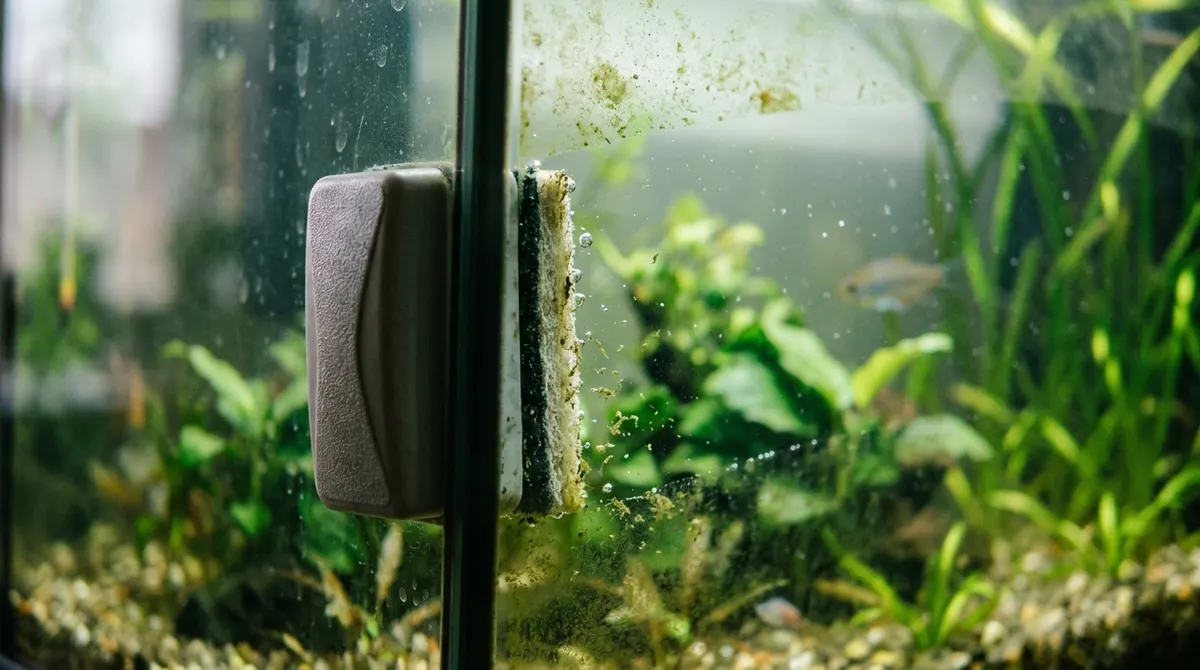
- Scrape algae off the inside glass first so it settles before you vacuum.
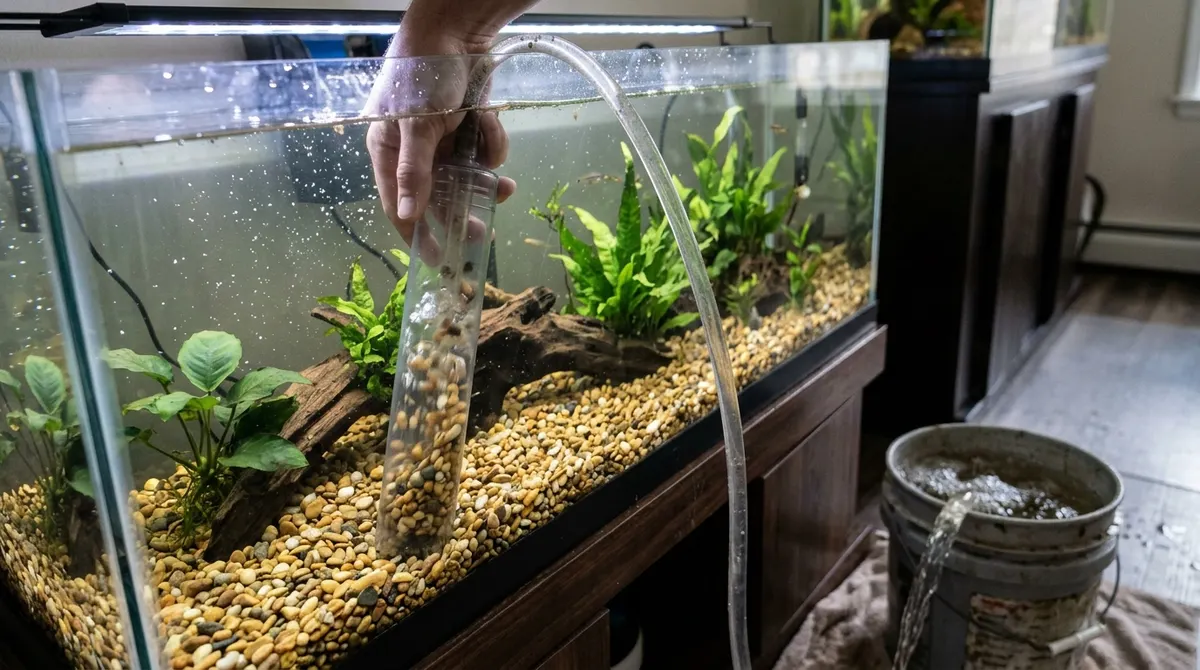
- Vacuum the gravel with the siphon, pushing it into the gravel to lift waste, until you’ve removed 10–25% of the water.
- Clean decorations if needed—scrub with a brush in removed tank water (no soap).
- Rinse filter media gently in the bucket of old tank water to keep beneficial bacteria. Replace cartridges only when they’re falling apart.
- Prepare new water: add dechlorinator and match the temperature to the tank.
- Refill slowly and plug the filter and heater back in once the water level covers them.
- Wipe the outside glass with an aquarium-safe cleaner or vinegar on a cloth (never spray near the tank opening).
Don’t over-clean: Replacing all the water or scrubbing the filter with tap water kills the beneficial bacteria that break down fish waste, which can cause dangerous ammonia spikes.
Partial vs Full Cleaning
Pros
- Partial water changes keep water chemistry stable
- Fish can stay in the tank
- Beneficial bacteria are preserved
Cons
- Full tear-downs stress fish and reset the cycle
- Skipping regular changes lets nitrates build up
- Neglected tanks may need several changes to recover
Frequently Asked Questions
Can you use Dawn dish soap to clean a fish tank?
No. Soap residue is toxic to fish. Use only water, an aquarium scraper, and—for an empty tank—diluted vinegar, rinsed thoroughly.
How do you clean a fish tank without removing the fish?
Do a partial water change with a gravel vacuum, scrape algae off the glass, and rinse filter media in removed tank water. The fish can stay in the tank.
How often do fish tanks need to be cleaned?
Most tanks need a 10–25% water change and gravel vacuum every 1–2 weeks.
What kills fish in a new tank?
Often “new tank syndrome”—ammonia buildup before beneficial bacteria are established. Cycle the tank before adding many fish and test water regularly.
Should I clean the filter with tap water?
No. Chlorine in tap water kills beneficial bacteria. Rinse filter media in water removed from the tank.