

To clean a water cooler, unplug it, remove the empty bottle, drain the reservoir through the taps, fill it with a vinegar solution or a weak unscented bleach solution, scrub, let it sit, drain it through the taps, and rinse with clean water several times until there’s no taste or smell. Manufacturers commonly recommend sanitizing every 3 to 6 months, and sooner if the water tastes off.
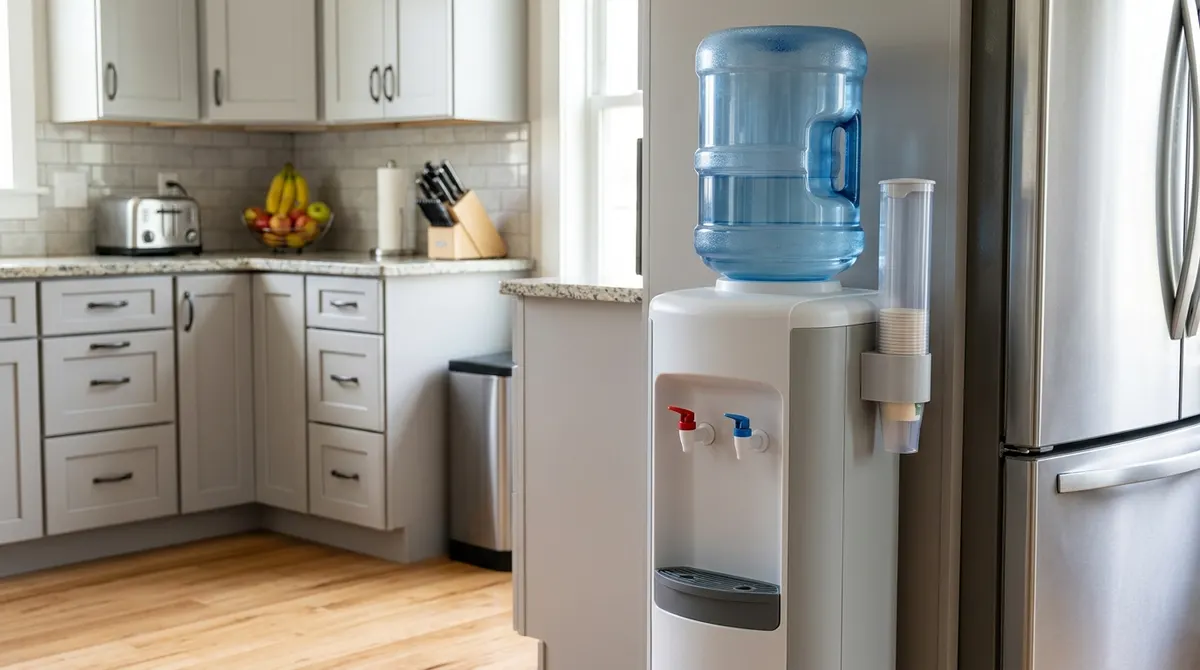
Safety: Unplug the cooler before cleaning and let the hot tank cool—hot-tap water can scald. Use vinegar or bleach, never both: mixing them releases chlorine gas. Use only plain unscented bleach and rinse thoroughly.
What You Need
- Bucket and soft sponge or bottle brush
- Distilled white vinegar or unscented chlorine bleach
- Dish soap and a towel
- Clean water (several gallons)
- Gloves
Step-by-Step Cleaning
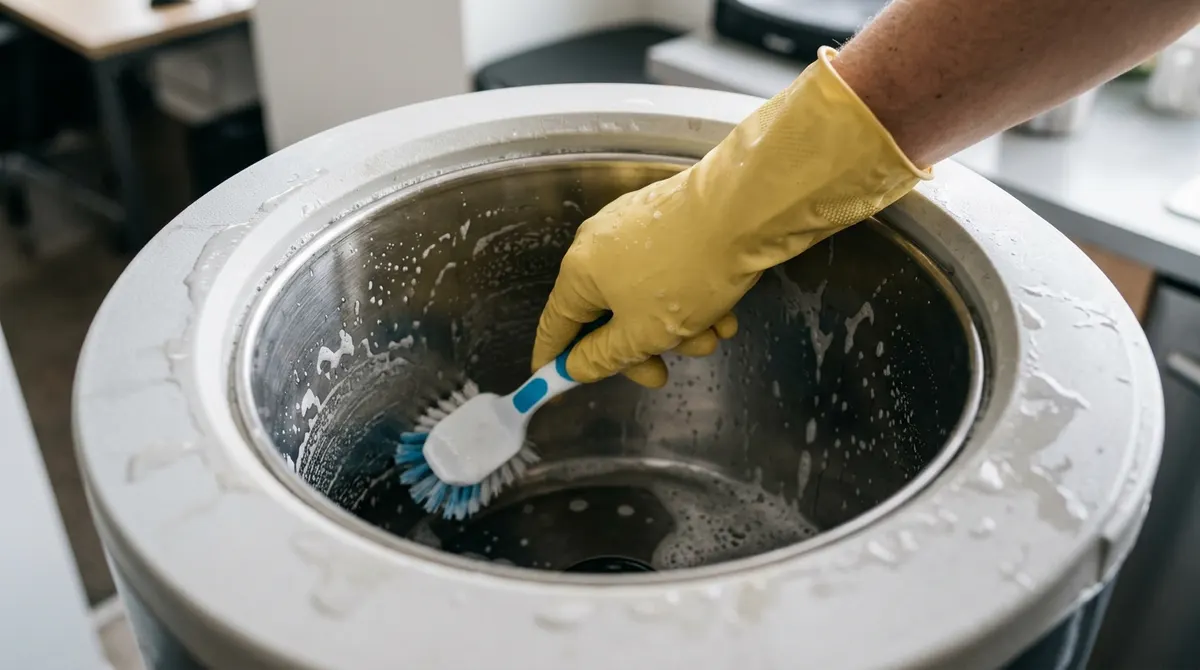
- Unplug and remove the bottle. Take off the bottle and any removable baffle or probe, following your manual.
- Drain. Empty the reservoir through the taps into a bucket; some coolers also have a rear drain plug.
- Mix the solution. Vinegar: about 1 part vinegar to 3 parts warm water. Bleach: about 1 teaspoon unscented bleach per gallon of water, or the ratio in your manual.
- Fill and scrub. Pour the solution into the reservoir, scrub the walls, and let it sit 10–15 minutes.
- Run it through the taps. Drain the solution through both taps to clean the lines.
- Rinse. Fill with clean water and drain through the taps at least 2–3 times, until you can’t taste or smell the cleaner.
- Reassemble. Wipe the neck of the new bottle before installing it, then plug the cooler back in.
Vinegar vs Bleach
| White vinegar | Unscented bleach | |
|---|---|---|
| Best for | Mineral scale, routine cleaning | Sanitizing slime or mold |
| Typical mix | 1:3 with warm water | About 1 tsp per gallon |
| Contact time | 10–15 minutes | About 10 minutes |
| Rinsing | Until no vinegar taste | Until no chlorine smell |
Clean the Drip Tray, Taps and Outside
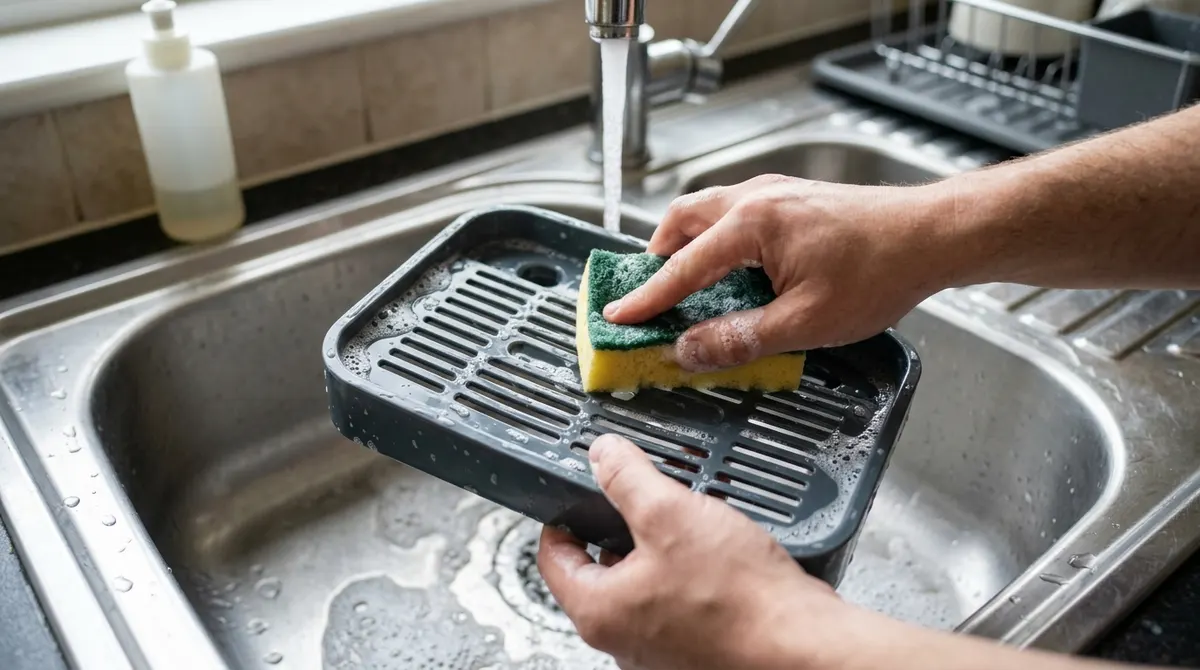
- Pull out the drip tray and grill and wash with warm soapy water
- Clean around the tap spouts with a small brush or cotton swab
- Wipe the cabinet with a damp cloth and mild soap
- Dust the coils on the back a few times a year
DIY Cleaning Pros and Cons
Pros
- Takes under an hour with household supplies
- Improves water taste and removes slime
- Vinegar also removes mineral scale
Cons
- Poor rinsing leaves an off taste
- Bottom-load and self-cleaning models have different steps
- Hot tanks need careful draining
Frequently Asked Questions
How often should you clean a water cooler?
Commonly every 3 to 6 months. Wash the drip tray more often and clean sooner if the water tastes or smells odd.
Can I use vinegar to clean my water cooler?
Yes. Diluted white vinegar descales and cleans well. Rinse several times so the water doesn’t taste of vinegar.
Is bleach safe for a water cooler?
Plain unscented bleach diluted to about a teaspoon per gallon is widely used, as long as you rinse thoroughly. Don’t use scented or thickened bleach.
Why is there slime in my water cooler?
Biofilm forms when the reservoir isn’t cleaned or the cooler sits in sunlight. Sanitize it and keep it out of direct sun.
How do I clean a bottom-load water cooler?
The steps are similar, but also clean the bottle probe and tubing. Follow your manual for removing the probe.


