To propagate spider plant babies (plantlets), snip off a baby that has small root nubs at its base, then either set the base in a glass of water until roots are 1–2 inches long, or plant it directly in moist potting mix. You can also pin the baby into a pot of soil while it’s still attached to the mother plant and cut the runner once it roots. Roots usually form in 1–3 weeks, and spider plants are among the easiest houseplants to propagate.
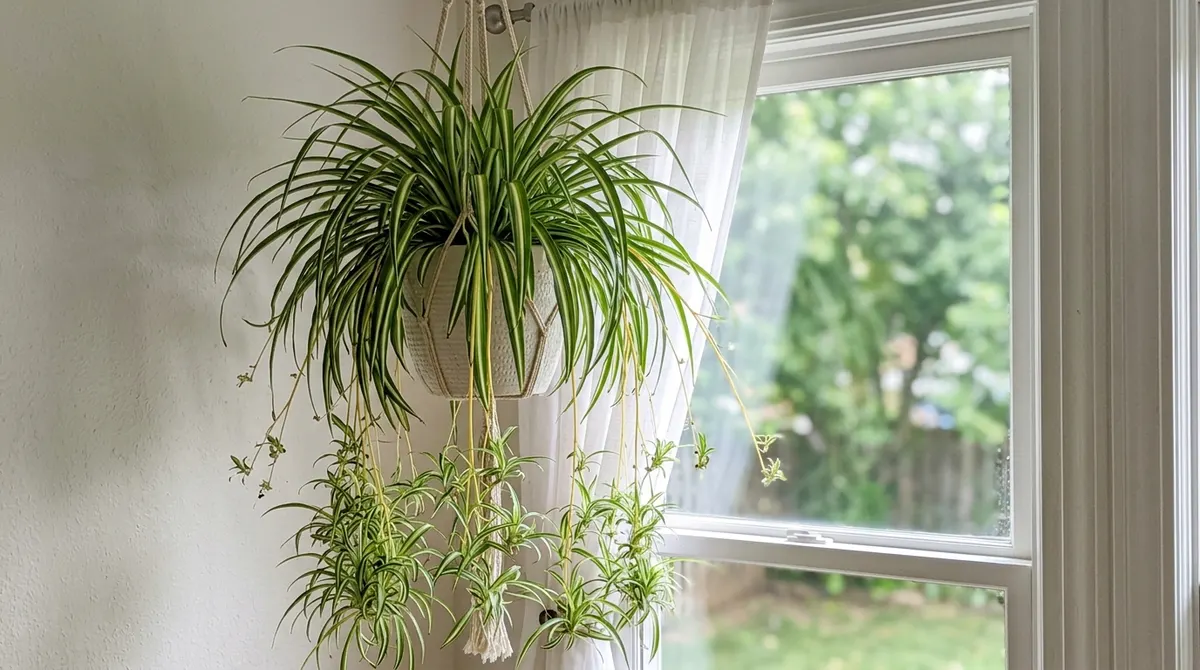
When Are Spider Plant Babies Ready?
- The plantlet is at least 2 inches across with several leaves
- Small brown or white root nubs are visible at its base
- The mother plant is healthy and actively growing (spring and summer are best)
3 Ways to Propagate Spider Plant Babies
| Method | Best for | Rooting time |
|---|---|---|
| Water | Watching roots grow; beginners | 1–3 weeks |
| Directly in soil | Babies with visible root nubs | 2–4 weeks |
| Attached to mother | Highest success rate | 1–2 weeks |
Method 1: Propagate in Water
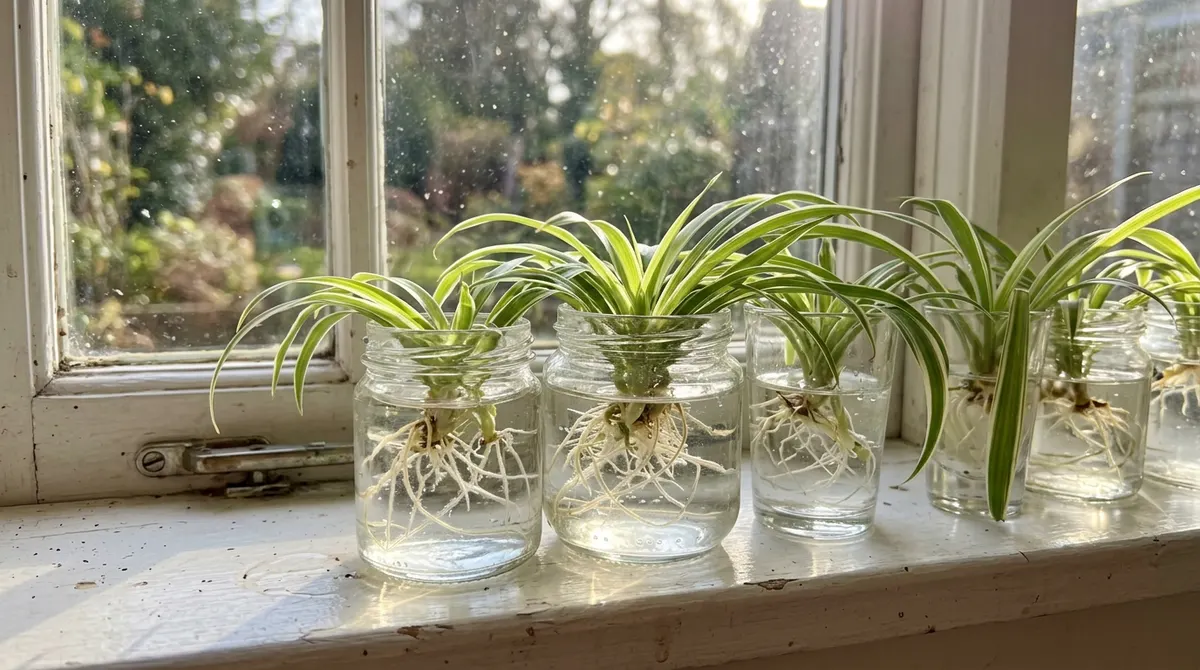
- Cut the runner close to the baby with clean scissors.
- Place the baby in a small glass or jar so only the base and root nubs sit in water.
- Put it in bright, indirect light.
- Change the water every few days (filtered or rain water helps prevent brown tips).
- Pot it up once roots are 1–2 inches long.
Method 2: Plant Directly in Soil
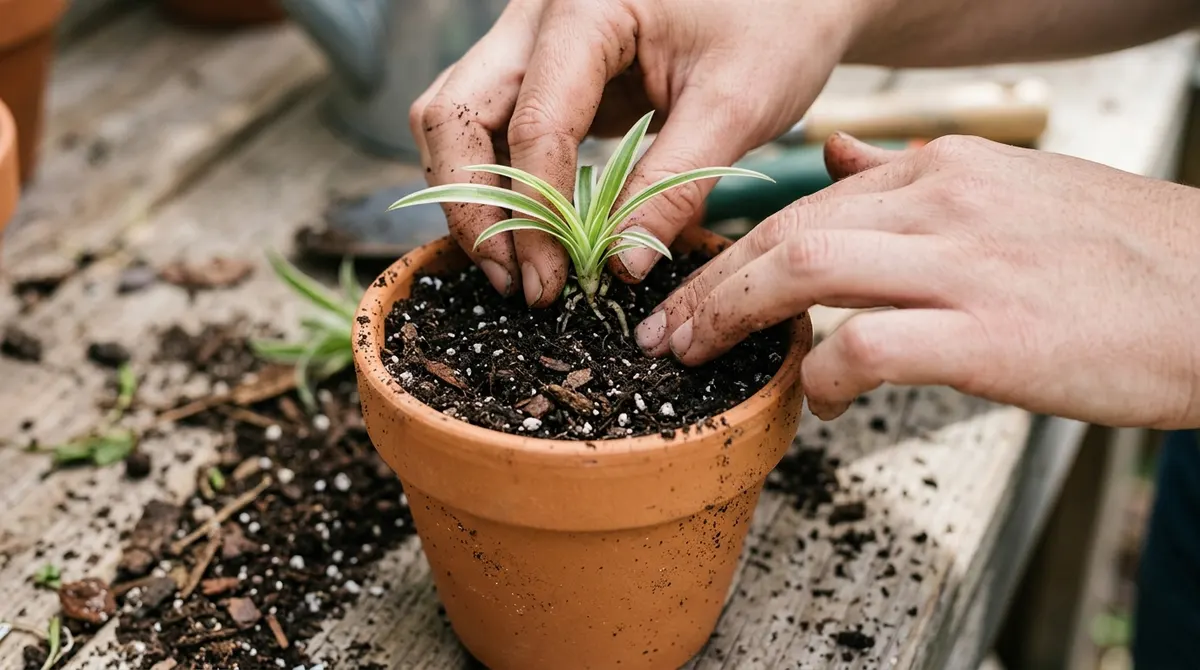
- Fill a small pot (3–4 inches) with well-draining potting mix.
- Press the baby’s base about 1/2 inch into the soil.
- Water lightly and keep the soil evenly moist, not soggy.
- Tug gently after 2–3 weeks—resistance means roots have formed.
Method 3: Root While Still Attached
Set a small pot of soil next to the mother plant, press the baby onto the soil and pin it with a bent paper clip, leaving the runner attached. The mother keeps feeding the baby while it roots. After 1–2 weeks, snip the runner.
Tip: Spider plants are non-toxic to cats and dogs according to the ASPCA, but cats love chewing the leaves—hang new plants out of reach.
Water vs Soil Propagation
Pros
- Water: easy to see root progress
- Soil: no transplant shock later
- Attached: highest success rate
Cons
- Water roots must adjust to soil
- Soil: you can’t see root growth
- Attached: needs space next to the mother
Aftercare for New Spider Plants
- Bright, indirect light; avoid harsh afternoon sun
- Water when the top inch of soil is dry
- Feed with diluted liquid fertilizer monthly in spring and summer
- Repot when roots fill the pot
Enjoy growing from scratch? Try planting a mango seed next.
Frequently Asked Questions
Should I cut the babies off my spider plant?
You can. Removing babies directs more energy to the mother plant, and cutting them lets you grow new plants. Leaving them on is fine too.
Can spider plant babies root without nodes or root nubs?
They can, but it takes longer. Babies with visible root nubs root much faster and more reliably.
How long do spider plant babies take to root in water?
Usually 1–3 weeks. Pot them once roots are 1–2 inches long.
Why is my spider plant not producing babies?
Young plants, too little light or a pot that’s too large can stop runners. Mature, slightly root-bound plants in bright light produce the most babies.
Can I plant several spider plant babies in one pot?
Yes. Planting 3–5 babies together creates a fuller-looking plant faster.