

If your garage door spring is broken, stop using the door and the opener right away—the door can weigh 100–400 lb and the spring is what lifts it. Leave the door closed, unplug the opener, and call a garage door technician to replace the springs (usually in pairs). Extension springs can be a careful DIY job for experienced homeowners, but torsion springs store enormous energy and should be replaced by a trained pro with proper winding bars.
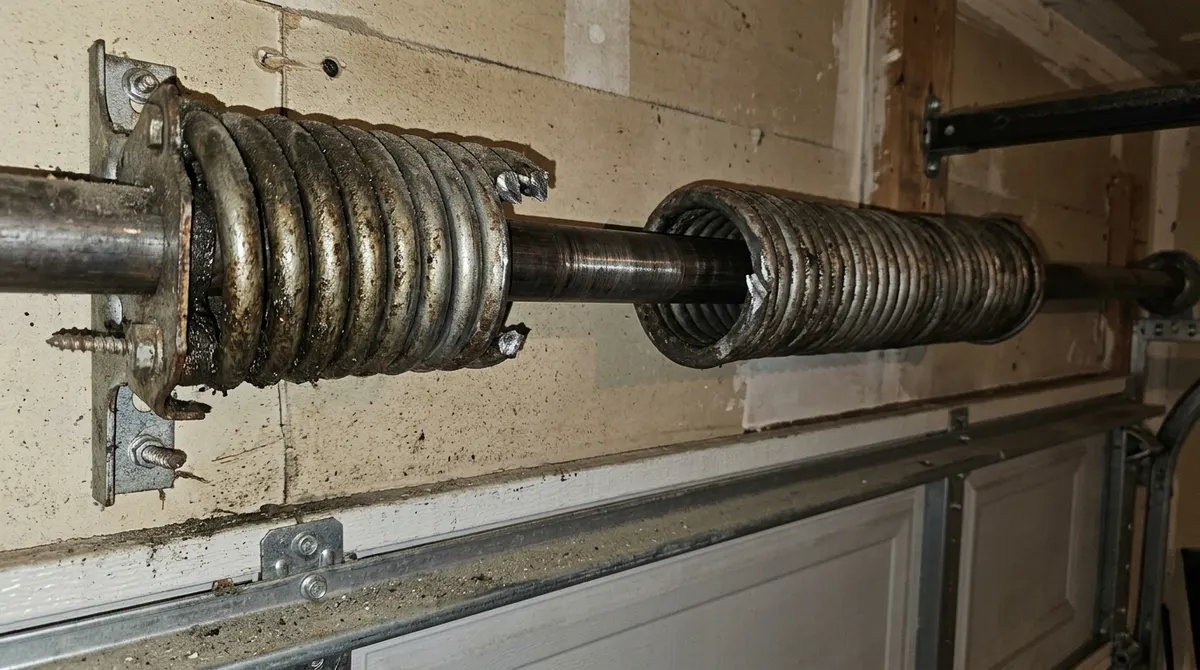
Safety: Never loosen the set screws on a torsion spring cone, and never use screwdrivers or pliers as winding tools. Spring tension can cause serious injury. Keep kids and pets away from a door with a broken spring.
Signs Your Garage Door Spring Is Broken
- A loud bang from the garage, like a firecracker, often with no one using the door
- A visible gap (usually 1–3 inches) in a torsion spring above the door
- The door feels extremely heavy when lifted by hand
- The opener strains, hums, or lifts the door only a few inches and stops
- The door goes up crooked or slams shut quickly
- Loose or hanging cables at the bottom corners
Torsion vs Extension Springs
| Feature | Torsion spring | Extension spring |
|---|---|---|
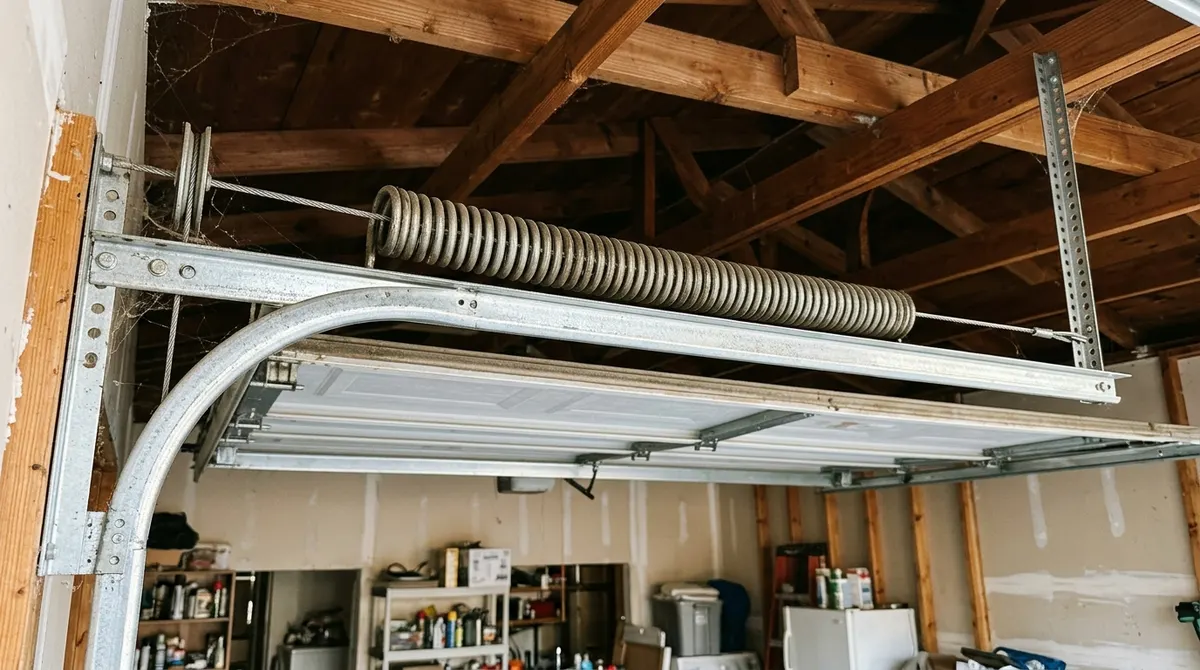
| Location | On a metal shaft above the door opening | Along the horizontal tracks on each side |
| How it works | Twists (winds) to store energy | Stretches as the door closes |
| Typical lifespan | About 10,000–15,000 cycles | About 10,000 cycles |
| DIY difficulty | High risk—pro recommended | Moderate—safety cables required |
| Typical pro cost | $150–$400 for a pair | $100–$300 for a pair |
What to Do Right Away
- Don’t press the opener button again—it can strip the opener gear or pull the door unevenly.
- Unplug the opener.
- If the door is closed, leave it closed. If it’s open, prop it with locking pliers clamped on the track below a roller and call a pro.
- Don’t pull the red emergency release while the door is up—it may crash down.
- Take a photo of the spring and label (wire size, length, color code) for the technician.
How to Replace a Garage Door Spring
Here is how the job is done so you know what to expect. For torsion springs we strongly recommend a professional.
Extension Springs (Experienced DIY)
- Open the door fully so the springs are relaxed, then clamp the tracks below the bottom rollers so the door can’t move.
- Unplug the opener.
- Remove the safety cable, pulley and old spring from the track hanger.
- Install a new spring of the same rating, rethread the pulley and the safety cable.
- Replace both sides at once so the door stays balanced, then remove the clamps and test.
Torsion Springs (Pro Recommended)
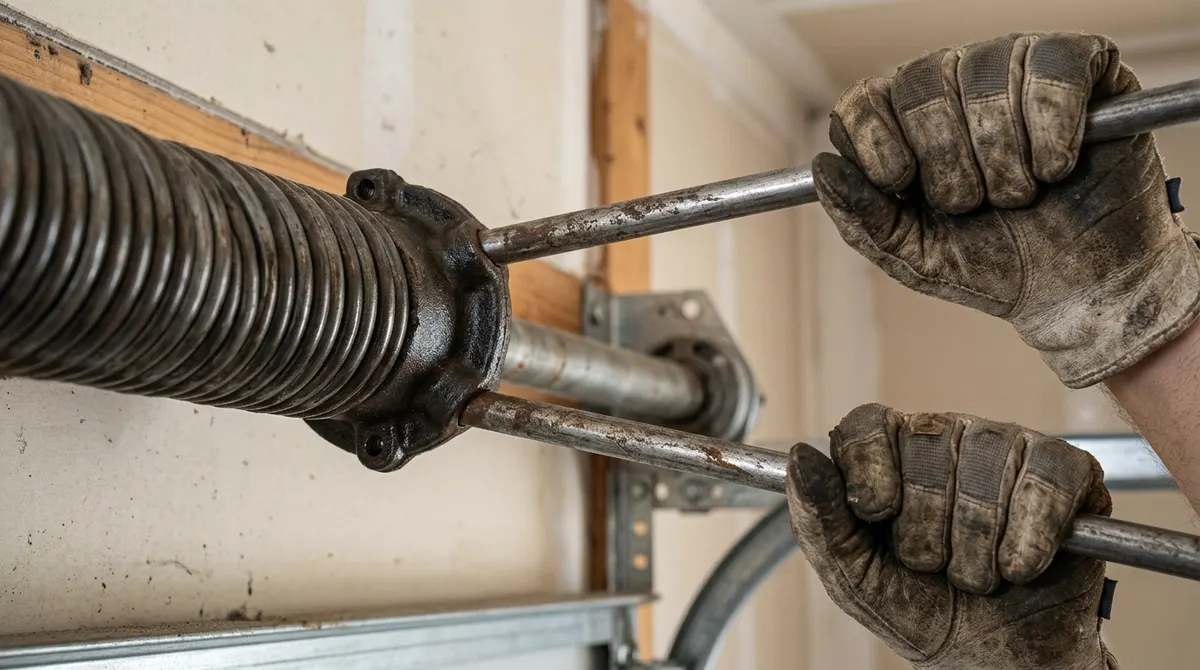
- The door is closed and clamped; the opener is unplugged.
- The technician unwinds the intact spring with two winding bars, a quarter turn at a time.
- The old springs come off the shaft and matched new springs (correct wire size, inside diameter, length and wind direction) go on.
- Cables are re-tensioned, the springs are wound to the correct number of turns (often about 7–8 full turns for a 7-ft door), and set screws are tightened.
- The door is balance-tested: it should stay put when lifted halfway by hand.
DIY vs Hiring a Pro
Pros
- DIY extension spring swaps can save $100+
- Springs are inexpensive parts
- A pro does the job in about an hour with a warranty
Cons
- Torsion springs can cause severe injuries
- Wrong spring size leaves the door unbalanced
- Many manufacturers sell springs only to dealers
If your opener misbehaves after the repair, see garage door opener not working and how to align garage door sensors.
Frequently Asked Questions
Can I open my garage door if the spring is broken?
It’s not recommended. Without the spring the door is very heavy and can drop suddenly. If you must, have two adults lift it slowly by hand and clamp it open—never use the opener.
How much does it cost to replace a garage door spring?
Most homeowners pay roughly $150–$400 for a professional to replace a pair of torsion springs, including labor. Parts alone are often $30–$100 per spring.
Should I replace both springs at once?
Yes. Springs wear at the same rate, so if one breaks the other is near the end of its life. Replacing both keeps the door balanced.
How long do garage door springs last?
Standard springs are rated for about 10,000 cycles—roughly 7–10 years with a few uses a day. High-cycle springs can last much longer.
Is it dangerous to replace a garage door spring yourself?
Torsion springs are one of the most dangerous home repairs. The stored tension can break bones if a tool slips. Leave torsion springs to a trained technician.


