To adjust water pressure in a house on city water, find the pressure reducing valve (PRV) where the main line enters, loosen the locknut and turn the adjusting screw clockwise to raise pressure or counterclockwise to lower it, a quarter turn at a time. On a well, adjust the pressure switch next to the pressure tank. Most homes do best at 40–60 psi. Always check pressure with a gauge before and after, and never set it above 80 psi, the upper limit most plumbing codes allow.
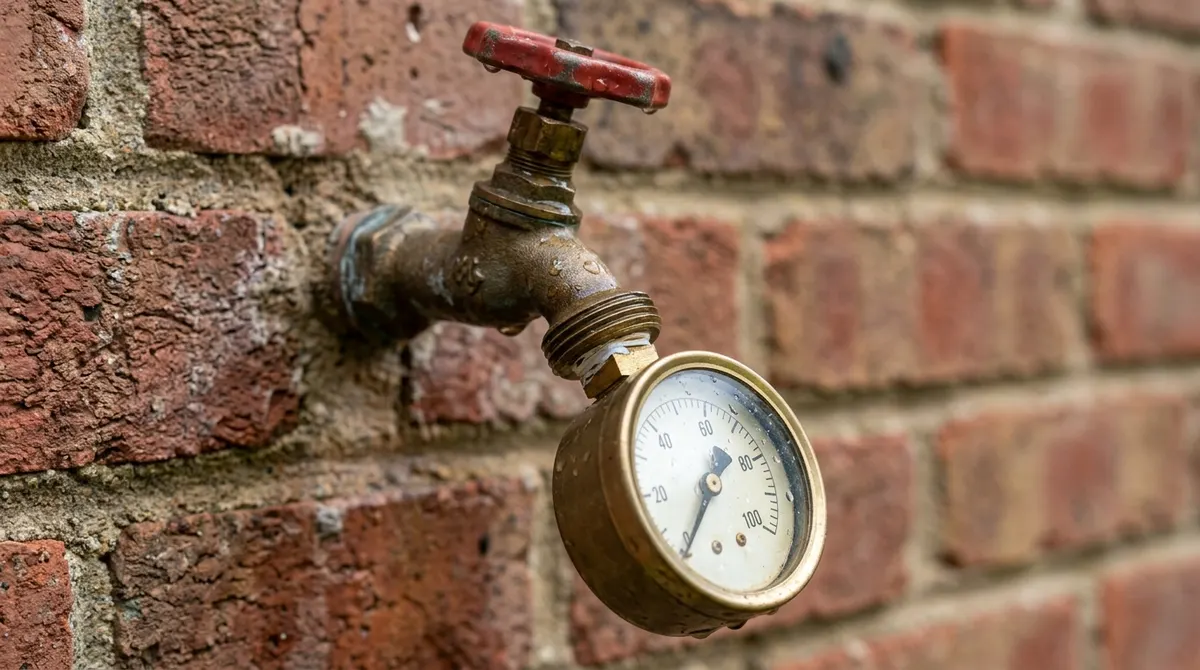
Step 1: Test Your Water Pressure
- Turn off all faucets and water-using appliances.
- Screw a pressure gauge onto an outdoor hose bib or laundry faucet.
- Open the faucet fully and read the gauge.
| Reading | What it means | Action |
|---|---|---|
| Below 40 psi | Low pressure | Check valves, PRV, clogs or well settings |
| 40–60 psi | Ideal range | No adjustment needed |
| 60–80 psi | High-normal | Consider lowering to protect fixtures |
| Above 80 psi | Too high | Install or adjust a PRV |
Step 2: Adjust a Pressure Reducing Valve (City Water)
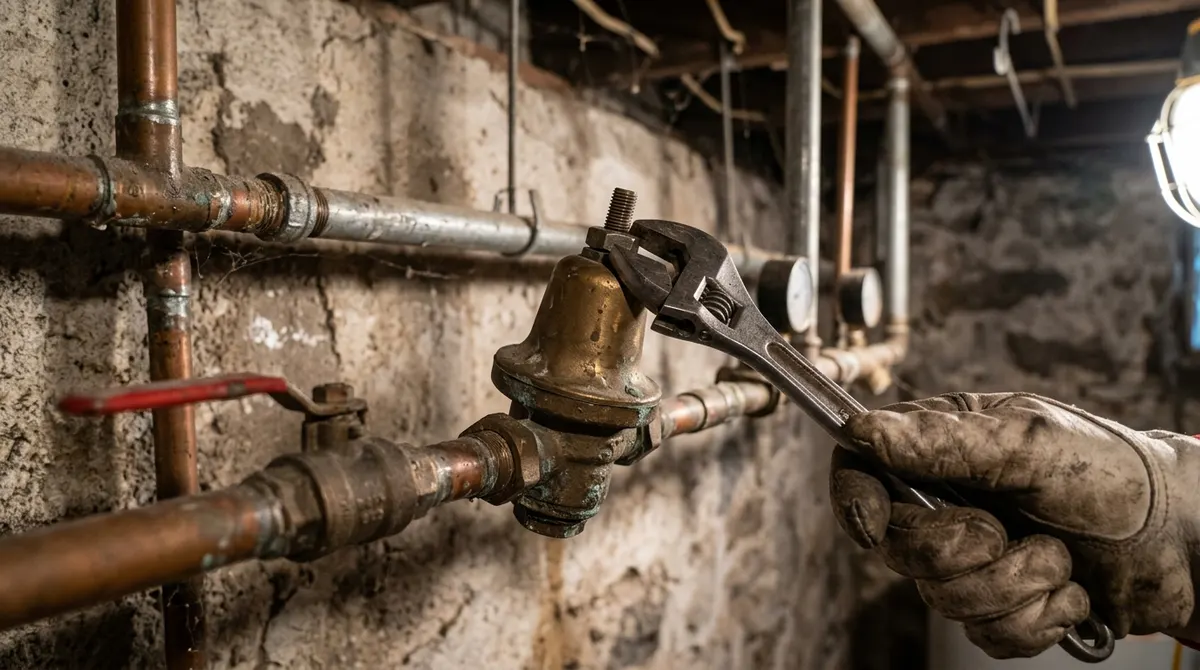
- Find the PRV near the main shutoff, usually in a basement, garage, crawlspace or outdoor box.
- Loosen the locknut on the adjusting screw.
- Turn the screw clockwise to increase pressure or counterclockwise to decrease it, a quarter to half turn at a time.
- Run a faucet, then recheck the gauge. Repeat until you reach 50–60 psi.
- Tighten the locknut.
If turning the screw changes nothing, the PRV may have failed (they often last about 10–15 years) and should be replaced by a plumber.
Step 3: Adjust a Well Pressure Switch
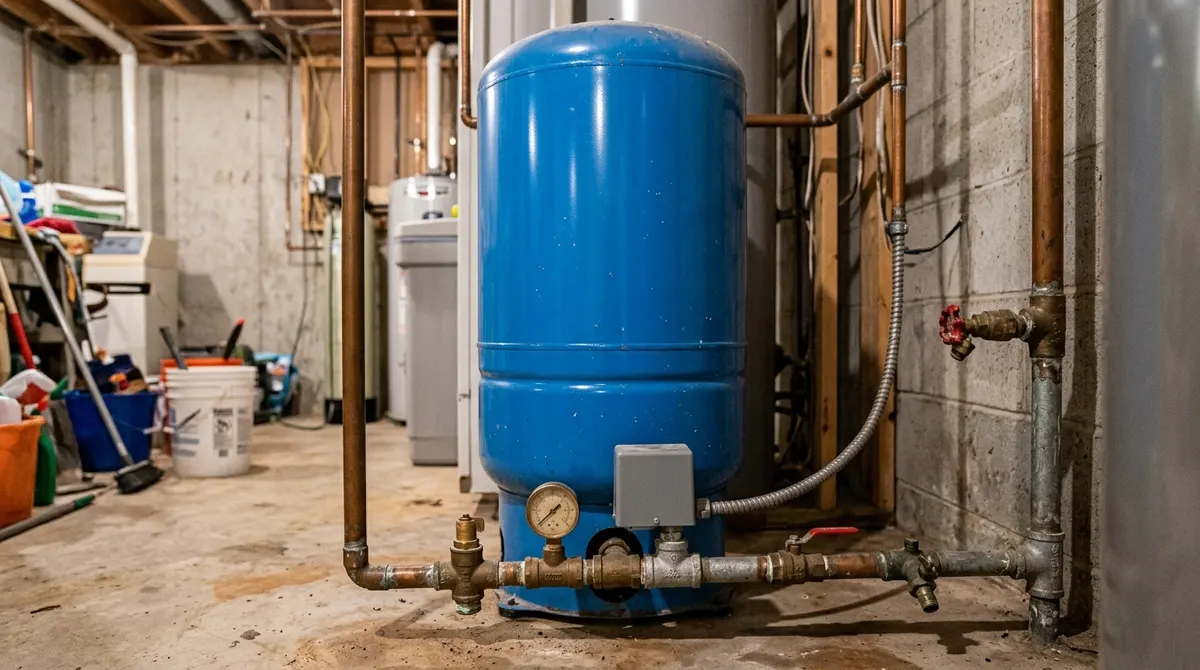
Safety: The pressure switch carries live 120/240-volt power. Turn off the pump breaker before removing the cover, and call a licensed well or electrical pro if you’re not comfortable working near wiring.
- Turn off power to the pump at the breaker.
- Drain the tank and check its air pre-charge with a tire gauge; it should be about 2 psi below the cut-in setting.
- Remove the switch cover. The large spring nut raises both cut-in and cut-out; the small nut changes the cut-out only.
- Turn the large nut a few turns clockwise to raise pressure (for example, from 30/50 to 40/60).
- Restore power and watch the gauge as the pump cycles. Never exceed the pump or tank rating.
Other Causes of Low Pressure
- Main shutoff or meter valve not fully open
- Clogged faucet aerators or showerheads
- Scale in old galvanized pipes
- A leak somewhere in the system
- Clogged whole-house filter or water softener
DIY Adjustment vs Calling a Plumber
Pros
- PRV adjustment takes minutes with a wrench
- Lower pressure protects pipes and appliances
- A gauge test is cheap and easy
Cons
- Well switches involve live electrical parts
- Old PRVs may be seized or failed
- Pressure above 80 psi can cause leaks and burst hoses
Low pressure at one fixture? See kitchen sink repair and how to replace a toilet fill valve.
Frequently Asked Questions
What is normal water pressure for a house?
40–60 psi is the usual target. Many plumbing codes require a pressure reducing valve when street pressure exceeds 80 psi.
Which way do you turn a PRV to increase pressure?
Clockwise (tightening the screw) increases pressure; counterclockwise decreases it.
Does every house have a pressure regulator?
No. Homes with moderate city pressure or well systems may not have one. Well homes are controlled by the pressure switch.
Can high water pressure damage pipes?
Yes. Over 80 psi can stress fittings, cause leaks, banging pipes and shorten the life of water heaters and appliances.
Why did my water pressure suddenly drop?
Common causes are a failing PRV, a partly closed valve, a leak, utility work, or a well pump or tank problem.