

To replace a bathroom faucet, shut off the water under the sink, disconnect the supply lines and lift rod, remove the mounting nuts, and lift out the old faucet. Then clean the sink deck, set the new faucet with its gasket or putty, tighten the mounting nuts, connect new braided supply lines and the pop-up drain, and test for leaks. Most homeowners finish in 1–2 hours with a basin wrench and adjustable wrench.
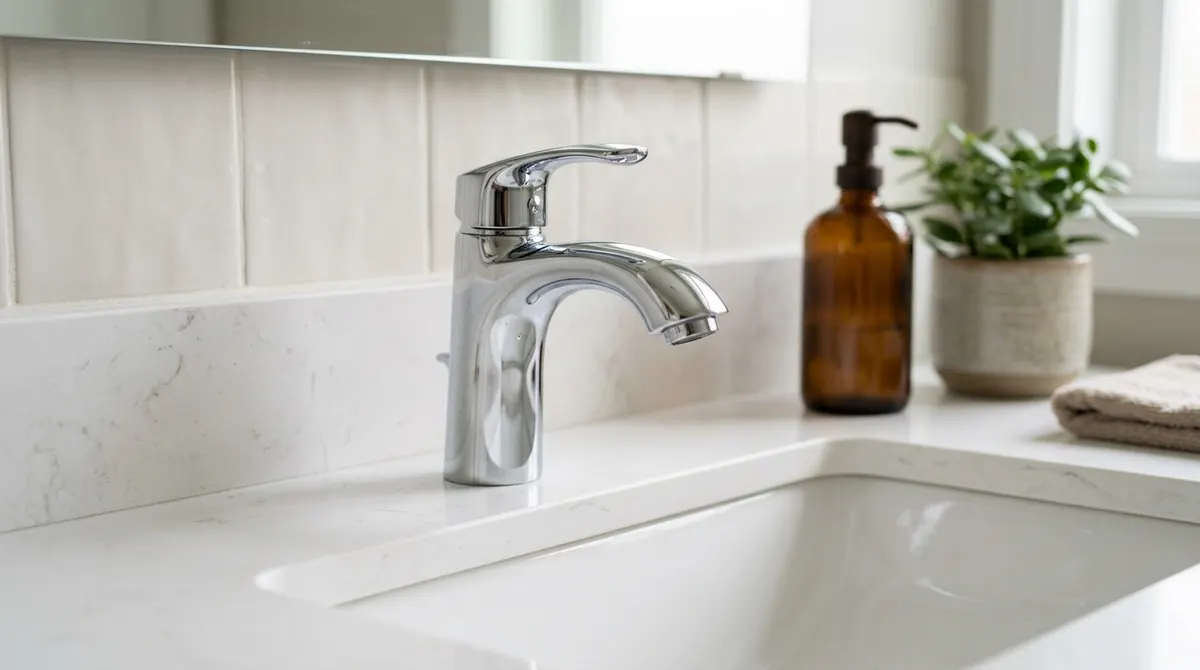
Choose the Right Replacement Faucet
Look under the sink and count the holes, then measure from the center of the left hole to the center of the right one.
| Faucet type | Hole spacing | Holes |
|---|---|---|
| Centerset | 4 inches | 3 (or 1 with deck plate) |
| Widespread | 6–16 inches (8 in is common) | 3 |
| Single-hole | — | 1 (a cover plate can hide extras) |
| Wall-mount | Varies | In wall—needs plumbing changes |
Tools and Materials
- Basin wrench and adjustable wrench
- Bucket, towels and a flashlight
- Plumber’s putty or silicone (check the faucet instructions)
- Two new braided supply lines (measure length and fitting size)
- Penetrating oil for corroded nuts
- Plumber’s tape for threaded drain parts
How to Replace a Bathroom Faucet
- Turn off the water at both shutoff valves and open the faucet to relieve pressure. If the valves leak or won’t close, shut off the main.
- Disconnect supply lines at the faucet tails with a basin wrench, catching water in a bucket.
- Disconnect the drain linkage—unscrew the pivot rod nut and loosen the lift rod strap.
- Remove the mounting nuts under the deck. Spray stubborn nuts with penetrating oil and wait 10 minutes.
- Lift out the old faucet and scrape away old putty and mineral deposits.
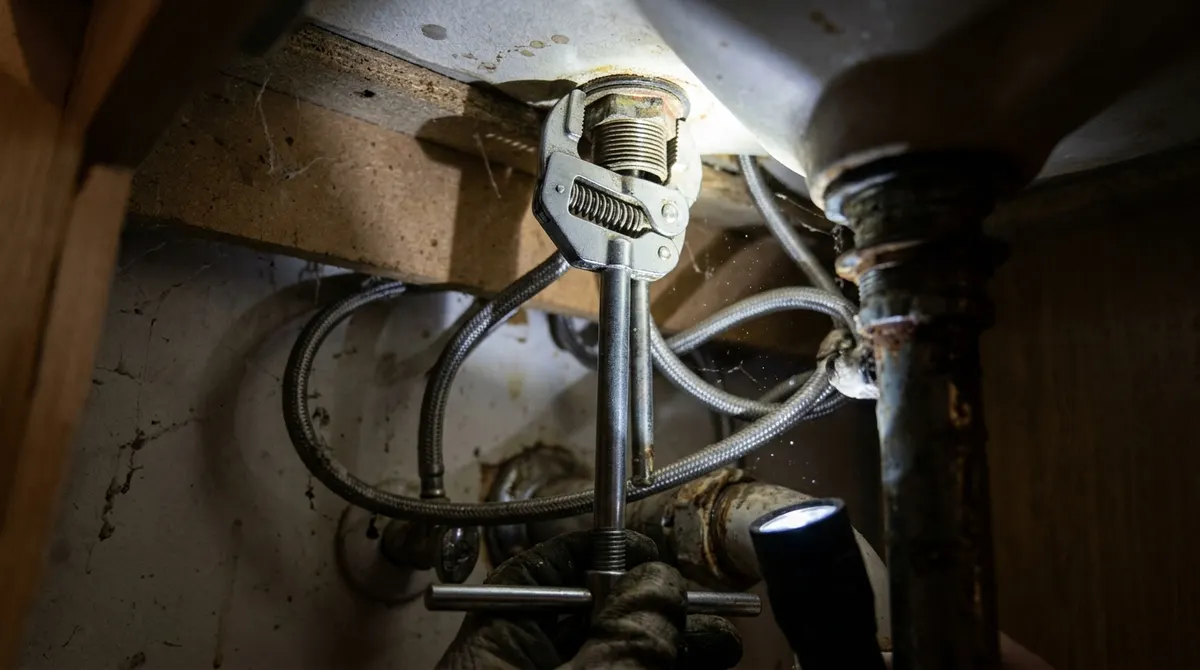
- Set the new faucet. Place the gasket (or a rope of putty if no gasket is supplied) and feed the tails through the holes. Have a helper keep it straight while you hand-tighten the mounting nuts, then snug them with the wrench.
- Install the drain if the faucet includes one: putty under the drain flange, thread the body from below, and connect the pop-up rod.
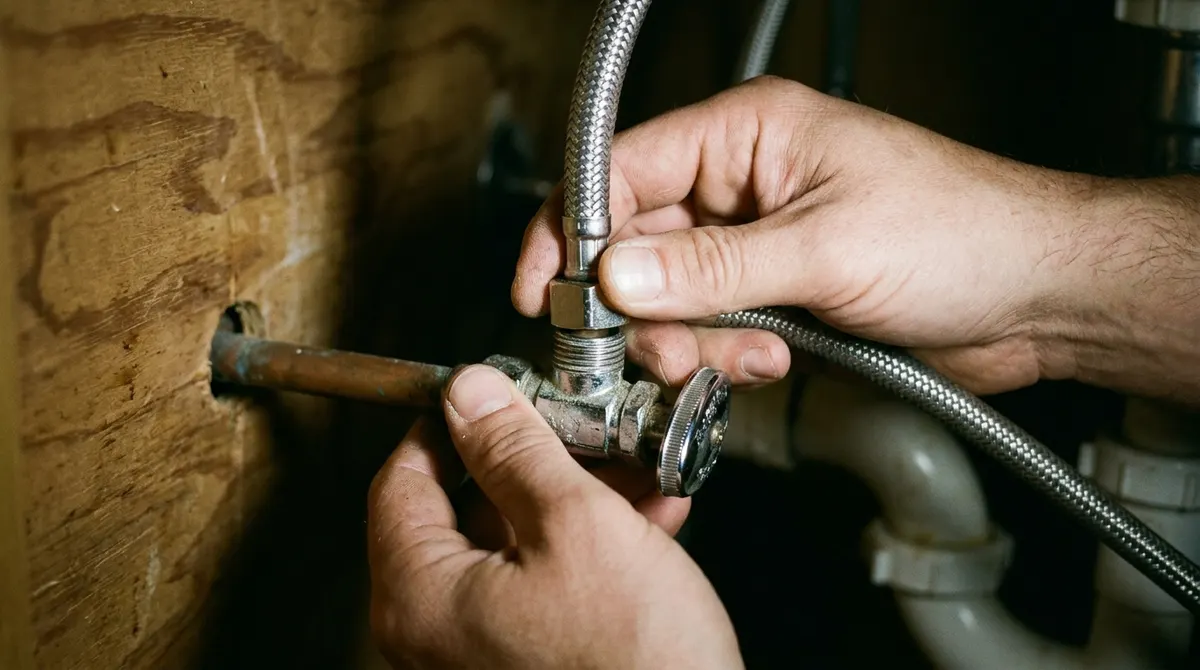
- Connect the supply lines. Hot to the left, cold to the right. Hand-tighten, then a quarter to half turn with a wrench. Compression fittings don’t need tape.
- Flush and test. Remove the aerator, turn the water on slowly and run the faucet for a minute to clear debris. Check every joint with a dry tissue, then reinstall the aerator.
Tip: Some stone and cultured-marble vanity tops stain from oil-based plumber’s putty. Use a stain-free putty or clear silicone on stone, and always follow the faucet maker’s sealing instructions.
DIY vs Hiring a Plumber
Pros
- Saves roughly $150–$300 in labor
- Basic tools and about an hour of work
- Good chance to replace old supply lines
Cons
- Seized nuts can be frustrating in tight cabinets
- Corroded shutoff valves may need replacing
- Wall-mount faucets need a plumber
Working on the kitchen too? See kitchen sink repair for P-trap leaks and cartridge swaps.
Frequently Asked Questions
How long does it take to replace a bathroom faucet?
About 1–2 hours for a first-timer. Removing a corroded old faucet is usually the slowest part.
Do I need plumber’s putty for a bathroom faucet?
Only if the faucet doesn’t come with a base gasket. Most new faucets include a rubber or foam gasket; putty is still common under the drain flange.
Can I put a single-hole faucet on a three-hole sink?
Yes, if the faucet comes with or accepts a deck plate (escutcheon) that covers the outer holes.
Should I replace the supply lines?
Yes. They’re inexpensive, and old rubber or rigid lines are a common leak point. Match the length and the fitting size at the valve.
Why is my new faucet’s water pressure low?
Debris from the lines is likely trapped in the aerator. Unscrew it, rinse the screen, and reinstall.


