

To clean a kitchen fast, work top to bottom and left to right: clear clutter and load the dishwasher, spray and wipe counters and backsplash, clean the stovetop and appliance fronts, scrub the sink, empty the trash, then sweep and mop the floor. Do quick daily wipe-downs, a weekly clean of appliances and floors, and a monthly deep clean of the oven, fridge, and cabinets.
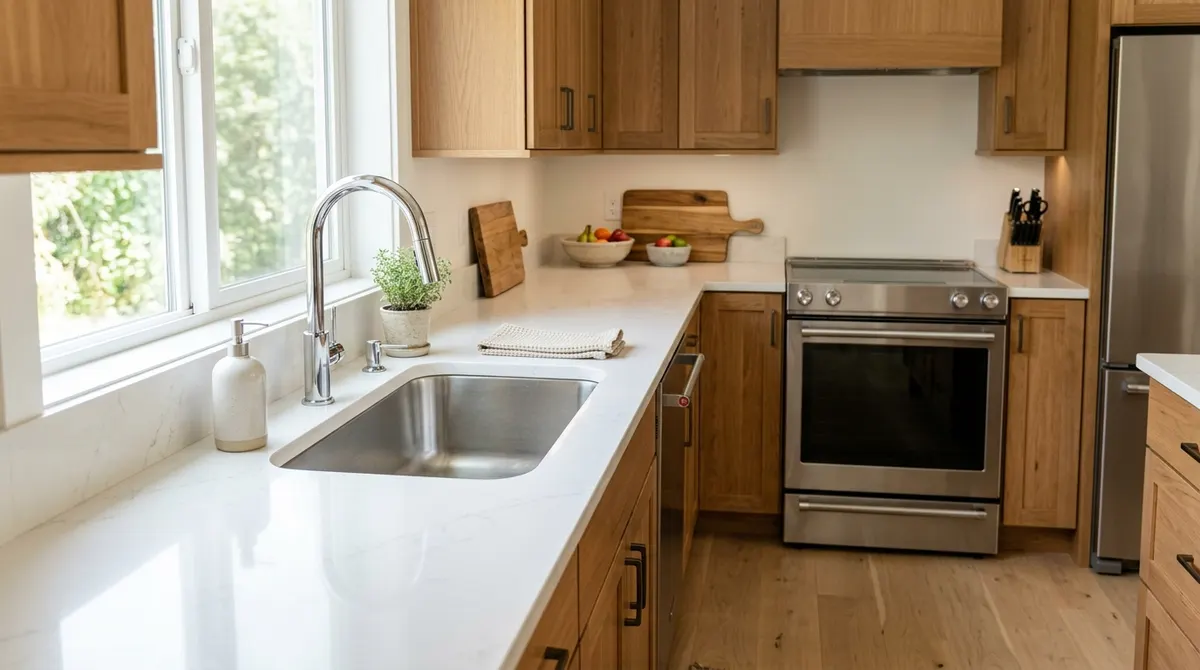
How to Clean a Kitchen Step by Step
- Declutter: put away food and items; load the dishwasher or soak pans.
- Dust high areas: tops of cabinets, light fixtures, and the range hood.
- Spray counters and backsplash with an all-purpose cleaner and let it sit a minute.
- Clean the stovetop: lift grates, wipe spills, and scrub burned-on bits.
- Wipe appliance fronts and handles—fridge, microwave, dishwasher.
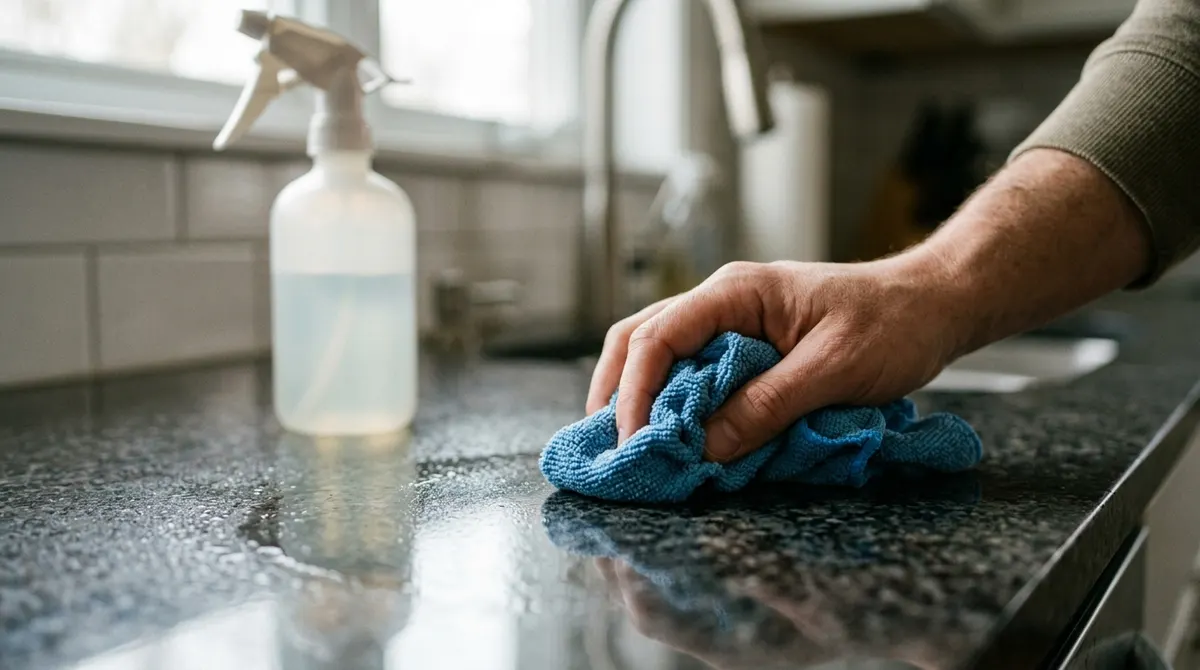
- Wipe counters with a microfiber cloth.
- Scrub the sink and faucet last so dirty water doesn’t land on clean surfaces.
- Empty trash and recycling and wipe the bin.
- Sweep or vacuum, then mop the floor.
Kitchen Cleaning Checklist
| How often | Tasks |
|---|---|
| Daily | Wash dishes, wipe counters and stovetop, clean sink, sweep crumbs, take out trash if full |
| Weekly | Clean microwave, wipe appliance fronts and handles, mop floor, clean fridge shelves of spills, disinfect trash bin |
| Monthly | Clean oven, dishwasher filter, range hood filter, inside cabinets, and toss expired food |
| Every 3–6 months | Deep clean fridge and freezer, clean behind appliances, wash walls and cabinet fronts |
Create a personalized routine with our cleaning schedule generator.
Best Cleaners for Each Kitchen Surface
| Surface | Use | Avoid |
|---|---|---|
| Granite / quartz | Mild dish soap and water | Vinegar, bleach, abrasive powders |
| Laminate | All-purpose cleaner | Steel wool |
| Stainless steel | Dish soap, then stainless polish with the grain | Bleach, abrasive pads |
| Wood cabinets | Diluted dish soap, dry immediately | Soaking wet cloths |
| Glass stovetop | Cooktop cleaner or baking soda paste | Scouring pads |
How to Deep Clean the Oven
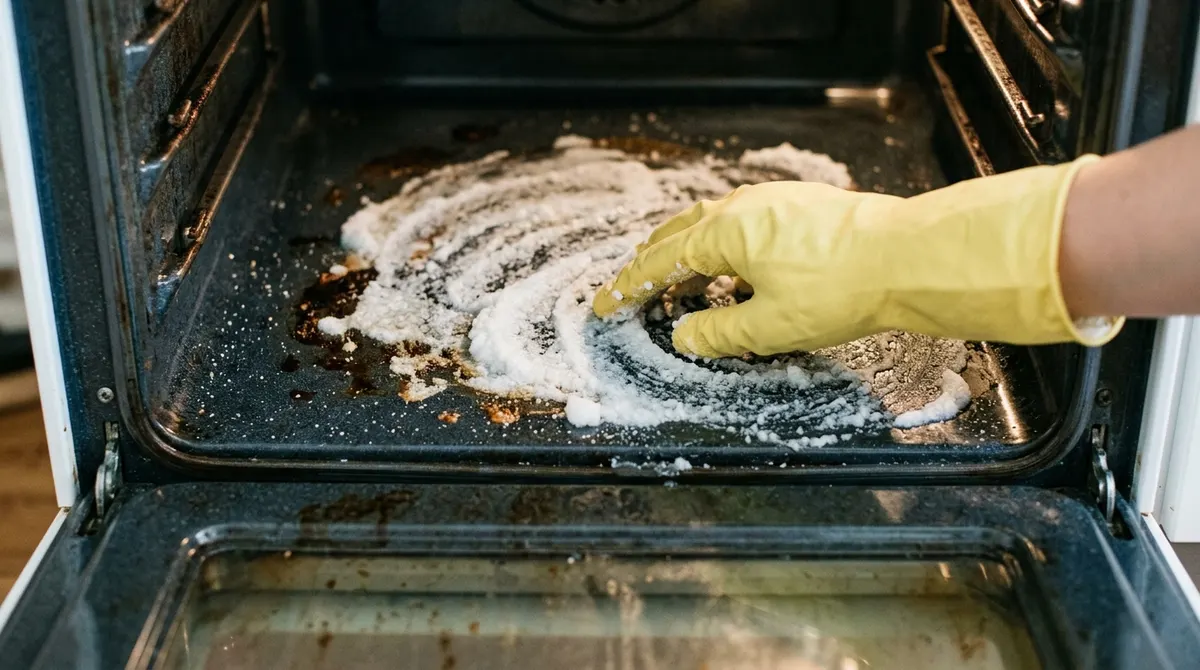
- Remove racks and soak them in hot soapy water.
- Spread a paste of baking soda and water inside (avoid the heating elements).
- Leave it overnight, then wipe off with a damp cloth.
- Spray white vinegar on any remaining residue, wipe, and dry.
Natural vs Store-Bought Cleaners
Pros
- Dish soap, baking soda and vinegar are cheap and food-safe
- Fewer fumes in a room where you cook
- Commercial degreasers cut heavy grease fast
Cons
- Vinegar can damage natural stone
- Natural cleaners need more scrubbing on baked-on grease
- Never mix bleach with vinegar or ammonia
Tip: Replace or sanitize kitchen sponges often—microwave a damp sponge for 1–2 minutes or run it through the dishwasher, and replace it every 1–2 weeks.
Frequently Asked Questions
What is the correct order to clean a kitchen?
Top to bottom: declutter, dust high areas, clean counters and appliances, scrub the sink, then sweep and mop the floor last.
How often should you deep clean your kitchen?
Do a quick clean daily, a thorough clean weekly, and deep clean the oven, fridge, and cabinets monthly or every few months.
What is the best cleaner for kitchen counters?
Mild dish soap and warm water is safe for almost all counters. Use a stone-safe cleaner for granite and quartz.
How do you clean a greasy kitchen?
Use hot water and dish soap or a degreaser on cabinets, range hood, and backsplash, and clean the range hood filter monthly.
How long does it take to clean a kitchen?
A daily tidy takes 10–15 minutes; a full deep clean can take 2–3 hours.


