To repair a concrete floor, clean out the damaged area, fill hairline and narrow cracks with concrete crack filler or epoxy, patch holes and spalled spots with a vinyl or polymer-modified patching compound, and use a concrete resurfacer for floors with widespread wear. Let repairs cure before sealing or coating. Cracks wider than 1/4 inch, uneven slabs, or cracks that keep growing can signal settling or moisture issues that need a pro.
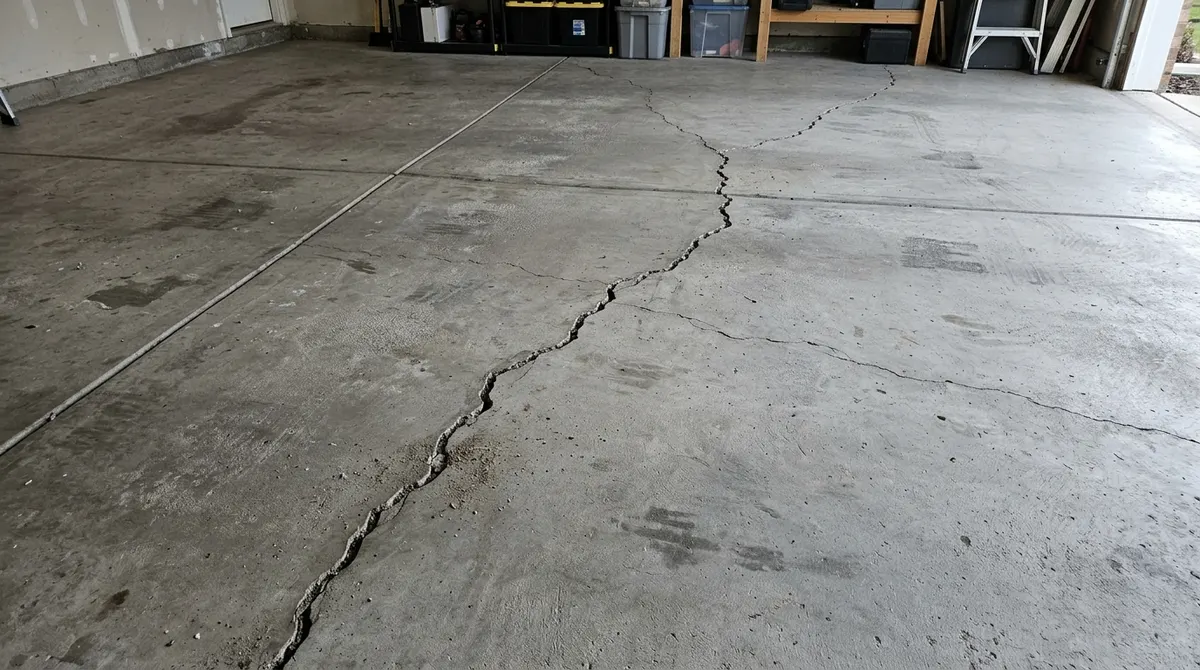
Types of Concrete Floor Damage
| Damage | Cause | Best repair |
|---|---|---|
| Hairline cracks (<1/8″) | Shrinkage while curing | Crack filler, epoxy or sealer |
| Medium cracks (1/8″–1/4″) | Shrinkage, temperature movement | Backer rod + polyurethane sealant or epoxy |
| Wide or uneven cracks (>1/4″) | Settling, soil movement | Professional assessment, leveling |
| Pits and holes | Impact, wear | Vinyl concrete patch |
| Spalling / flaking | Freeze-thaw, de-icing salts | Patch or resurface |
| Dusting / worn surface | Weak top layer | Resurfacer, then sealer |
What You’ll Need
- Wire brush, shop vac, cold chisel and hammer
- Concrete crack filler or two-part epoxy
- Foam backer rod (for deeper cracks)
- Vinyl or polymer-modified patching compound
- Concrete resurfacer, squeegee and broom (for large areas)
- Trowel, bucket, drill and mixing paddle
- Gloves, safety glasses and a dust mask
How to Fix Cracks in a Concrete Floor
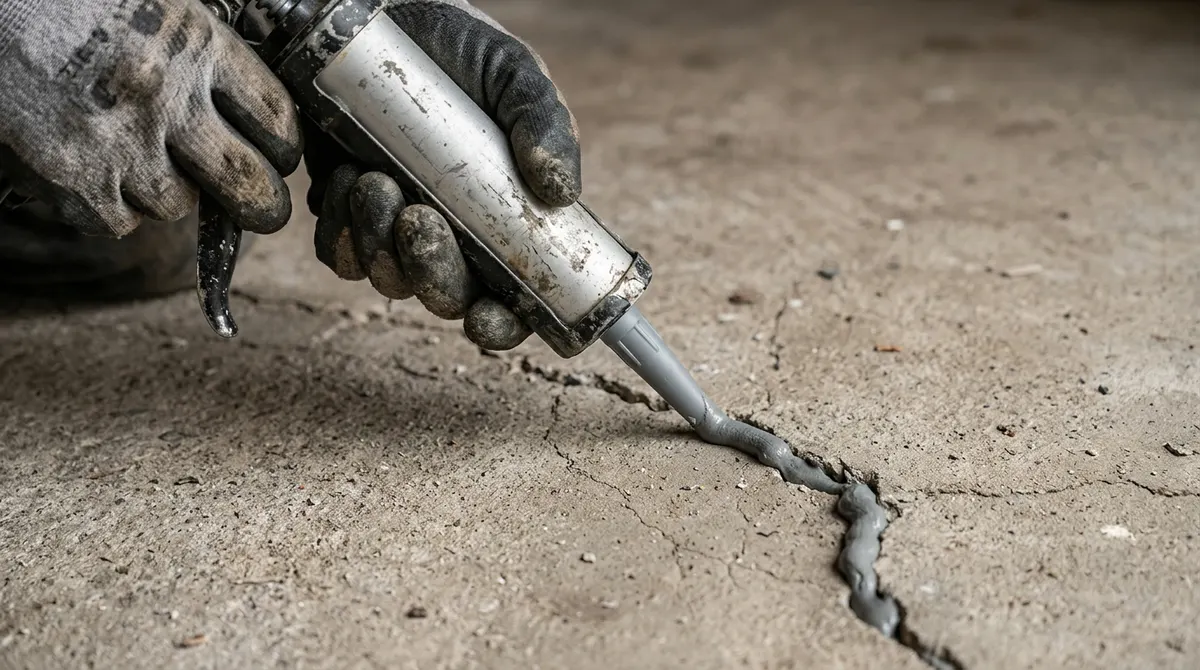
- Widen the crack slightly with a chisel and undercut the edges (a “V” or inverted-V helps the filler lock in).
- Brush and vacuum out all dust and loose debris.
- For cracks deeper than 1/2″, push in foam backer rod.
- Fill with crack filler or epoxy, overfilling slightly.
- Smooth flush with a putty knife and let it cure per the label.
How to Patch Holes and Spalling
- Chip away all loose concrete until you reach solid material.
- Clean and dampen the area (no standing water).
- Mix vinyl patching compound and press it firmly into the hole.
- For deeper holes, build up in layers per the product directions.
- Feather the edges with a trowel and keep damp while curing if instructed.
Resurfacing a Worn Floor
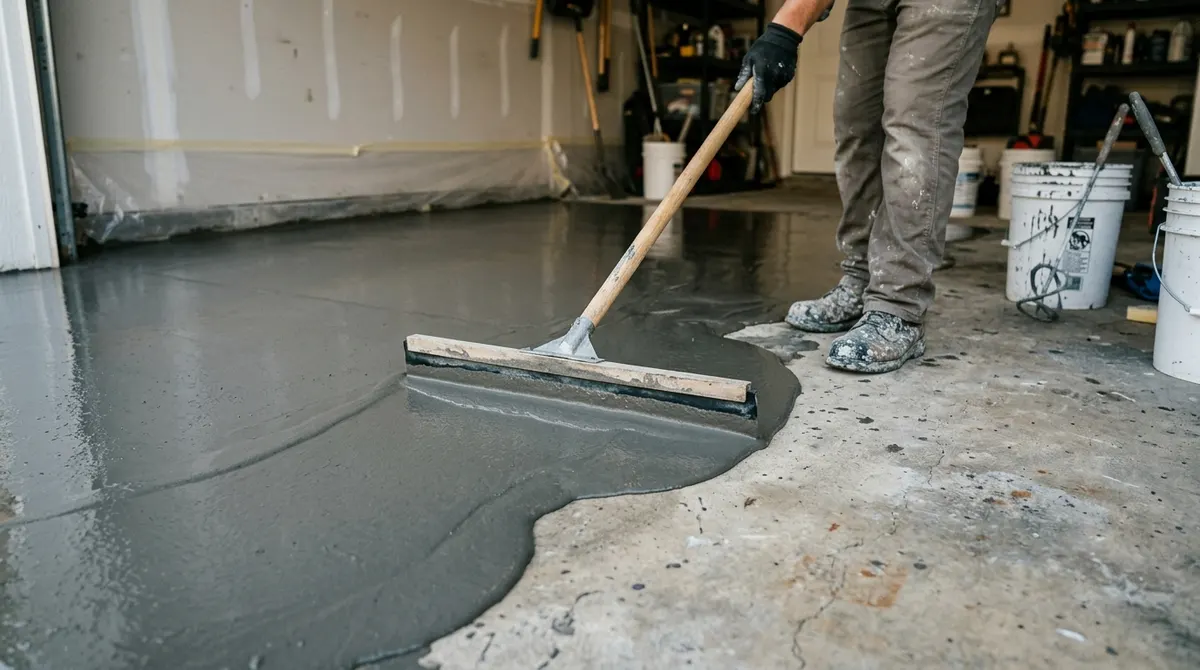
Pressure-wash and fill cracks first. Mix the resurfacer to a pourable consistency, spread it with a long-handled squeegee in manageable sections, then broom finish for traction. Keep existing control joints open. Most resurfacers can be walked on in a few hours and driven on after about a day—check the bag.
DIY vs Professional Repair
Pros
- Crack and patch kits are inexpensive
- Most repairs take a weekend
- Stops water, salt and pests getting in
Cons
- Patches rarely match color perfectly
- Won’t fix settling or heaving slabs
- Basement cracks with water may need drainage work
Water coming through basement floor cracks? Read about a French drain for your basement.