A fake wall is a non-structural partition that divides a room without permanent construction. The most popular options are a freestanding 2×4 stud wall clad in drywall or paneling, a tension-mounted pressure wall, a modular panel kit, a tall bookcase, or a ceiling-track curtain. Renters should choose one that holds itself in place by pressure or weight, so nothing is screwed into the ceiling or floor.
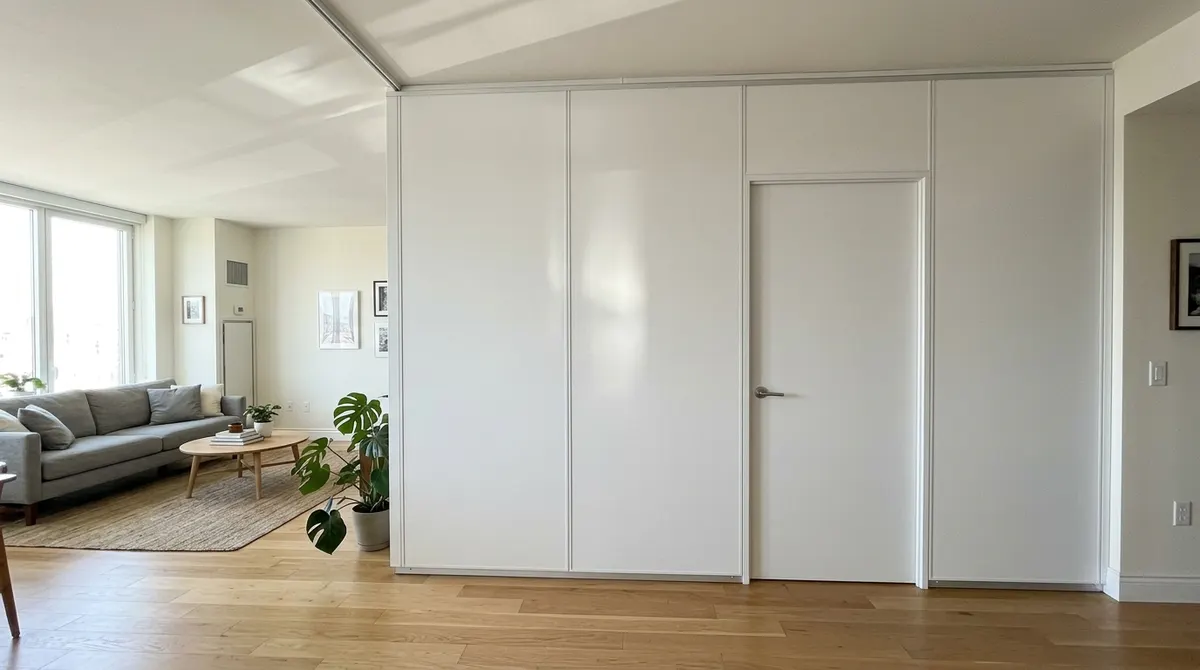
Types of Fake Walls Compared
| Option | Privacy | Sound blocking | Rental friendly | Typical cost |
|---|---|---|---|---|
| Freestanding stud wall | High | Medium (better with insulation) | Yes, if pressure-fit | $300–$800 DIY |
| Tension pressure wall kit | High | Medium | Yes | $1,000+ installed |
| Modular panel system | High | Low–medium | Yes | $500–$2,500 |
| Tall bookcase | Medium | Low | Yes | $100–$400 |
| Ceiling-track or tension-rod curtain | Low–medium | Very low | Yes (tension rod) | $40–$200 |
Before You Build
- Check your lease or building rules. Many landlords allow pressure-fit walls but not fasteners.
- Keep egress and light. Each sleeping area needs a window or a safe way out, and a smoke alarm. Don’t block HVAC returns or vents.
- Leave walkways of at least 30–36 inches.
- Measure ceiling height at several points—floors and ceilings are rarely level.
How to Build a Freestanding Fake Wall
- Cut plates. Cut 2×4 bottom and top plates to the wall length. Put felt or rubber pads under the bottom plate and foam sill seal on top to protect finishes.
- Cut studs about ¼–½ inch shorter than the floor-to-ceiling height minus the two plates, so you can tap the wall upright.
- Frame flat on the floor with studs 16 or 24 inches on center. Add a framed opening if you want a door.
- Raise and shim. Tilt the wall up and drive shims (or adjustable jack feet) between the top plate and a padded board so the wall is tight. Check plumb with a level.
- Add insulation such as mineral wool batts for better sound control.
- Skin it with drywall, plywood, or lightweight paneling, then paint or wallpaper.
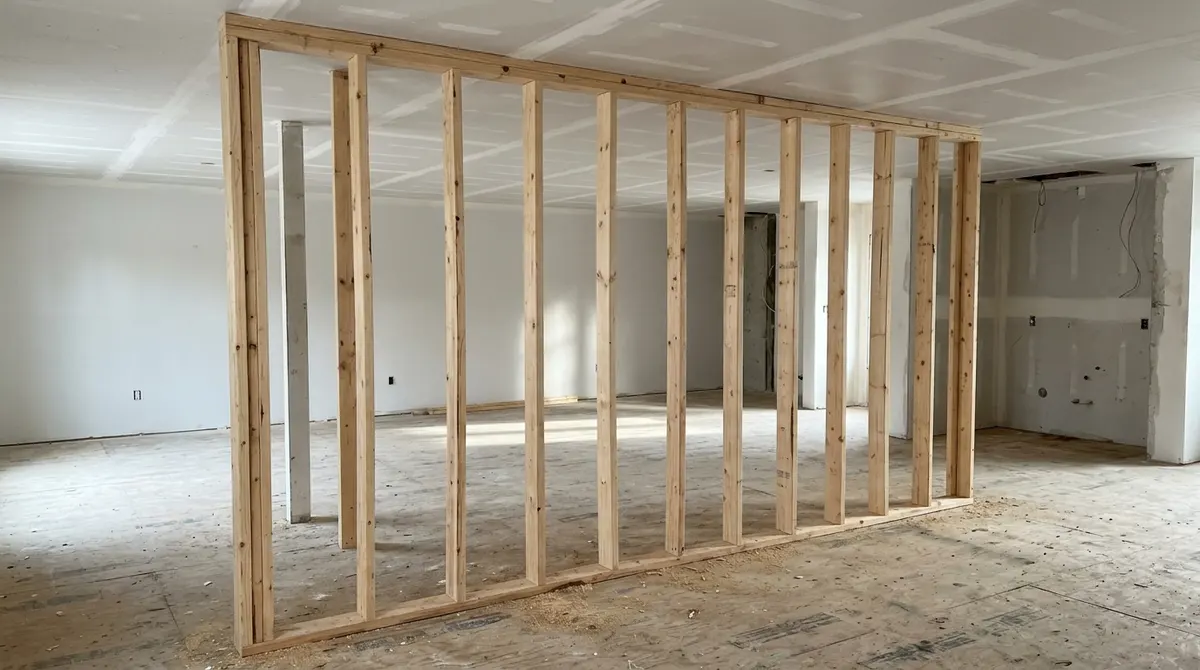
Safety: A tall wall that isn’t secured can tip. Make sure it’s snug to the ceiling, tie long walls into an existing wall at one end with a removable bracket, and anchor tall bookcases with anti-tip hardware. Never run electrical wiring through a temporary wall without a permit and an electrician.
Quick Fake Wall Ideas Without Building
- Two tall, back-to-back bookcases make a sturdy, storage-packed divider
- A ceiling-track curtain gives floor-to-ceiling softness and slides open
- Folding screens or slatted wood panels add privacy and let light through
- Faux brick or wood peel-and-stick panels on a freestanding frame create an accent wall
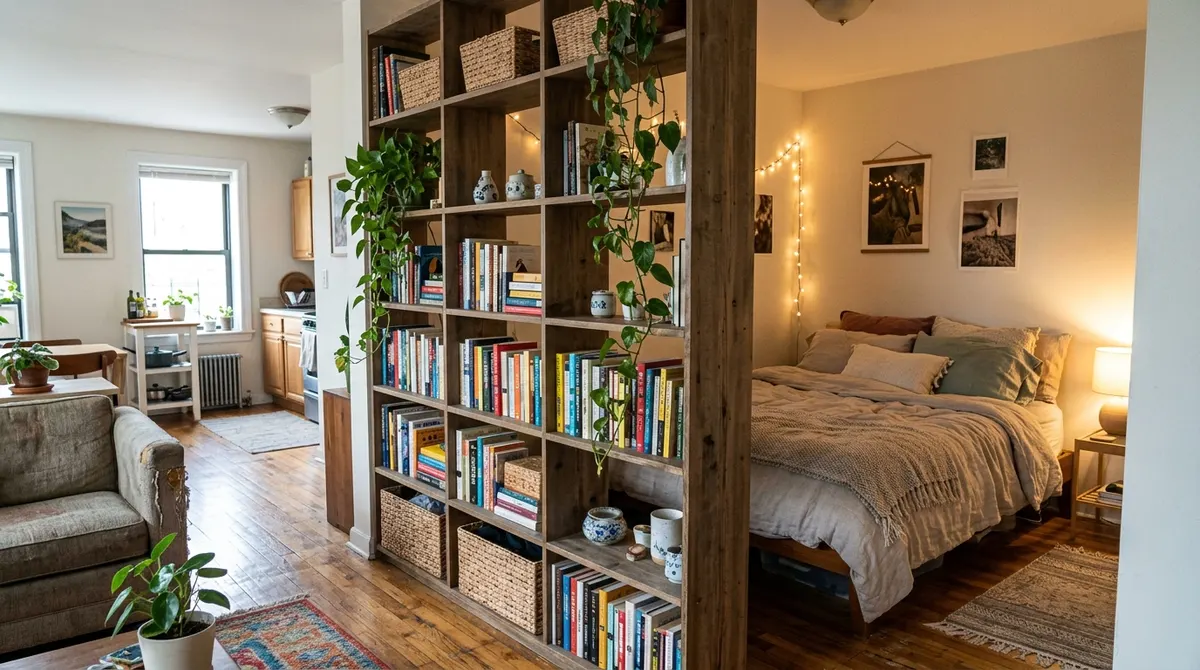
Pros and Cons of a Fake Wall
Pros
- Adds a bedroom or office without renovation
- Removable when you move out
- Much cheaper than a permanent wall
Cons
- Doesn’t block sound like a real wall
- Can block light and airflow
- Some buildings restrict them
If you later want to hang shelves on a real wall, see how to find a stud in the wall.
Frequently Asked Questions
Are fake walls legal in apartments?
Often yes, but rules vary. Many buildings allow pressure-mounted walls if a bedroom created this way still has a window, a smoke detector and a clear exit. Check with your landlord first.
How much does a temporary wall cost?
A DIY 2×4 and drywall wall can cost a few hundred dollars in materials. Professionally installed pressurized walls typically cost $1,000 or more.
Will a fake wall damage my ceiling?
Not if you pad the top plate with foam or rubber and don’t overtighten. Excessive pressure can crack drywall ceilings.
Can a fake wall have a door?
Yes. Frame a rough opening and hang a lightweight hollow-core or sliding door, or use a curtain.
How do I make a fake wall more soundproof?
Fill the cavity with mineral wool insulation, use two layers of drywall, and seal the gaps at the top and bottom with foam or acoustic caulk.