

You can “dry clean” many clothes at home by using a home dry-cleaning kit in your dryer, gently hand washing washable fabrics like wool, silk, cashmere, and polyester in cold water with a mild detergent, or refreshing them with a steamer. True dry cleaning uses chemical solvents you can’t safely use at home, so leave structured suits, leather, suede, and heavily stained or delicate garments to a professional.

“Dry Clean” vs “Dry Clean Only”
- “Dry Clean” means professional cleaning is recommended, but the fabric can often be hand washed carefully.
- “Dry Clean Only” is a stronger warning—usually because of structure, linings, trims, or fabrics that shrink, bleed, or lose shape in water. Be cautious with these.
Which Fabrics Can You Clean at Home?
| Usually safe at home | Best left to a professional |
|---|---|
| Polyester, nylon, acrylic | Tailored suits and structured blazers |
| Wool and cashmere sweaters (hand wash, cold) | Leather and suede |
| Silk blouses (hand wash, cold, test color first) | Velvet, taffeta, brocade |
| Cotton and linen | Rayon/viscose that is lined or structured |
| Spandex blends | Beaded, sequined, or embellished items |
Method 1: Use a Home Dry-Cleaning Kit
Kits such as Dryel or Woolite Dry Cleaner’s Secret use a reusable bag and pre-moistened cleaning cloths in your clothes dryer. They freshen and remove odors and light wrinkles, but they won’t remove heavy stains.
- Spot-treat small stains with the kit’s stain remover pen.
- Place up to 3–4 garments in the bag with one cleaning cloth.
- Run the dryer on medium heat for about 30 minutes (follow the kit instructions).
- Remove items immediately and hang them up to let wrinkles fall out.
Method 2: Hand Wash Delicate Fabrics

- Test for colorfastness: dab a hidden seam with a damp white cloth. If color transfers, don’t wash it—take it to a dry cleaner.
- Fill a basin with cold or lukewarm water and a small amount of wool-safe or delicate detergent.
- Submerge and swish gently for 3–5 minutes. Don’t rub or wring.
- Rinse in clean cool water until no suds remain.
- Press out water by rolling the item in a clean towel.
- Dry flat on a towel or drying rack (sweaters), or hang on a padded hanger (blouses), away from heat and sunlight.
Method 3: Steam to Refresh
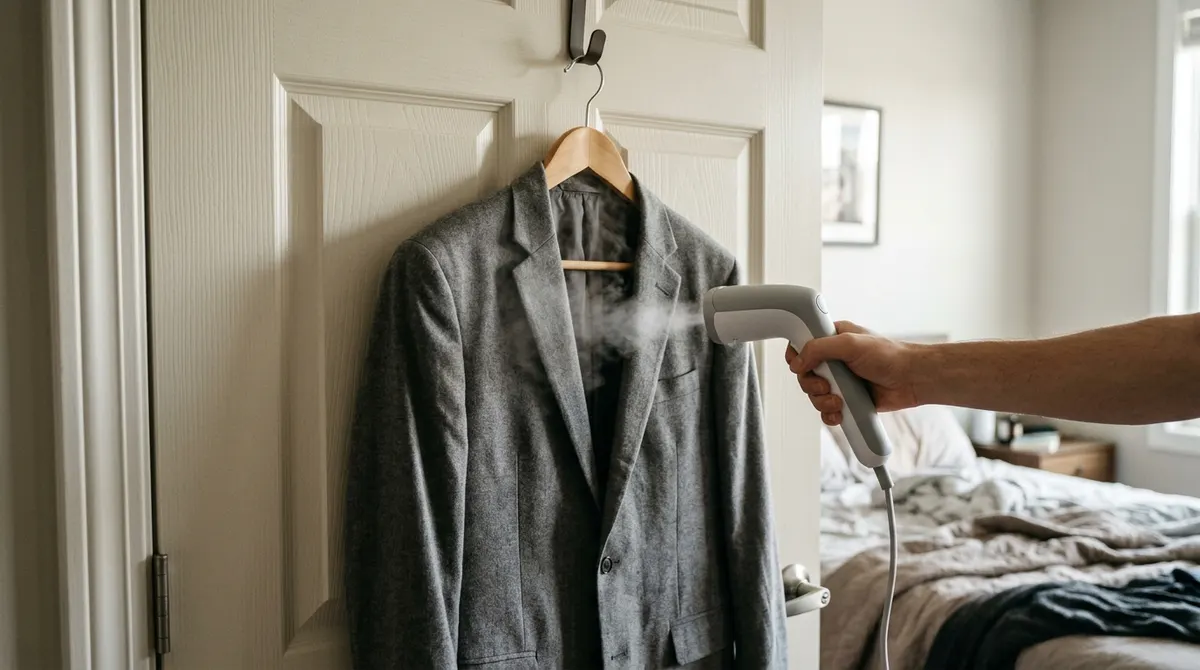
A handheld garment steamer removes wrinkles, freshens fabric, and kills some odor-causing bacteria—great for suits, coats, and dresses you’ve worn once or twice. Hang the garment, keep the steamer a few inches away, and let it dry fully before wearing.
Home Dry Cleaning: Pros and Cons
Pros
- Saves money and trips to the cleaner
- Gentle methods can extend garment life
- Avoids harsh solvents
Cons
- Won’t remove heavy grease or set-in stains
- Risk of shrinking or color bleeding if done wrong
- Can’t restore the crisp press of professional finishing
How to Remove Stains from Dry Clean Only Clothes
- Blot fresh spills immediately with a clean cloth—don’t rub.
- Use a stain pen or a tiny amount of mild detergent and cool water on a hidden area first.
- For oily stains, sprinkle cornstarch to absorb the oil, then brush it off.
- Point out stains to your dry cleaner rather than treating large or valuable stains yourself.


