

Most kitchen sink repairs are simple DIY jobs: tighten or reseal the drain and P-trap slip nuts to stop leaks, clear clogs with a plunger or by removing the P-trap, replace the faucet cartridge or O-rings to stop drips, and clean the aerator to fix low water pressure. Always shut off the water at the valves under the sink first. Call a plumber for leaks inside the wall, cracked sinks, or repeated clogs deeper in the drain line.
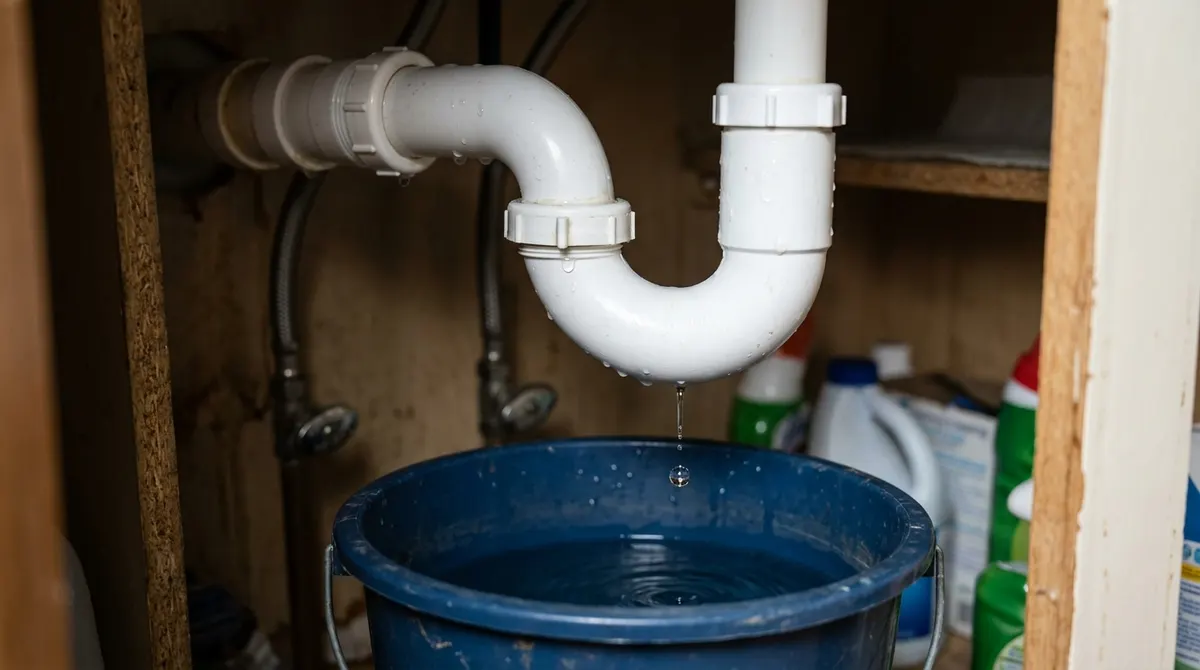
Common Kitchen Sink Problems and Fixes
| Problem | Likely cause | Fix |
|---|---|---|
| Leak under sink | Loose slip nut, worn washer, failed basket strainer putty | Tighten nuts, replace washers, reseal strainer |
| Slow drain / clog | Grease, food scraps in trap | Plunge, clean P-trap, snake the line |
| Dripping faucet | Worn cartridge, O-rings or seats | Replace cartridge or O-rings |
| Low water pressure | Clogged aerator or sprayer | Soak aerator in vinegar, clean or replace |
| Leak at base of faucet | Worn O-rings on spout | Replace O-rings |
| Sprayer not working | Diverter or hose kink | Straighten hose, clean or replace diverter |
| Disposal humming | Jammed flywheel | Power off, turn with hex key, press reset |
Before any repair: Close both shutoff valves under the sink, open the faucet to relieve pressure, put a bucket under the trap, and unplug the garbage disposal.
How to Fix a Leaking Sink Drain
- Dry everything, then run water and watch to find the exact leak point.
- Hand-tighten P-trap slip nuts plus a quarter turn with pliers—don’t overtighten plastic.
- If a nut still leaks, replace the slip washer.
- If water leaks around the basket strainer, remove it, scrape off the old putty, apply new plumber’s putty, and reinstall.
How to Unclog a Kitchen Sink
- Plunge with a cup plunger, covering the other drain (on double sinks) with a wet cloth.
- Pour very hot (not boiling, to protect PVC pipes) water with dish soap to loosen grease.
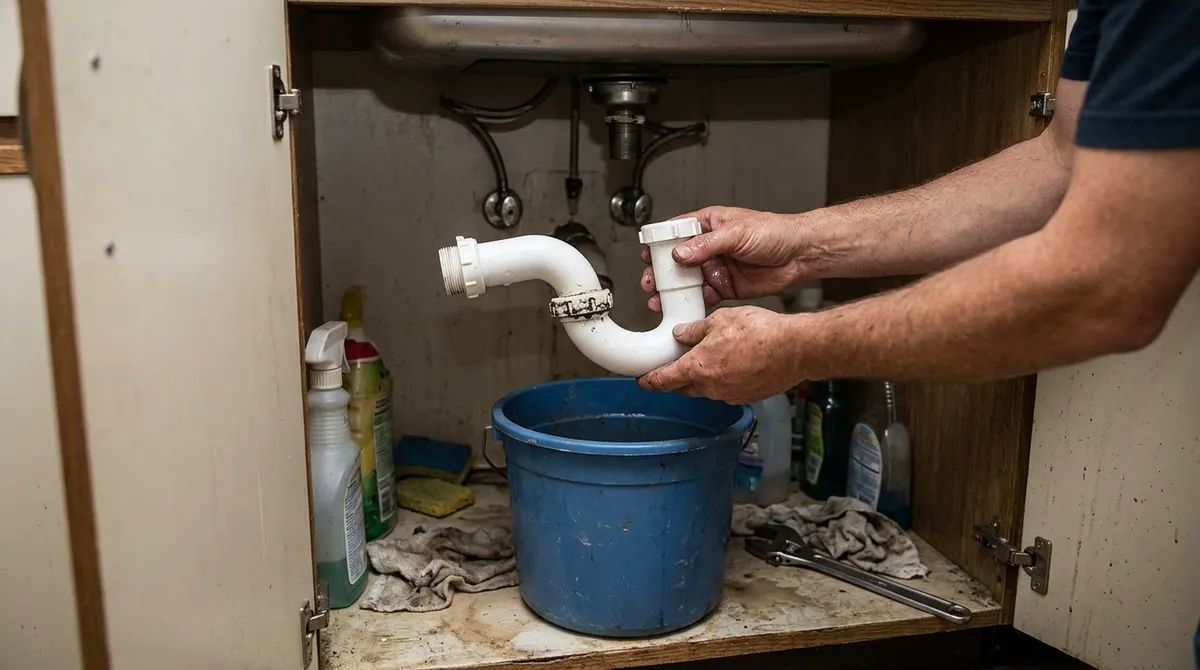
- Remove the P-trap and clean it out.
- Use a hand auger (drain snake) in the drain arm if the clog is past the trap.
- Avoid chemical drain cleaners, which can damage pipes and splash back.
How to Fix a Dripping Kitchen Faucet
- Shut off the water and plug the drain so small parts don’t fall in.
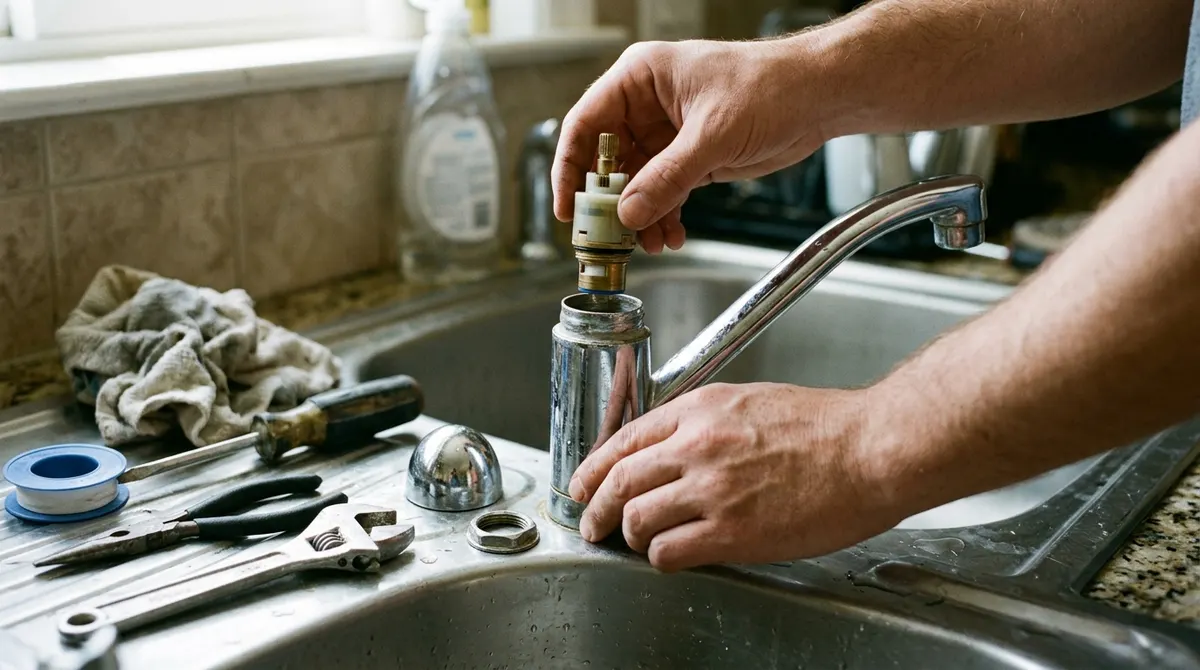
- Pry off the handle cap and remove the handle screw.
- Remove the retaining nut or clip and pull out the cartridge.
- Install a matching cartridge (or new O-rings and seats), reassemble and test.
DIY vs Plumber
Pros
- Most fixes cost under $30 in parts
- Basic tools: wrench, pliers, screwdriver
- Usually done in under an hour
Cons
- Hidden leaks in walls need a pro
- Old corroded valves may break when turned
- Main-line clogs need professional snaking
No water at all? See how to flush a toilet when the water is off for outage tips.
Frequently Asked Questions
Why is my kitchen sink leaking underneath?
The most common causes are loose P-trap slip nuts, worn washers, a failed basket strainer seal, or a loose supply line. Find the drip point while running water.
How much does kitchen sink repair cost?
DIY fixes usually cost $5–$30 in parts. A plumber typically charges about $150–$350 for common sink repairs.
Can I fix a kitchen faucet myself?
Yes. Replacing a cartridge or O-rings is a beginner-friendly repair once the water is turned off.
What is the fastest way to unclog a kitchen sink?
Plunge it with a cup plunger. If that fails, remove and clean the P-trap.
Why is my kitchen sink water pressure low?
Usually a clogged aerator. Unscrew it, soak it in vinegar and rinse. If both hot and cold are low everywhere, check the shutoff valves.


