A septic clean out is a capped vertical pipe on the sewer line between your house and the septic tank, usually within a few feet of the foundation. It gives plumbers access to snake clogs in the main line. It is not the same as the septic tank lid, which is used to pump the tank—something EPA guidance says most homes need every 3 to 5 years. If drains throughout the house gurgle or back up, the clean out is where a plumber starts.
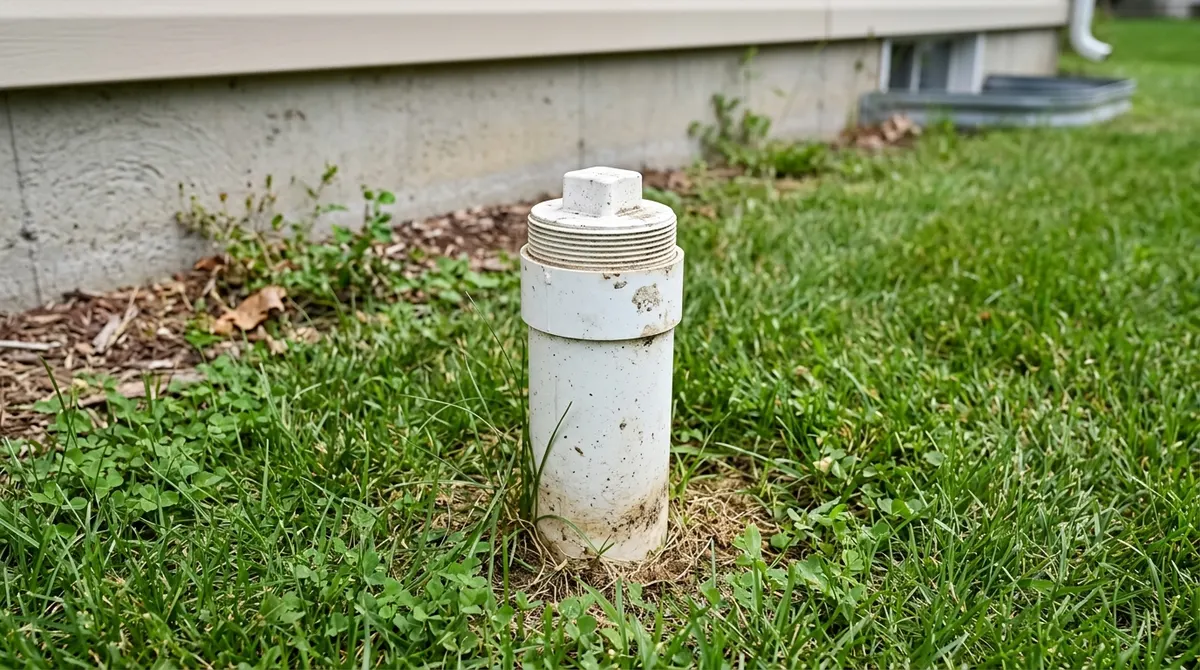
Safety: Never enter or lean into a septic tank. Septic gases such as hydrogen sulfide and methane can kill within minutes. Open a backed-up clean out slowly and stand to the side, and leave tank work to licensed septic professionals.
Clean Out vs Septic Tank Access
| Feature | Sewer clean out | Septic tank lid / riser |
|---|---|---|
| Location | On the line near the house or in the basement | On top of the buried tank in the yard |
| Size | 3–4 inch pipe with threaded cap | Large lid, often 20–24 inches |
| Purpose | Clearing line clogs, camera inspection | Pumping, inspecting baffles and filters |
| Who uses it | Plumber or careful DIY | Licensed septic contractor |
How to Find Your Septic Clean Out
- Walk the side of the house where the plumbing vent stacks exit the roof
- Look for a capped pipe within about 1–3 feet of the foundation
- Check the basement or crawlspace wall where the main drain exits
- Look at your home’s septic permit or as-built drawing (from the local health department)
- Ask the company that last pumped your tank
How to Use the Clean Out to Clear a Clog
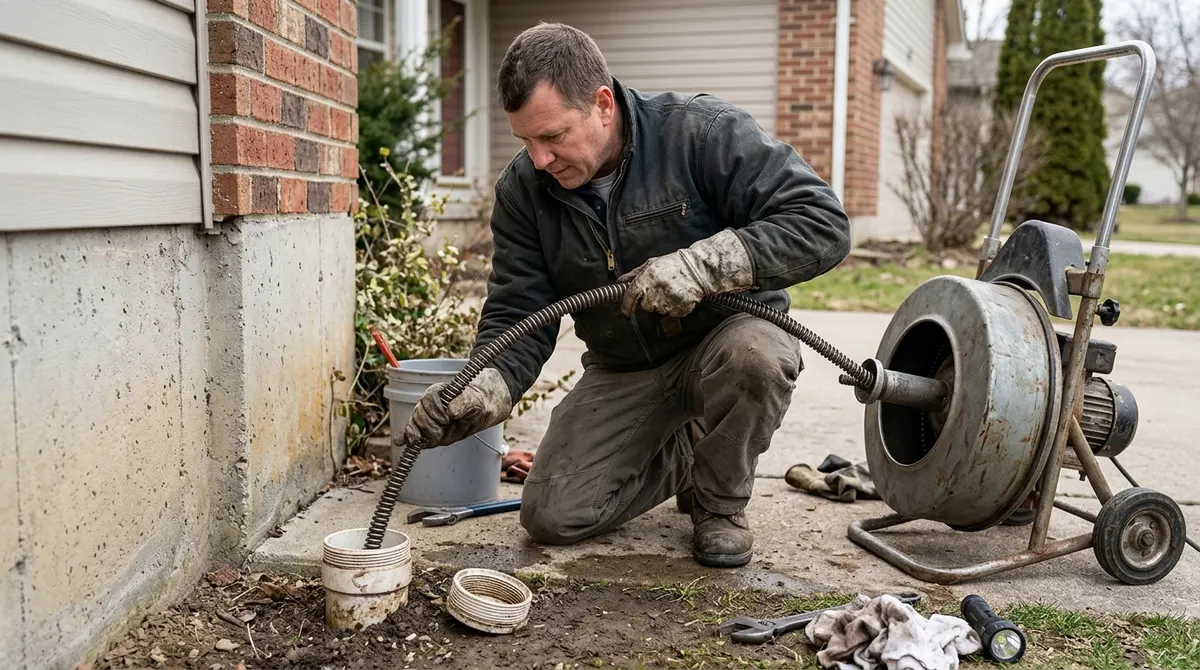
- Stop using water in the house.
- Wearing gloves and eye protection, unscrew the cap slowly—sewage may be under pressure.
- If water is standing in the pipe, the clog is between the clean out and the tank (or the tank is full). If it’s dry, the clog is in the house plumbing.
- Feed a main-line drain snake into the pipe toward the tank and work through the clog.
- Flush with water, replace the cap tightly, and watch for slow drains.
If the tank itself is full, snaking won’t help—you need it pumped.
When to Pump the Septic Tank
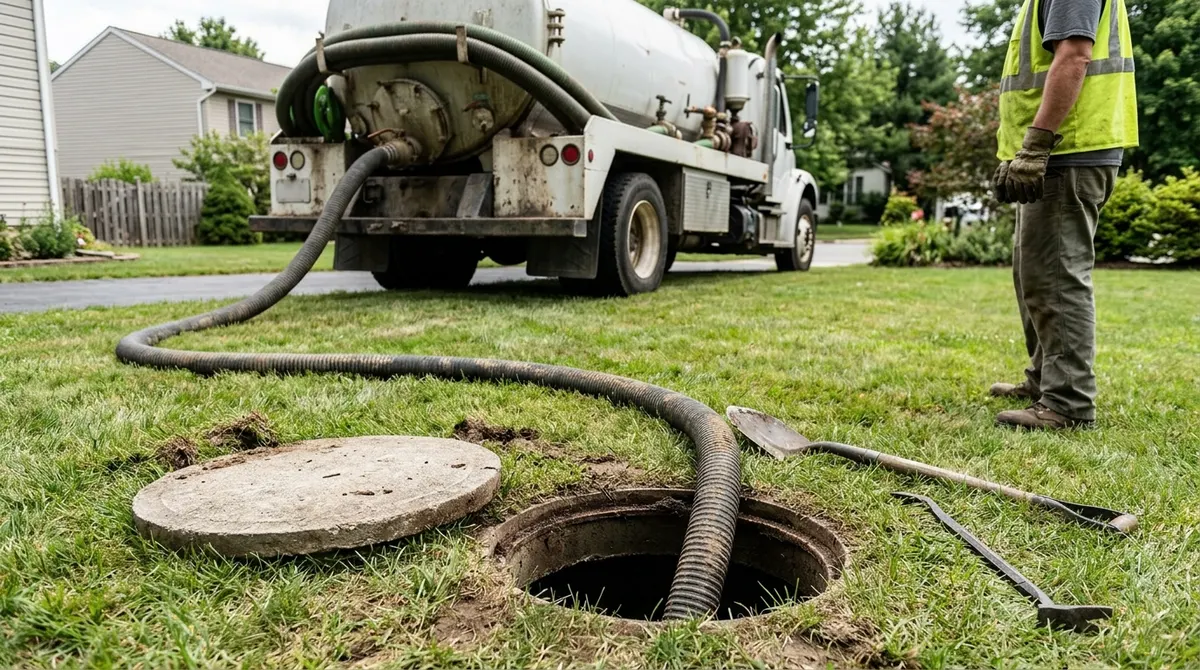
- Typical interval: every 3–5 years, more often for large households or small tanks
- Gurgling drains or toilets in several rooms
- Sewage odors in the yard or house
- Soggy, bright-green grass over the drainfield
- Backup appearing at the clean out
DIY vs Calling a Pro
Pros
- Opening a clean out tells you where the clog is
- Rented drain snakes can clear simple line clogs
- Pros can camera-inspect for roots or broken pipe
Cons
- Raw sewage is a health hazard
- Snakes can damage old or fragile pipe
- Tank pumping always requires a licensed contractor
For indoor backups, see toilet won’t unclog and how to use a toilet auger.
Frequently Asked Questions
Is the septic clean out the same as the tank lid?
No. The clean out is a small pipe on the line from the house; the tank lid is a large access cover on the tank used for pumping.
Can you pump a septic tank through the clean out?
No. The clean out pipe is too small and doesn’t reach the tank’s sludge layer. Pumping is done through the tank lid.
What if my house has no clean out?
Older homes may not have one. A plumber can install one, which makes future clog repairs faster and cheaper.
How often should a septic tank be pumped?
Most homes every 3–5 years, depending on tank size, household size and water use. An inspection every few years tells you when.
Should water be in the septic clean out?
No standing water should be visible. Water in the pipe usually means a clog downstream or a full tank.