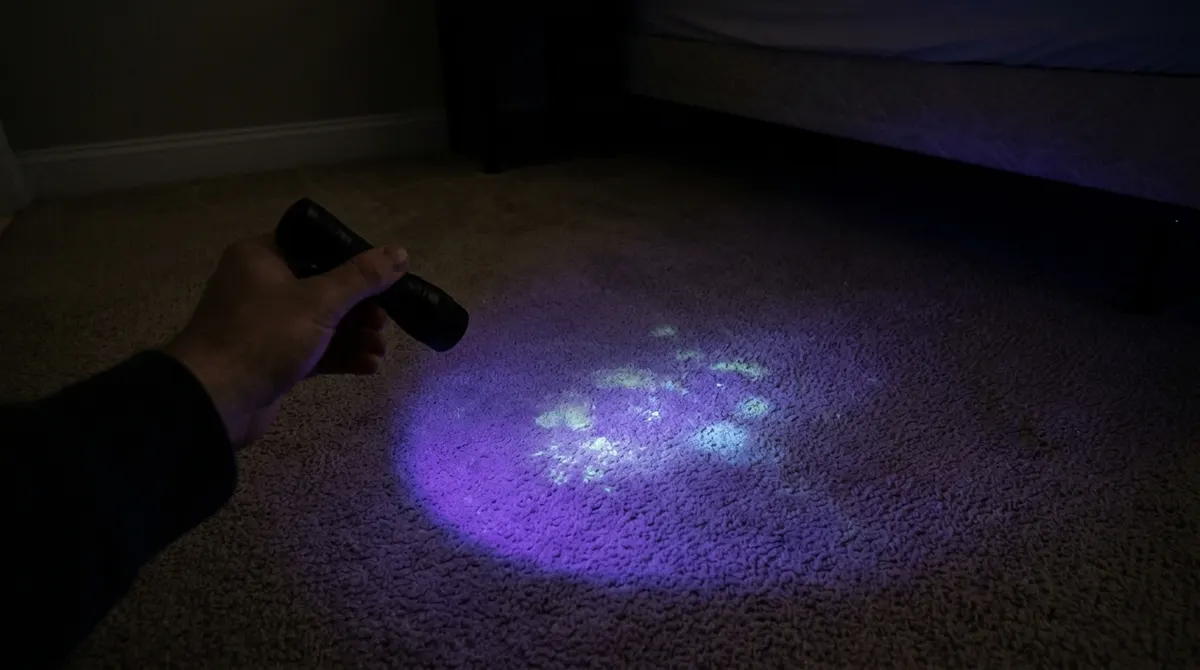
To get rid of cat urine smell, find every spot with a UV black light, blot up anything fresh, then saturate each spot with an enzyme cleaner made for pet urine so it soaks as deep as the urine did, and let it air-dry slowly. The enzymes break down the uric acid crystals that water and ordinary cleaners can’t dissolve—that’s why the smell returns on humid days after regular cleaning.
Why Cat Urine Smell Is So Hard to Remove
- Cat urine is concentrated and contains urea, uric acid and strong-smelling compounds.
- As bacteria break it down, it releases ammonia; older spots develop sulfur-like thiols.
- Uric acid forms salt crystals that don’t dissolve in water and re-release odor whenever humidity rises.
- Urine wicks through carpet into padding and subfloor, so surface cleaning misses most of it.
Best Methods by Surface
| Surface | Best approach | Notes |
|---|---|---|
| Carpet | Enzyme cleaner soaked into padding | Old spots may need pad replacement |
| Couch / upholstery | Enzyme cleaner, remove cushion covers | Test for colorfastness first |
| Mattress | Blot, enzyme spray, air-dry; baking soda after | Don’t soak too heavily |
| Hardwood | Wipe, enzyme cleaner sparingly; sand and seal dark spots | Peroxide can lighten wood |
| Concrete / subfloor | Enzyme cleaner, then odor-blocking sealer primer | Porous—may need two treatments |
| Washable fabric | Cold wash with enzyme detergent or 1 cup vinegar | Air-dry; dryer heat can set odor |
Step-by-Step: Removing Cat Pee Odor From Carpet
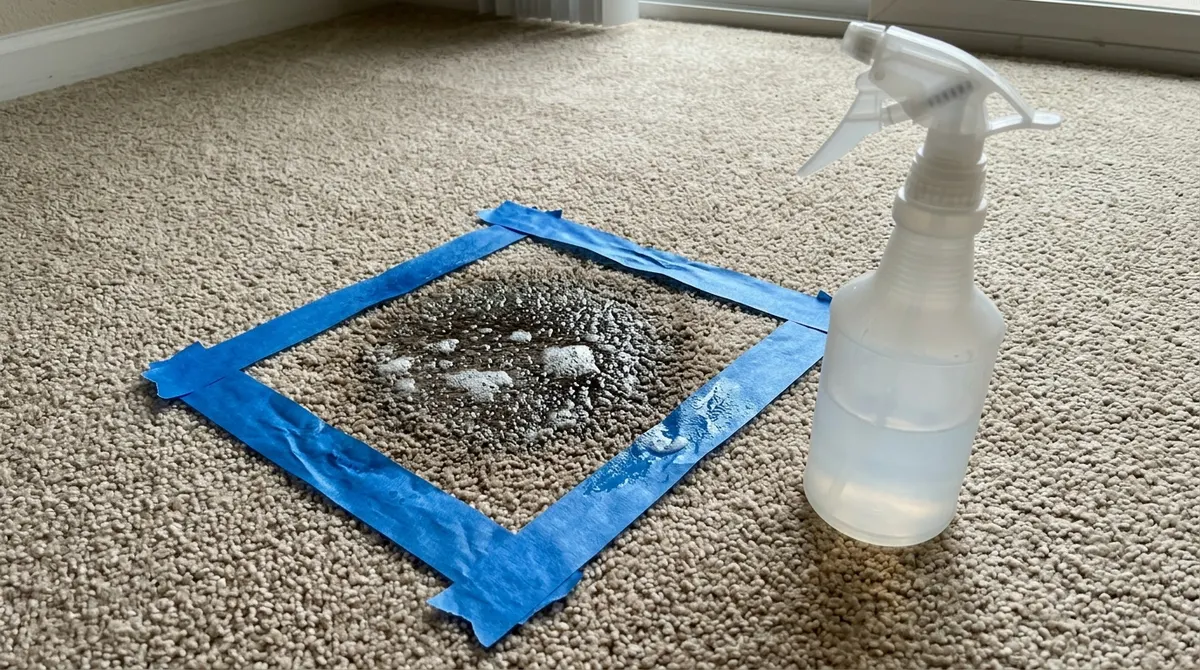
- Find it. Darken the room and scan with a UV light. Outline each spot with painter’s tape.
- Blot fresh urine with paper towels, pressing firmly. Don’t rub.
- Saturate with enzyme cleaner. Use enough to reach the padding—roughly the same volume as the original accident, and a bit wider than the visible spot.
- Let it dwell. Follow the label, often 10–15 minutes to several hours. Cover with a damp towel or plastic to slow drying.
- Air-dry naturally. Enzymes need moisture and time; drying with heat stops them.
- Re-check with the UV light and treat again if the odor remains.
When the Smell Won’t Go Away
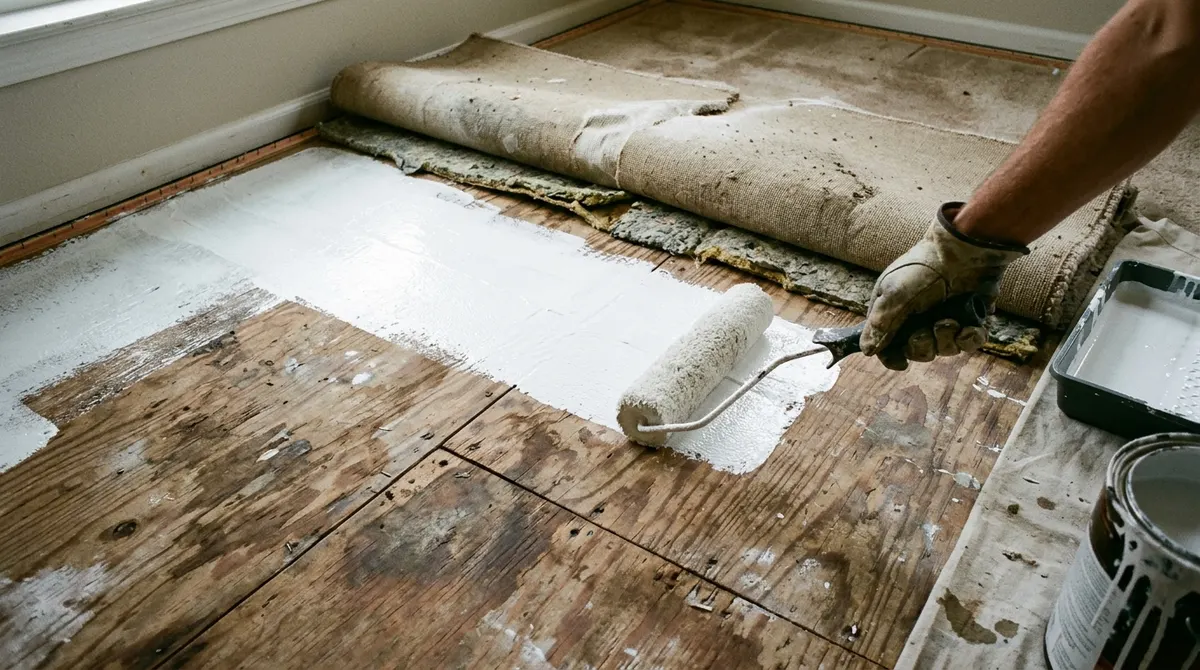
If several treatments fail, urine has likely soaked into the pad or subfloor. Pull back the carpet, replace the stained padding, treat the subfloor with enzyme cleaner, let it dry, then seal it with a shellac-based or odor-blocking primer.
A strong ammonia smell with no accident spots? Check our guide on ammonia smell in house. To stop new accidents, read how to stop a cat from peeing on carpet.
Enzyme Cleaners vs Home Remedies
Enzyme cleaners
- Break down uric acid crystals
- Remove the scent that draws cats back
- Safe on most carpets and fabrics
Vinegar and baking soda
- Neutralize fresh ammonia odor only
- Don’t break down uric acid
- Odor often returns in humid weather