To kill fruit flies in a drain, you have to remove the slimy film inside the pipe where the larvae live: pull the stopper, scrub the drain walls with a long, stiff pipe brush, flush with a kettle of boiling water (or very hot water for PVC), then pour in an enzyme or bio drain cleaner and let it work overnight. Trap the adults with an apple cider vinegar trap at the same time. Repeat daily for about a week to break the breeding cycle.
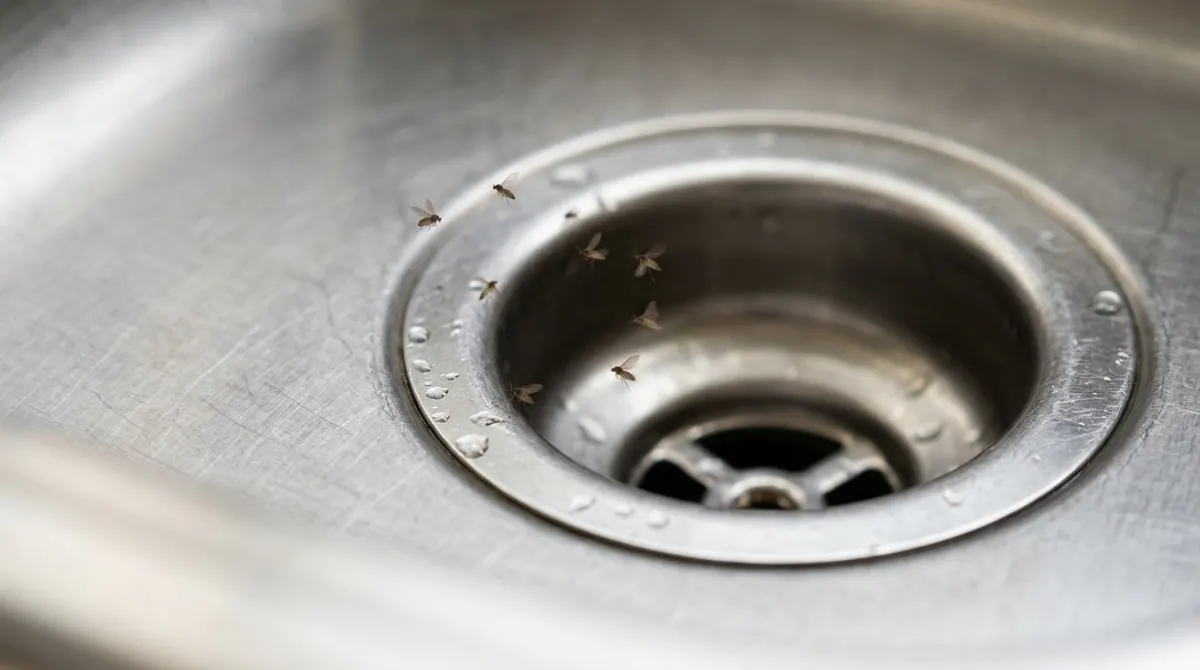
Fruit Flies or Drain Flies?
| Trait | Fruit fly | Drain fly |
|---|---|---|
| Look | Tan body, bright red eyes, smooth | Gray, fuzzy, moth-like wings |
| Flight | Quick, hovering | Weak, short hops |
| Rests on | Fruit, trash, sink rim | Walls and tub near the drain |
| Breeds in | Fermenting food, disposals, drain gunk | Biofilm in drains and overflows |
The good news: the drain fix is the same for both.
Confirm the Drain Is the Source
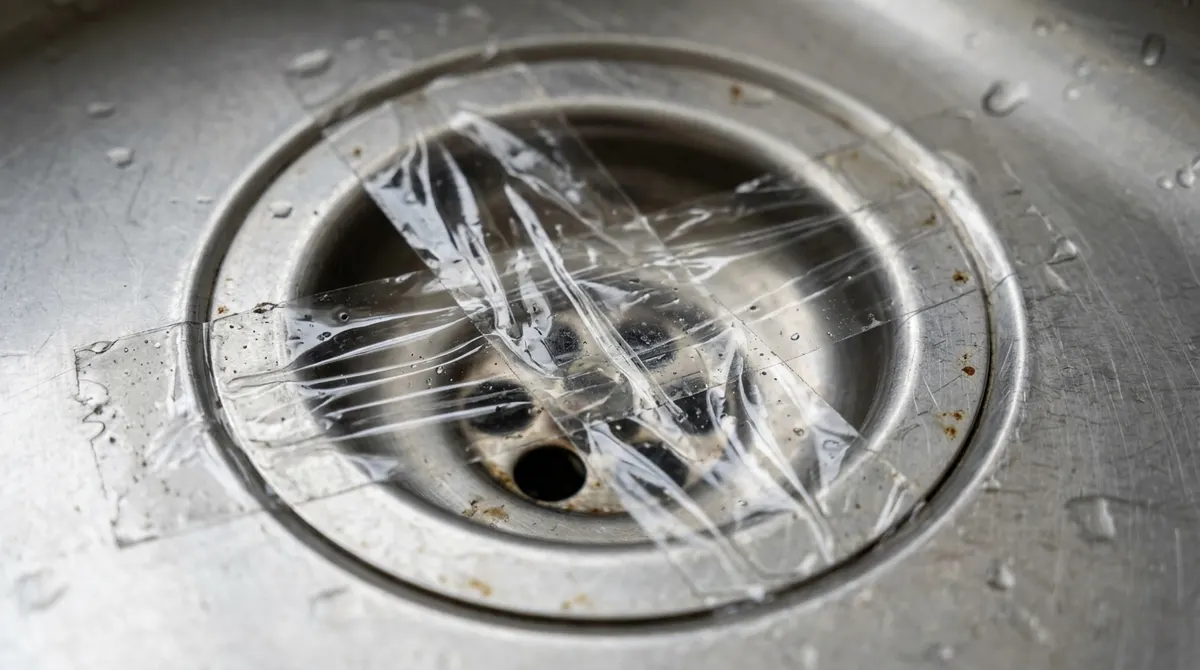
- Stretch clear packing tape over the drain opening, sticky side down, leaving small air gaps.
- Check in the morning. Flies stuck to the underside mean that drain is breeding them.
- Test every sink, tub, shower and floor drain, plus the dishwasher air gap.
How to Kill Fruit Flies in a Drain
- Remove stoppers and strainers and scrub off the gunk.
- Loosen the slime with a kettle of hot water (boiling is fine for metal pipes; use very hot tap water for PVC).
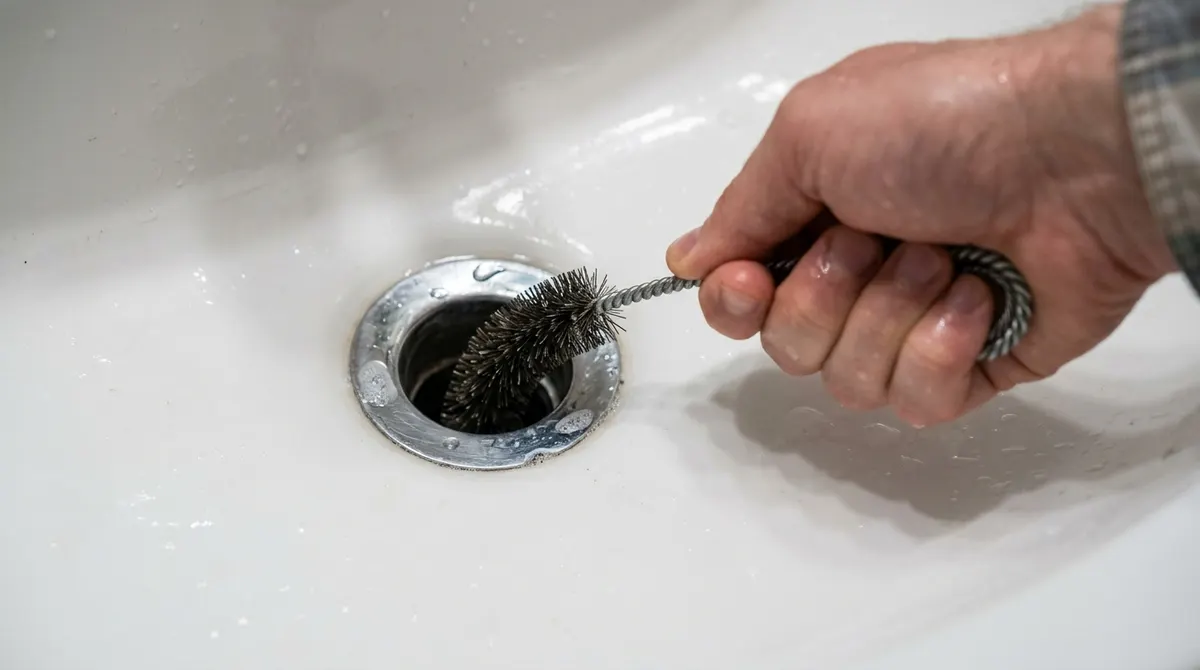
- Scrub the pipe. Push a long, flexible pipe brush down the drain and up the overflow, twisting to break up the biofilm.
- Flush again with hot water.
- Apply an enzyme or bio-based drain cleaner at night so it sits undisturbed; it digests what the brush missed.
- Trap adults: a jar of apple cider vinegar with a drop of dish soap, covered with plastic wrap poked with small holes.
- Repeat daily for 5–7 days, since eggs keep hatching.
Why bleach doesn’t work: Bleach rushes past the slime and goes down the pipe without killing larvae embedded in the film. Never mix bleach with vinegar or ammonia-based cleaners.
What About Baking Soda and Vinegar?
A cup of baking soda followed by a cup of vinegar, then hot water after 15 minutes, can loosen light buildup, but it won’t clear thick biofilm on its own. Use it as a weekly maintenance step after you’ve scrubbed.
Prevent Them From Coming Back
- Run the disposal with plenty of water and rinse it weekly
- Fix slow drains—see bathtub drain clogged
- Run water in unused drains weekly so traps don’t dry out
- Keep ripe fruit in the fridge and take out trash nightly
- Follow a kitchen cleaning checklist
Enzyme Cleaner vs Harsh Chemicals
Enzyme cleaners
- Digest the organic film larvae feed on
- Safe for pipes and septic systems
- Good for ongoing maintenance
Harsh chemicals
- Bleach passes over the biofilm
- Caustic cleaners can damage old pipes
- Dangerous fumes if mixed
Frequently Asked Questions
Does boiling water kill fruit flies in a drain?
It kills some larvae and loosens slime, but by itself it rarely solves the problem. Combine it with scrubbing and an enzyme cleaner.
How long does it take to get rid of drain flies?
Usually about a week of daily cleaning, because new adults keep emerging from eggs laid before you started.
Can fruit flies live in drains?
Yes. Fruit flies lay eggs in fermenting food residue that collects in sink drains and disposals.
Why do I still have flies after cleaning the drain?
Another drain, the overflow, a dirty disposal, a cracked pipe under the floor, or produce left out may still be breeding them.
Is it safe to pour vinegar down a drain?
Yes, vinegar is safe for drains, but it’s mainly a trap bait for flies—not a reliable larvae killer.