

If yellow jackets are nesting inside your wall, don’t seal the entrance hole and don’t spray liquid into it. Blocking the hole can force the wasps to chew through drywall into your home. The most effective fix is an insecticidal dust puffed into the entrance at night, when the colony is inside, followed by sealing the hole a few days after all activity stops. Because wall nests can hold thousands of stinging wasps, calling a pest control professional is the safest option.
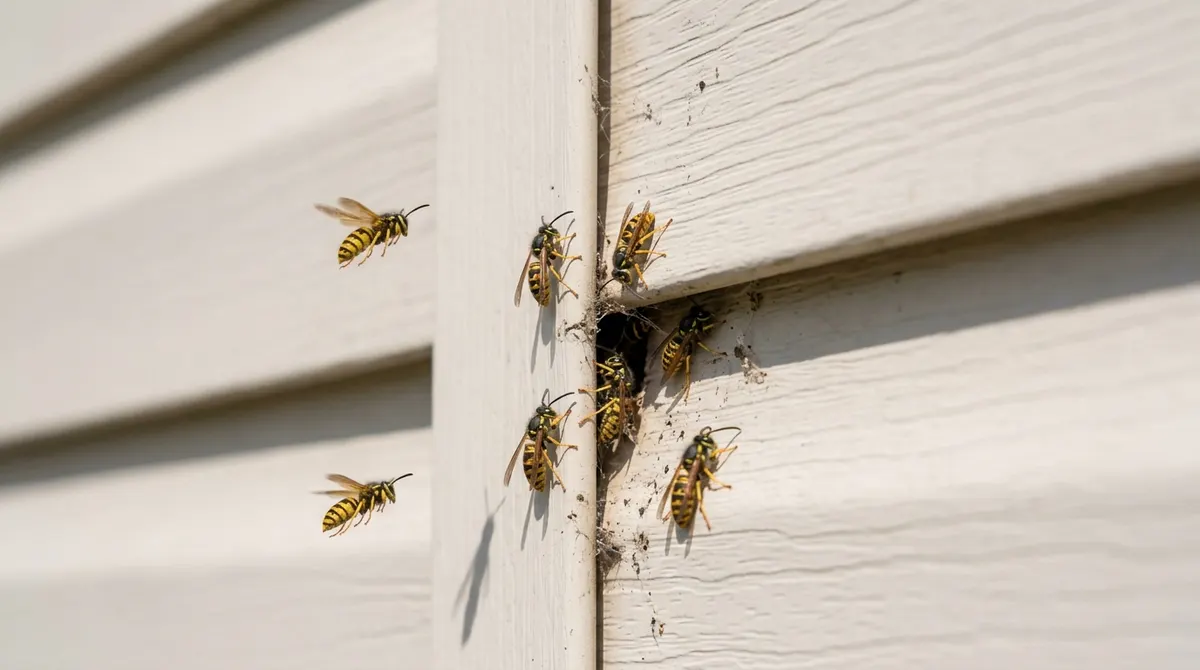
Signs of a Yellow Jacket Nest in a Wall
- A steady stream of wasps flying in and out of one spot (a gap in siding, a vent, a weep hole, or around a pipe)
- A papery, scratching, or crackling sound inside the wall
- Yellow jackets appearing indoors, especially near lights, outlets, or attic access
- A warm or damp spot on interior drywall (in large, late-season nests)
Why You Should Never Seal the Hole First
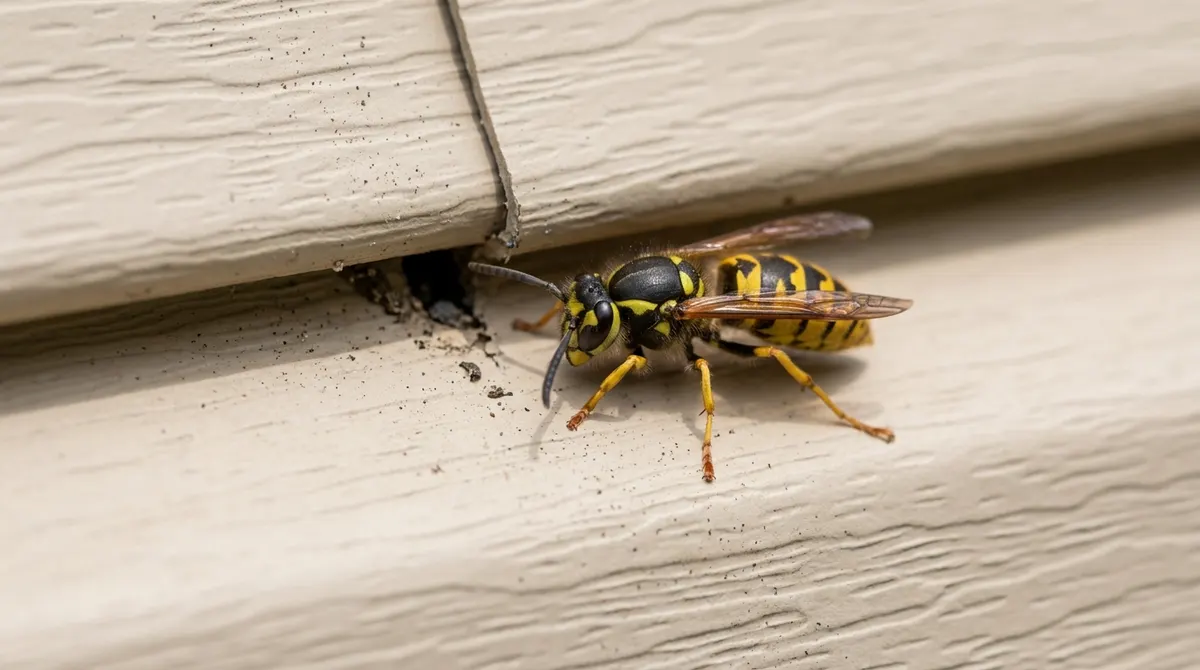
When you block the only exit, the colony looks for another one. Yellow jackets can chew through drywall and ceilings and end up inside the house. Sealing should only happen after the nest is dead.
How Yellow Jacket Wall Nests Are Treated
- Locate the entrance during the day from a safe distance.
- Wait until after dark, when yellow jackets are inside and less active. Use a red-filtered flashlight—white light attracts them.
- Wear protective clothing: thick long sleeves, gloves, pants tucked into socks, and eye protection.
- Puff insecticidal dust labeled for wasps directly into the entrance with a bulb duster, following the label. Returning wasps carry the dust into the nest.
- Leave the hole open and stay away for several days.
- Seal the hole with caulk or patch once there’s no activity for a few days.
Liquid sprays rarely reach the nest inside a wall and can make the colony more aggressive.
DIY vs Professional Removal
Pros
- Professionals have protective suits and the right dusts and tools
- They can locate hidden nests and handle large colonies safely
- Many offer a guarantee if the wasps return
Cons
- DIY treatment risks many stings
- Wrong treatment can push wasps indoors
- Professional service costs money (estimate with our calculator below)

What Happens to the Nest After Treatment?
Yellow jacket nests aren’t reused the next year. Once the colony dies, the papery nest dries out and usually doesn’t need to be removed from the wall unless it’s very large and causing odor or attracting other insects.
When Do Yellow Jackets Build Nests?
Queens start new nests in spring. Colonies grow all summer and are largest and most aggressive in late summer and early fall. Nests die off when hard frosts arrive; only new queens survive the winter, hibernating in sheltered spots.
Prevent Future Wall Nests
- In early spring, seal gaps in siding, soffits, and around pipes and vents.
- Cover vents with fine mesh screens.
- Keep trash cans closed and pick up fallen fruit.
- Remove small new nests early in the season, when colonies are tiny.


