

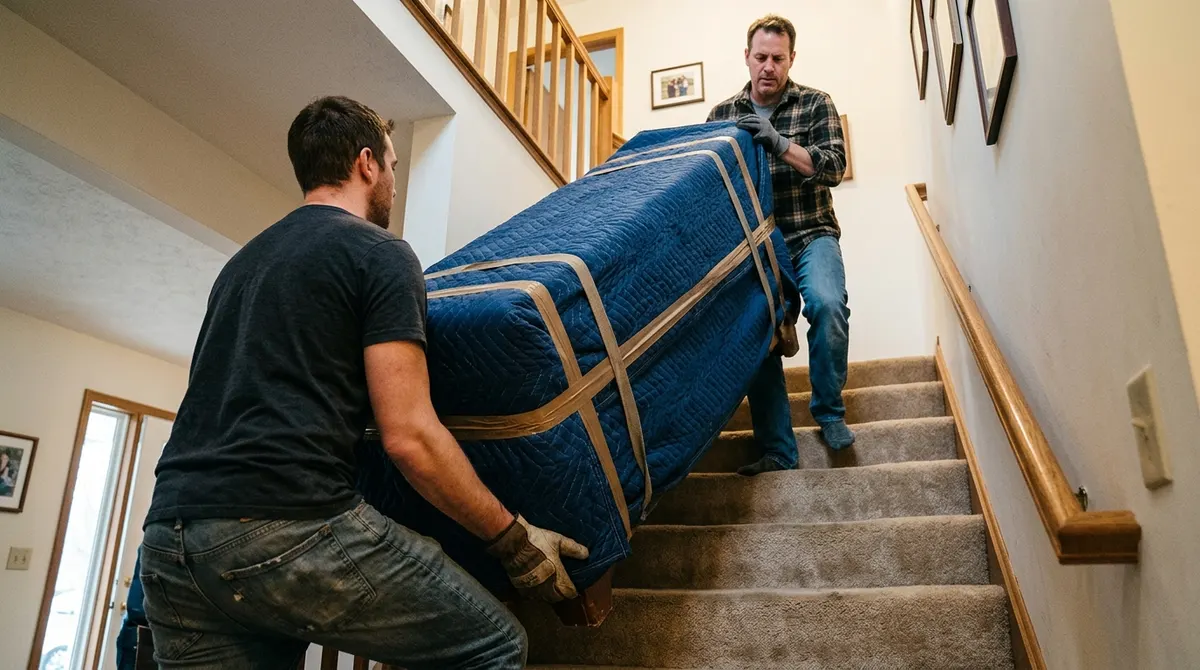
To move furniture up stairs, measure the item and the stairwell first, remove legs, drawers and doors, wrap the piece in moving blankets, and carry it with two people—the stronger person on the lower end taking most of the weight—using lifting straps or a stair-climbing dolly. Go one step at a time, keep the load close to your body, and tilt tall pieces around landings instead of forcing them.
Before You Lift: Measure Everything
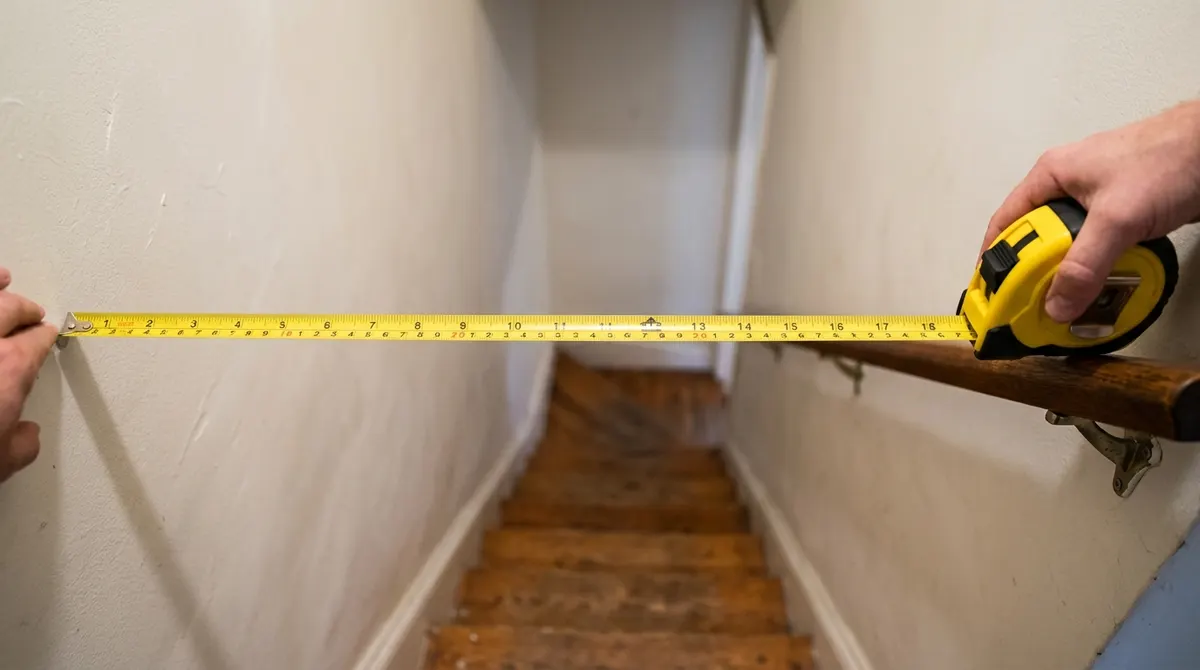
- Width of the stairwell at its narrowest (including handrails)
- Ceiling clearance above the stairs, especially at the bottom step
- Landing size and the turn direction
- Doorway width at the top of the stairs
- Height, width and diagonal depth of the furniture
A sofa often fits if you stand it on end; compare its diagonal depth to the opening, not just its width.
Gear That Makes It Easier
| Tool | Best for | Why it helps |
|---|---|---|
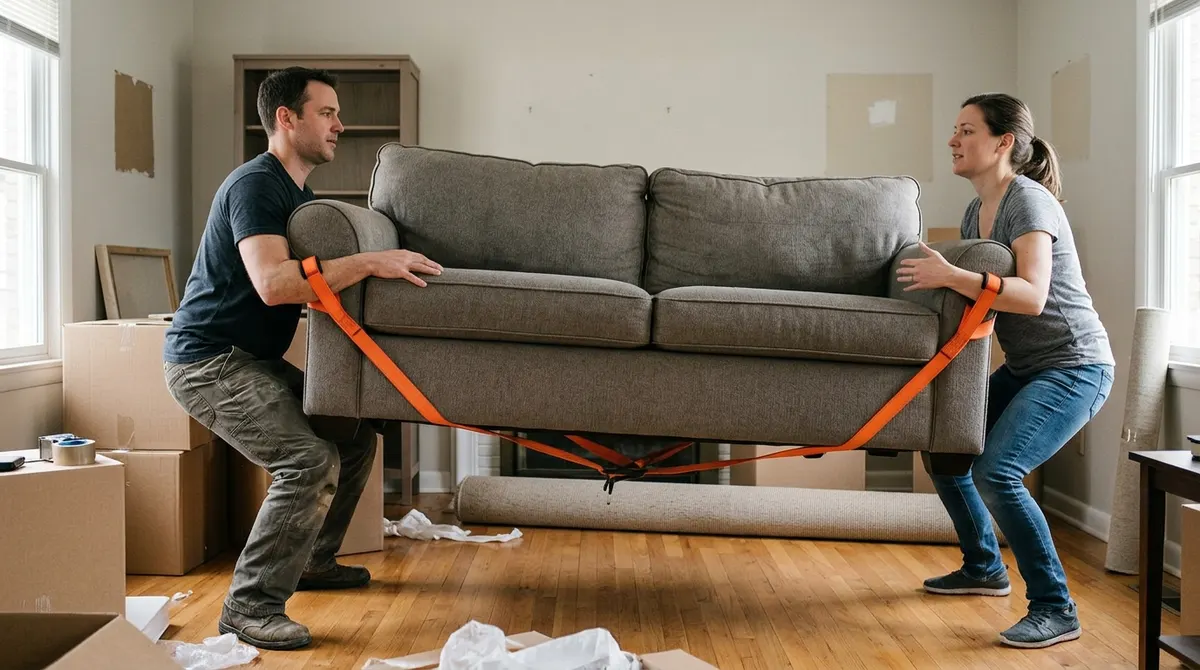
| Forearm/shoulder lifting straps | Dressers, sofas, chests | Spread weight to larger muscles and free your hands |
| Stair-climbing hand truck | Appliances, heavy boxes | Tracks or tri-wheels roll up each step |
| Moving blankets and stretch wrap | Wood and upholstered pieces | Prevent scratches and keep drawers shut |
| Corner guards / cardboard | Walls, banisters, door frames | Protect paint and drywall |
| Work gloves with grip | Everything | Better hold on slick finishes |
Step-by-Step: Carrying Furniture Up Stairs
- Lighten the load. Remove drawers, shelves, cushions, legs, feet and doors. Bag and label screws.
- Wrap it. Blanket the piece and secure with stretch wrap, not tape on finishes.
- Clear the path. Remove rugs, pictures and anything on the stairs; prop doors open.
- Plan roles. The lower lifter carries most of the weight; the upper lifter guides and calls out each step.
- Lift correctly. Bend at the knees, keep your back straight and the item close.
- Move together. Go one step at a time and pause at landings.
- Pivot at turns. Stand tall pieces on end and rotate around the corner; sofas often go “hooked” over the banister.
- Rest when needed. Set the piece on a step only when both people agree.
Safety: Never walk backward up stairs with a heavy load if you can’t see the steps, and stop if anyone’s grip slips. Pianos, gun safes and large appliances over about 200 lb are a job for pros.
DIY vs Hiring Movers
DIY pros
- Saves the cost of a moving crew
- You control timing and care of your items
- Straps and a dolly are cheap to buy or rent
DIY cons
- Back, knee and finger injuries are common
- Wall and banister damage can cost more than movers
- Very heavy pieces need special equipment
If you ding a wall, our guide on finding a stud helps if you need to remount a handrail.
Frequently Asked Questions
Who should be at the bottom when carrying furniture up stairs?
The stronger, taller person goes on the bottom, because more of the weight shifts downhill onto them.
Can one person move furniture up stairs?
Only light pieces. For anything heavy, use at least two people, or a stair-climbing dolly for compact items.
How do you get a couch up a narrow staircase?
Remove legs and cushions, stand it on end, and pivot it around turns. If it still won’t fit, a window hoist or disassembly may be needed.
Do lifting straps work on stairs?
Yes, but adjust them so the lower lifter’s strap is longer, keeping the piece level as you climb.
How do I protect stairs and walls?
Lay runners or cardboard on steps, tape cardboard to corners and banisters, and wrap furniture in blankets.


