The most common house bugs are ants, cockroaches, spiders, silverfish, house flies, fruit flies, drain flies, bed bugs, carpet beetles, pantry moths, crickets, earwigs, centipedes, stink bugs and fleas. You can usually tell them apart by size, color, number of legs, whether they have wings, and where in the house you find them. Use the descriptions below to name what you’re seeing, then follow the linked guides to deal with it.
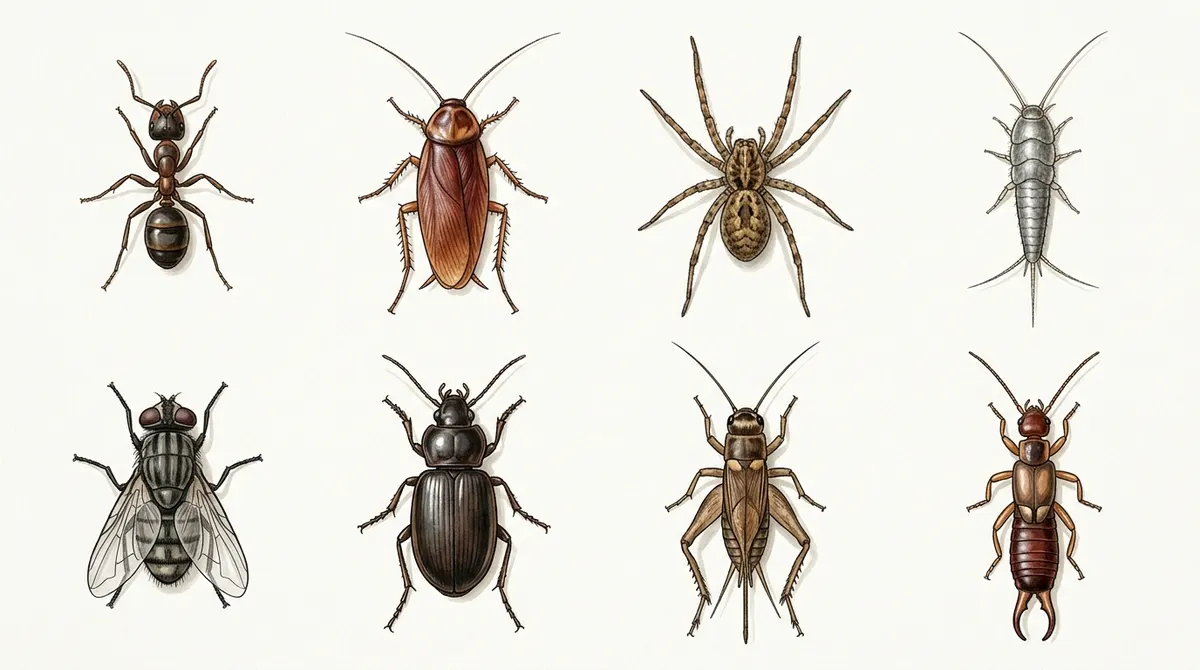
Quick ID Table
| Bug | Size and look | Where you’ll see it | Harmful? |
|---|---|---|---|
| Ants | 1/16–1/2 in, narrow waist, elbowed antennae | Kitchen trails, windowsills | Nuisance; carpenter ants damage wood |
| German cockroach | 1/2 in, tan with two dark stripes behind head | Kitchens, bathrooms | Yes—allergens, bacteria |
| American cockroach | 1.5 in, reddish-brown, yellowish band behind head | Basements, drains | Yes—contamination |
| House spider | 8 legs, two body parts, no antennae | Corners, basements | Mostly harmless |
| Silverfish | 1/2 in, silvery, carrot-shaped, three tail bristles | Bathrooms, books | Damage paper, fabric |
| House fly | 1/4 in, gray with four dark stripes on thorax | Kitchens, trash | Spread germs |
| Fruit fly | 1/8 in, tan, red eyes | Fruit bowls, drains | Nuisance |
| Drain fly | 1/8 in, fuzzy, moth-like wings held roof-shaped | Sinks, showers | Nuisance |
| Bed bug | Apple-seed size, flat, reddish-brown, wingless | Mattress seams | Bites |
| Carpet beetle | 1/8 in, round, mottled; larvae hairy | Rugs, closets | Damage wool, fabric |
| Pantry moth | 1/2 in wingspan, bronze-tipped wings | Flour, cereal, grains | Contaminate food |
| Cricket | Up to 1 in, long hind legs, long antennae | Basements, garages | Noise; chew fabric |
| Earwig | 3/4 in, brown, pincers at rear | Damp areas, doorways | Harmless |
| House centipede | 1–1.5 in, 15 pairs of very long legs | Basements, bathrooms | Rarely bites; eats other bugs |
| Stink bug | 5/8 in, shield-shaped, mottled brown | Windows in fall | Smell when crushed |
Bugs in the Kitchen
- Ants: A line of tiny ants usually means a food source. See tiny ants in house.
- Cockroaches: Flat, fast, oval and mostly nocturnal; look for pepper-like droppings in cabinets. Read do roaches sleep.
- Flies: House flies are bigger and gray; fruit flies are tiny with red eyes. See how to kill house flies.
- Pantry moths and beetles: Webbing or tiny beetles in grain products.
Bugs in Bathrooms and Basements
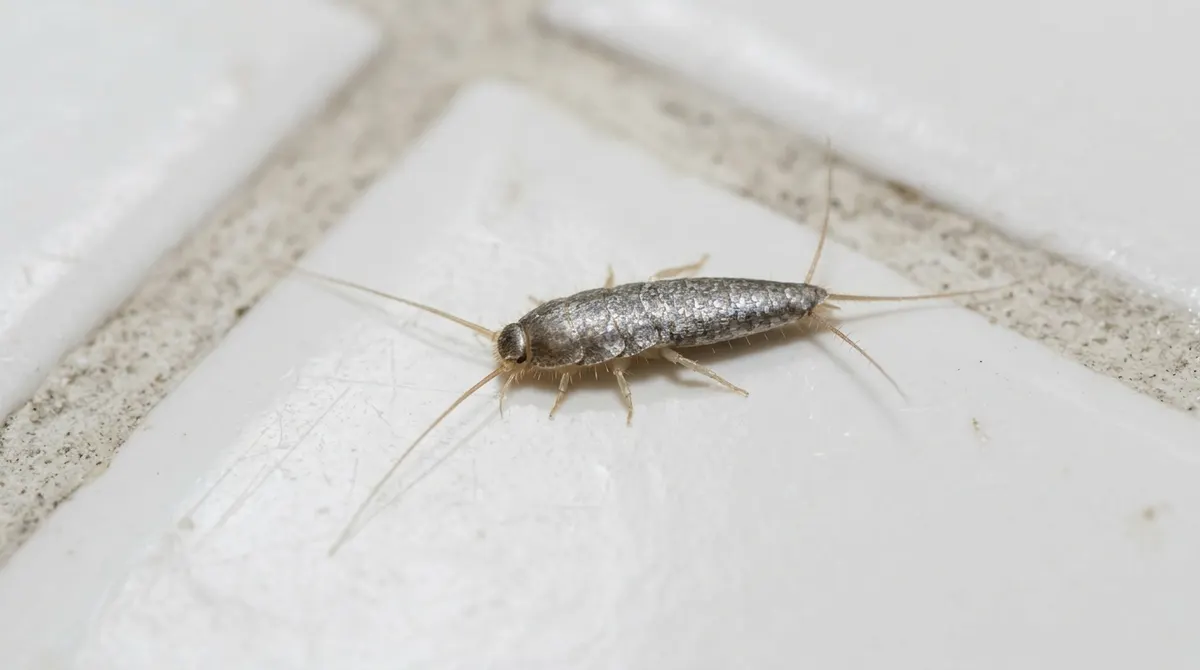
- Silverfish: Wriggle like fish; love humidity. Run a dehumidifier.
- House centipedes: Many long legs, move very fast; a sign of moisture and other insects.
- Drain flies: Rest on walls near drains. Scrub the slime inside the drain to end them.
- Crickets and earwigs: Wander in from outside. See how to find a cricket in your house.
Bugs in Bedrooms and Living Areas
- Bed bugs: Flat, reddish-brown, wingless; look for dark spots on mattress seams. See how long bed bugs live without a host.
- Carpet beetles: Small round adults near windows; fuzzy larvae chew wool.
- Spiders: Count eight legs and no antennae. See how to keep spiders out.
- Fleas: Tiny, dark, jump high; usually come with pets.
ID tip: Insects have six legs and three body parts; spiders have eight legs and two. Centipedes and millipedes have many more. Counting legs narrows things down fast.
DIY Identification vs Calling a Pro
DIY ID
- Most common bugs are easy to recognize
- Cheap fixes like sealing and cleaning work for many
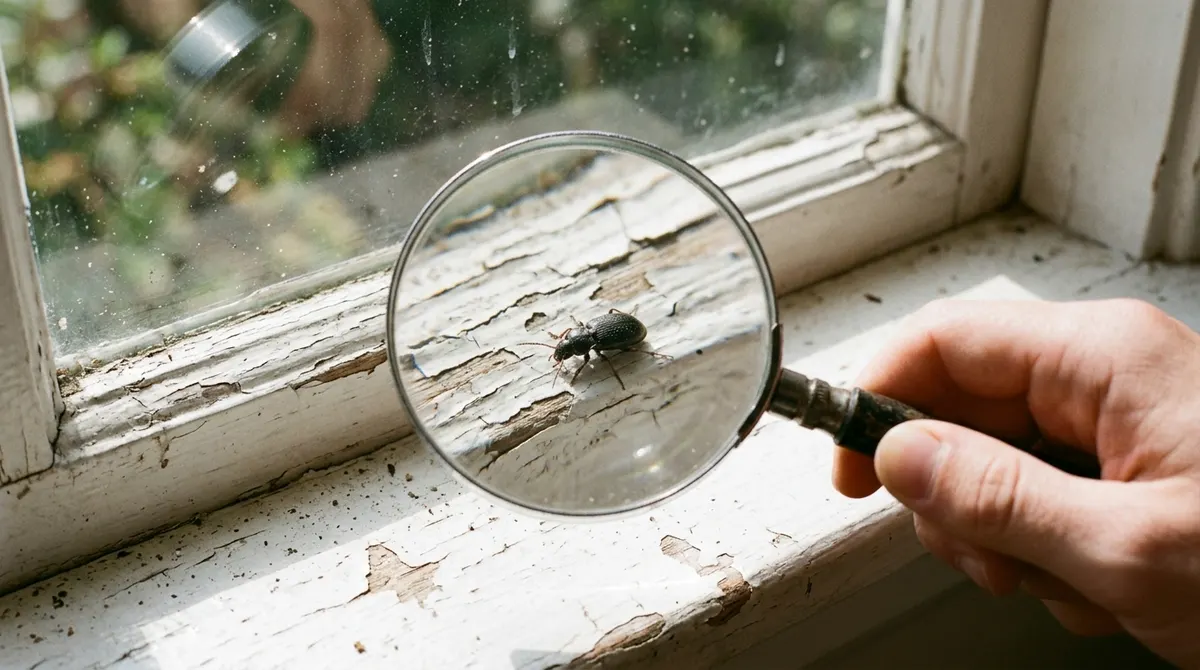
- Local extension offices can identify samples
When to call a pro
- Bed bugs, termites or large roach infestations
- Bugs keep returning after treatment
- Stinging insect nests inside walls
Frequently Asked Questions
What are the tiny bugs in my house?
The most common tiny bugs are ants, fruit flies, drain flies, carpet beetles, booklice and fleas. Where you find them is the best clue.
What bug looks like a cockroach but isn’t?
Ground beetles, water bugs and wood roaches are often confused with pest cockroaches. Beetles have hard wing covers that meet in a straight line down the back.
Which house bugs bite?
Bed bugs, fleas, mosquitoes and occasionally spiders. Most other household bugs don’t bite people.
Why are bugs suddenly in my house?
Weather changes, moisture problems, open food and new gaps around doors or windows all bring bugs in.
How can I get a bug identified for free?
Many county extension offices identify insect samples for free or a small fee. Keep the bug in a sealed container or on clear tape.